Liubliana é a capital da Eslovénia,
país que fazia parte da antiga Jugoslávia e que se tornou independente apenas
em 1991. A cidade encontra-se rodeada pelos Alpes Julianos e por uma imensa
floresta, que trazem uma brisa fresca à mesma. Esta é atravessada pelo Rio Liublianica,
ao redor do qual se encontram edifícios emblemáticos que espelham o cruzamento
da cultura românica, germana e eslava. A cidade tem um toque medieval, com
castelo no topo e alguns edifícios barrocos e em estilo secessão.
Ljubljana is
the capital of Slovenia, which was part of former Yugoslavia and became
independent only in 1991. The city is surrounded by the Julian Alps and a huge
forest, that brings a fresh breeze into the city. The city is crossed by the
Liublianica River, around which exist emblematic buildings that mirror the
crossroads of the Romance, Germanic and Slavic culture. The town has a medieval
touch, with a castle on top and some buildings in baroque and secession style.
Homemade Yogurt dumplings with mango (photo by Littlelle)
Ljubljana (photo by Littlelle)
Ljubljana Castle (photo by Mário Santos, edited by Littlelle)
Liublianica River (photo by Littlelle)
City side by side with the Liublianica River (photo by Littlelle)
Street details (photo by Littlelle)
Appreciating the architecture of the city (photo by Littlelle)
Appreciating the architecture of the city (photo by Littlelle)
Appreciating the architecture of the city (photo by Littlelle)
Streets plenty of a mixture of architecture (photo by Littlelle)
Building in Secession style (photo by Littlelle)
O mais famoso “habitante” de
Liubliana é o Dragão, sendo considerado o símbolo da cidade, que demonstra a
coragem da sua população. Este faz parte do brasão da cidade. Entre as inúmeras
estátuas e monumentos onde podes encontrar esta simbólica mascote, destaco a
Ponte do Dragão (Zmajski Most), em estilo secessão. Esta apresenta 4 dragões e
conta a lenda que durante a madrugada o Dragão balança a cauda quando passa uma
virgem no seu caminho.
The most
famous "inhabitant" of Ljubljana is the Dragon, being considered the
symbol of the city, which shows the courage of its population. It’s part of the
city's coat of arms. Among the numerous statues and monuments where you can
find this symbolic mascot, I highlight the Dragon Bridge (Zmajski Most), in the
secession style. This one presents 4 dragons and tells the legend that during
the dawn the Dragon shakes the tail when a virgin passes by.
Ljubljana Dragon (photo by Mário Santos, edited by Littlelle)
One of the Dragons of Zmajski Most (photo by Mário Santos, edited by Littlelle)
Zmajski Most (photo by Littlelle)
No topo de uma das pitorescas
colinas que compõem Liubliana - a colina Grajski Gric - encontra-se o Castelo
de onde é possível ter uma bonita vista sobre a cidade com os Alpes Julianos ao
fundo. Para subir ao castelo podes ir a pé ou de funicular.Lá podes percorrer as muralhas, subir à torre
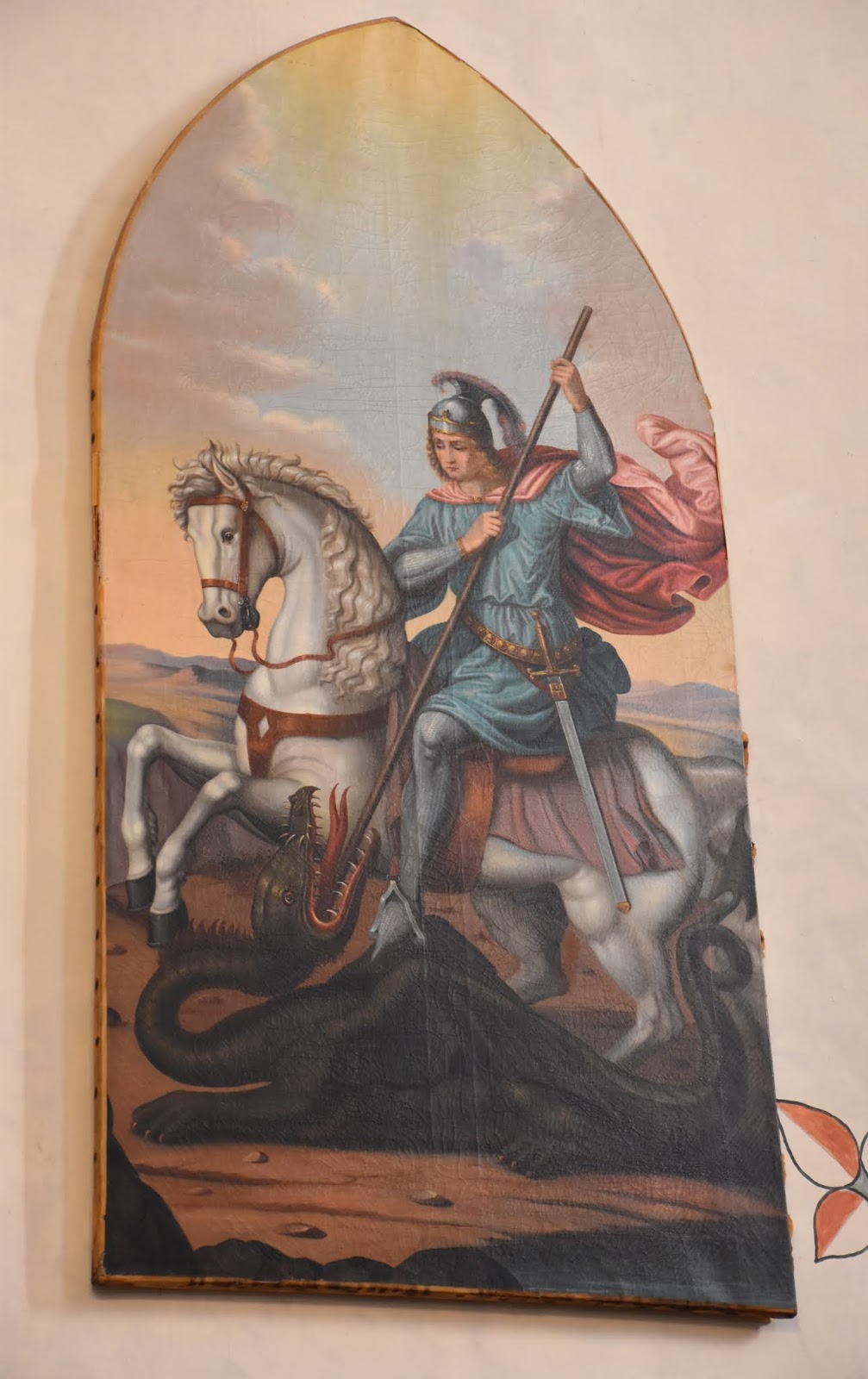
e ver algumas exposições. O castelo tem uma pequena capela gótica dedicada a
São Jorge, santo conhecido entre outras histórias pela lenda da morte de um
dragão. Será coincidência existir uma capela dedicada a ele em Liubliana?
On top of
one of the picturesque hills that make up Ljubljana - the Grajski Gric hill -
lies the Castle from which has a beautiful view over the city with the Julian
Alps in the background. To reach the castle you can go by foot or funicular.
There you can walk through the walls, climb the tower and see some exhibitions.
The castle has a small Gothic chapel dedicated to St. George, a saint known
among other stories for the legend of killing a dragon. Is it a coincidence?
Having a chapel dedicated to him in Ljubljana?
Ljubljana Castle (photo by Mário Santos, edited by Littlelle)
Funicular to the Ljubljana Castle (photo by Mário Santos, edited by Littlelle)
Ljubljana Castle (photo by Littlelle)
Ljubljana seen from the Castle (photo by Littlelle)
St. George Chapel (photo by Mário Santos, edited by Littlelle)
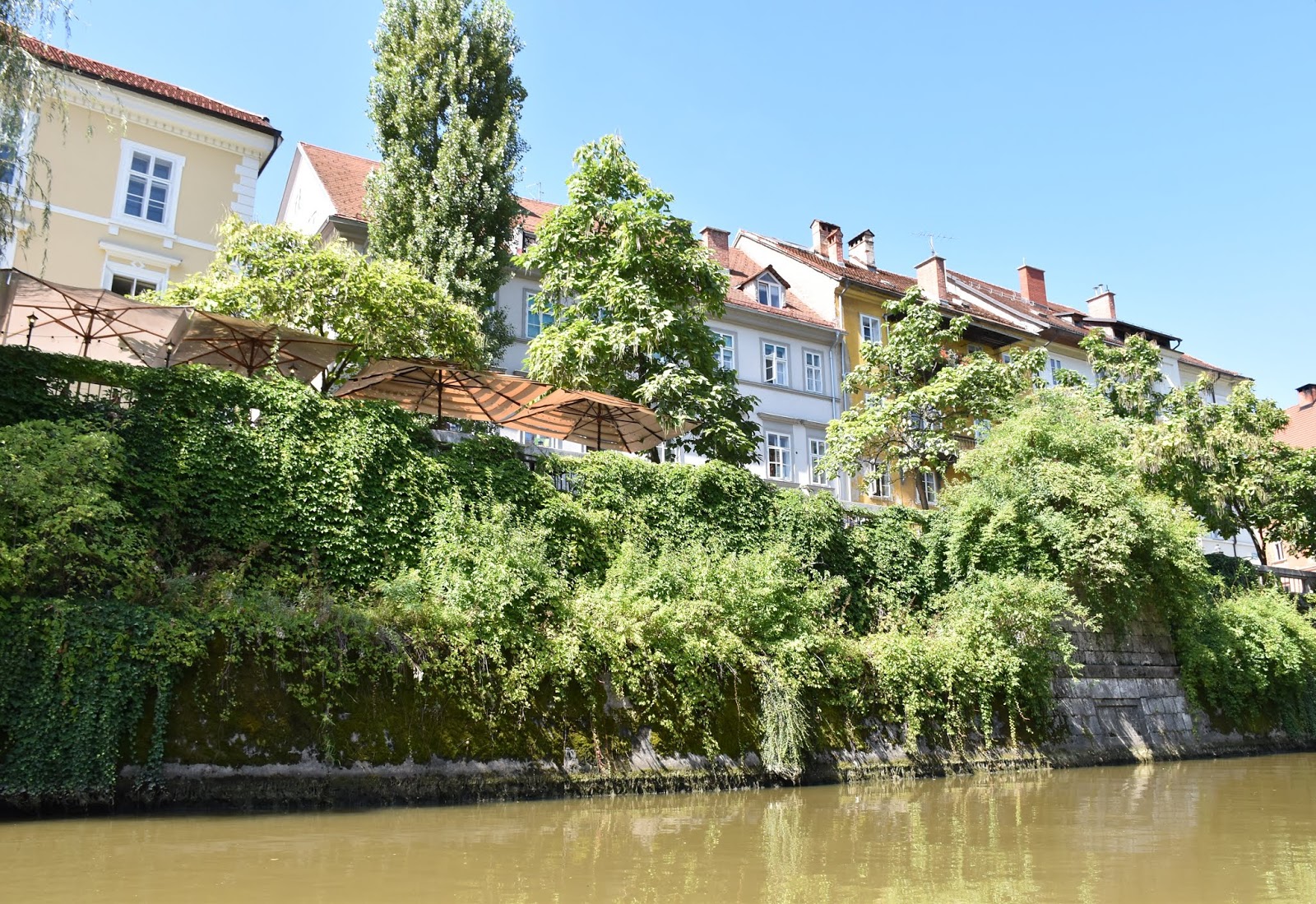
A cidade é atravessada pelo rio,
havendo inúmeras pontes que cruzam as margens e vários restaurantes e bares em
ambos os lados do mesmo. É uma zona bastante popular entre residentes e
turistas. Existem passeios de barco pelo rio, contudo, na minha opinião o
passeio não vale a pena, pois não se consegue ter grande panorâmica. Penso que
um passeio a pé pelas ruas e praças da cidade é bem mais apelativo.
The city is
crossed by the river, having numerous bridges that links the banks and several
restaurants and bars on both sides of it. It’s a very popular area among
residents and tourists. There are boat trips on the river, however, in my
opinion the tour is not worth it, because you cannot have a great panoramic
view. I think walking on the streets and squares of the city is much more
appealing.
Boat trip at Liublianica River (photo by Mários Santos, edited by Littlelle)
Liublianica River (photo by Littlelle)
The view from the boat (photo by Mário Santos, edited by Littlelle)
The city seen from the boat (photo by Mário Santos, edited by Littlelle)
Walking around (photo by Mário Santos, edited by Littlelle)
No teu percurso pedestre podes
começar pela Ponte Tromostovlje, uma tripla ponte que vai dar à Praça Preseren.
Seguindo vais encontrar por exemplo a Fonte de Hércules na praça Stari Trg ou a
Fonte barroca Robbov Vodnjak de Robba na praça Mestni Trg. Outro local a passar
é a Ponte dos sapateiros (Postolarski Most). O Mercado de Plecnik na praça
Pogacarjev fica no coração da cidade, junto a uma das múltiplas igrejas que a
mesma dispõe, sendo a religião predominante o cristianismo.
In your
pedestrian route you can start with the Tromostovlje, a triple bridge that goes
to the Preseren square. Continuing the path you will find, for example, the
Fountain of Hercules in Stari Trg Square or the Baroque Fountain Robbov Vodnjak
of Robba in the square Mestni Trg. Another place to pass is Postolarski Most,
known as the Shoemakers bridge. The Plecnik Market in Pogacarjev Square is in
the heart of the city, next to one of the many churches that it has, being
Christianity the predominant religion.
Tromostovlje (photo by Littlelle)
Preseren Square (photo by Mário Santos, edited by Littlelle)
Robbov Vodnjak (photo by Littlelle)
Pedestrian street (photo by Littlelle)
Postolarski Most (photo by Littlelle)
Ljubljana Cathedral (photo by Mário Santos, edited by Littlelle)
Plecnik Market (photo by Littlelle)
Plecnik Market (photo by Littlelle)
Local fruit at Plecnik Market (photo by Littlelle)
Eu passei apenas um dia neste
capital europeia. Fui de comboio a partir de Zagreb. Num dia consegues fazer
uma visita panorâmica pela cidade e relaxar num dos restaurantes junto ao rio,
onde o fluxo de Liubliana ocorre.
I spent only
one day in this European capital. I went by train from Zagreb. In one day you
can take a panoramic tour of the city and relax in one of the riverside
restaurants, where the Ljubljana flow takes place.
Ljubljana train station (photo by Mário Santos, edited by Littlelle)
Panoramic view of Ljubljana (photo by Littlelle)
Walking by the river(photo by Littlelle)
Restaurants by the river(photo by Mário Santos, edited by Littlelle)
Traditional food (photo by Littlelle)
Informações
úteis | Useful information:
- Fuso
horário/ Timezone: UTC/GMT +1 hora, dependendo da altura do ano/1 hour, depending on
the time of the year
- Moeda/Currency: Euro (Eur)
- Língua oficial/Official language:
Esloveno/ Slovenian
Bratislava, capital da Eslováquia,
situa-se na rota entre Viena e Budapeste. É uma cidade pequenina, uma das
capitais mais pequenas da Europa, por isso o ideal será integrá-la numa road trip europeia. É o destino ideal
para passar 1 dia, com preços muito mais acessíveis comparativamente com os
países vizinhos. Também o Danúbio por ali passa, tendo sido em tempos chamada
de Istrópolis, cidade do Danúbio.
Bratislava,
the capital of Slovakia, lies on the route between Vienna and Budapest. It’s a
small city, one of the smallest capitals in Europe, so the ideal would be
integrating it into an European road trip. It’s the ideal destination to spend
1 day, with prices much more affordable compared to the neighboring countries.
Also, the Danube passes by, having been in times called Isópolis, city of the Danube.
Old town (photo by Littlelle)
Slovak Philharmonic (photo by Littlelle)
Podes começar a tua visita pelo
Castelo de Bratislava (Burg Bratislava) (10€ entrada), datado do século XIII,
que se situa no topo de uma colina. De lá consegues ter uma panorâmica sobre a
cidade e o Danúbio, outrora azul. Se gostas de história, o castelo alberga o
Museu Nacional da Eslováquia.
You can
start your visit by the Castle of Bratislava (Burg Bratislava) (10 € entrance),
dated from the 13th century, which sits in the top of a hill. From
there you get a panoramic view of the city and the Danube, once blue. If you
like history, the castle houses the National Museum of Slovakia.
Castle of Bratislava (photo by Littlelle)
Descendo a colina até à cidade
velha, vais encontrar vários palácios barrocos, como o Palácio dos Primados (3€) e
várias igrejas, como por exemplo a Catedral de São Matinho e Igreja de Santa
Isabel. Da antiga fortificação da cidade, datada do século XIV, resta a porta
de S. Miguel (Michael’s Gate) (4,5€). Na praça principal encontras a antiga
Câmara Municipal, onde se encontra o Museu Municipal, museu mais antigo do
país. Depois é perderes-te pelas ruas e vielas da cidade e descobrires o seu
lado mais colorido.
Going down
the hill to the Old Town, you will find several baroque palaces, such as the
Primate's Palace (€3) and several churches, such as St. Matine's Cathedral and
St. Elizabeth's Church. From the old fortification of the city, dating from the
fourteenth century, remains Michael's Gate (4.5 €). In the main square is the Old
Town Hall, where you will find the Municipal Museum, the oldest museum in the
country. Then you have to lose yourself through the streets and alleys of the
city and discover its most colorful side.
Michael's Gate (photo by Littlelle)
Kostol Trinitárov or Trinitarian Church (photo by Littlelle)
Primate’s Palace (photo by Littlelle)
Old Town Hall (photo by Littlelle)
Old Town Hall (photo by Littlelle)
À medida que caminhas pelas ruas do
centro histórico vais-te deparando com várias estátuas em tamanho real. Na
realidade é das coisas que melhor me recordo desta cidade. Entre elas
encontras, por exemplo, Schöne Náci, um local famoso, Rubberneck (Čumil), a
estátua mais fotografada da cidade ou Napoleonic soldier (Napoleónec).
Caminhando até ao rio, encontras a Nový Most (Ponte Nova) e uma torre com 95 metros de altura, que mais parece um OVNI (7,40€). As you walk
through the streets of the old town, you will come across several human size
statues. In fact, it’s what I remind the most, when I think about Bratislava.
Among them you find, for example, Schöne Náci, a famous local person,
Rubberneck (Čumil), the most photographed statue of the city or Napoleonic
soldier (Napoleónec). Walking to
the river, you will find the Nový Most (New Bridge) and a 95 meters high tower,
that looks like a UFO (7.40 €).
Cumil statue (photo by Littlelle)
Bratislava Bear (photo by Littlelle)
A cidade é pequenina, mas bem
movimentada. Apresenta vários restaurantes típicos, por exemplo na zona judaica,
e cafezinhos engraçados. Recomendo o FoxFord. Para além disso, não te podes ir
embora sem provar a comida tradicional, como os dumplings ou as sopinhas. Entre a oferta, tens uma sopa cremosa de
alho, servida dentro de um pão, devidamente acompanhada por uma caneca de
cerveja. Afinal, numa cidade de encher os olhos, a barriga não pode ficar
vazia...
The city is
small, but very busy. It features several typical restaurants, for example in
the Jewish quarter, and nice coffee shops. I recommend FoxFord. Also, you
cannot leave this city without trying its traditional food, like dumplings or
soup. Among the offers, you have a creamy garlic soup, served inside of a loaf,
accompanied by a pint of beer. After all, in a city which brightens up your
eyes, the belly cannot be empty...
Bratislava by night (photo by Littlelle)
Foxford Café (photo by Littlelle)
Dinning in Bratislava (photo by Littlelle)
Informações úteis | Useful
information
- Fuso horário/ Timezone: CET
(UTC+1), dependendo da altura do ano/depending on the time of the year.
- Moeda/Currency: Euro (Eur)
- Língua oficial/Official language: Eslovaco/
Slovak
Banksy é aquele artista que nunca
nos deixa de surpreender. Recentemente, surgiu uma vez mais nos media com um “golpe” genial que deixou
toda a gente de boca aberta. Durante um leilão na Sotheby's em Londres, “Girl
with the baloon” uma das suas obras mais conhecidas, após ser leiloada por 1,2
milhões de euros, autodestruiu-se! Sim, literalmente! Banksy tinha instalado
uma espécie de máquina de desfazer papel na moldura, que foi ativada
remotamente após a obra ter sido vendida! Escusado será dizer que os bocadinhos
de papel agora devem valer uma fortuna.
Banksy is
that artist who never ceases to surprise us. Recently, he appeared once again
in the media with a genial strike that left everyone with their mouths open.
During an auction at Sotheby's in London, "Girl with the Baloon" one
of his best-known artworks, after being auctioned for 1.2 million euros, it was
self-destructed! Yes, literally! Banksy had installed some kind of
paper-undoing machine on the frame, which was activated remotely after the work
was sold! Needless to say, the little pieces of paper should now be worth a
fortune.
"Trolleys Signed" (2006) at Moco Museum
"Girl with ballon" on metal (2003) at Moco Museum
Critico da sociedade, dos governos e
corporações.... Afinal, quem é Banksy?
A sua identidade continua a ser desconhecida. Sabe-se que nasceu em Bristol e diz-se que poderá ser Robert
Del Naja, vocalista dos Massive Attack.
Critic of
society, governments and corporations .... After all, who is Banksy?
His identity
remains unknown. It’s known that he was born in Bristol and is said
to be Robert Del Naja, lead singer of the Massive Attack.
"Gasmask boy" at Moco Museum
Quando viajo para Londres, ou a
alguma outra cidade com bastante street
art, tento encontrar obras dele. Posso dizer que fui bem-sucedida, e mais
uma vez surpreendida por Banksy, pois algumas delas encontrei quando estava
menos à espera e por total acaso.
When I
travel to London, or some other city with street art, I try to find some of his
artworks. I can say that I was pretty successful, and again surprised by
Banksy, because some of them I found when I was least expecting and by total
chance.
Rat at Portobello Road in London
"Filth" (2000) at Taglialatella Galleries in New York
Gosto especialmente dos seus
trabalhos, pelo facto de Banksy utilizar a arte como veículo de comunicação,
com mensagens que não nos deixam de todo indiferentes. Por vezes através do
sentido de humor negro e bem crítico, deixam-nos a refletir sobre o mundo em
que vivemos. Que excelente forma de promover o sentido crítico da população e
mobilizar as massas.
I especially
like his work, because Banksy uses art as a vehicle for communication, with
messages that don’t leave us indifferent at all. Sometimes through the dark and
very critical sense of humor, they leave us wondering about on the world we
live in. What a great way to promote the critical sense of the population and
mobilize the masses.
Banksy at Taglialatella Galleries in New York
Banksy at Taglialatella Galleries in New York
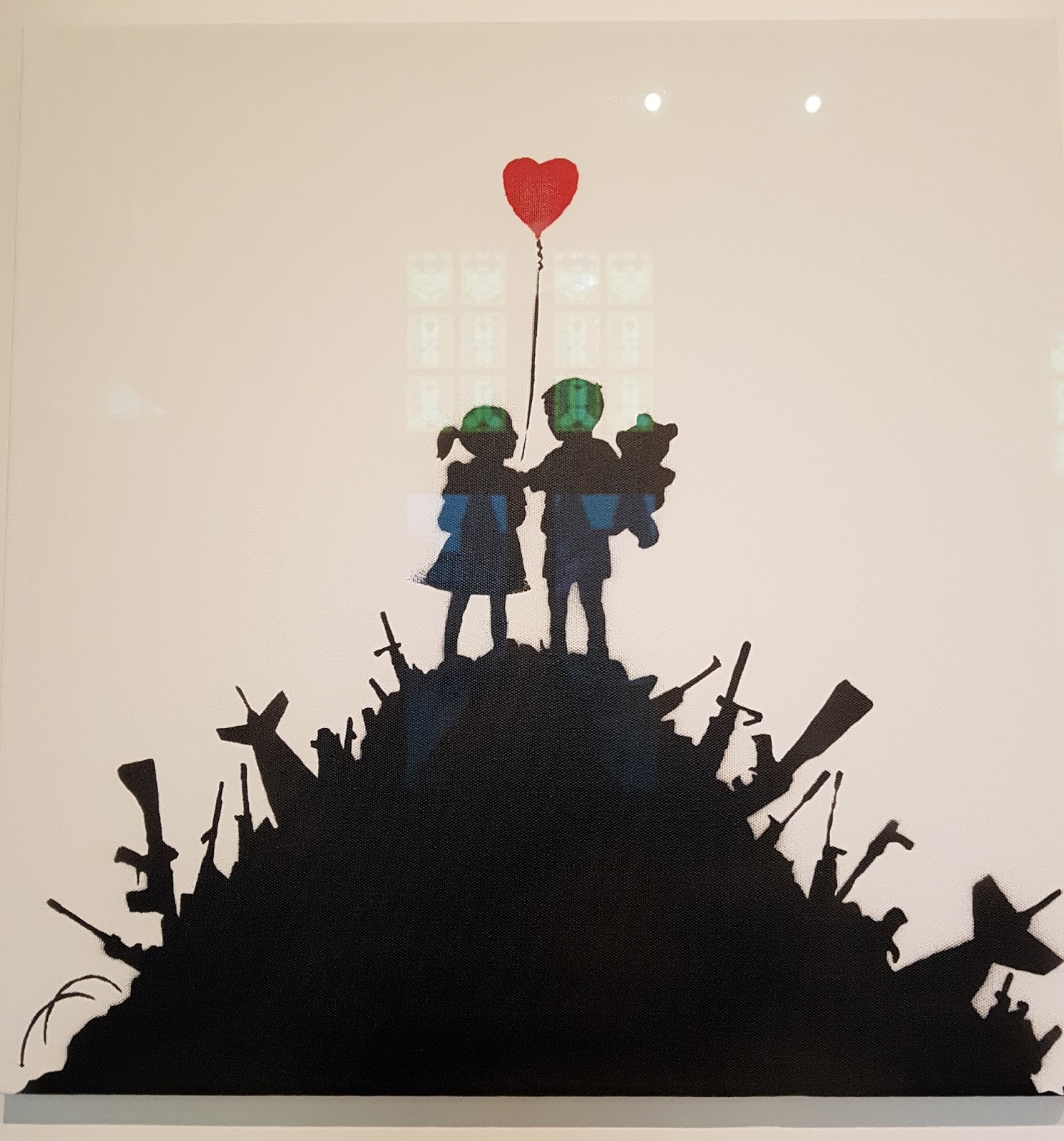
"Heavy Weaponry Colour" (1998) at Moco Museum
Onde podes encontrar os seus trabalhos? Where do you can find his artworks?
Inicialmente nas ruas de várias
cidades do Reino Unido, como Bristol ou Londres, rapidamente se expandiu para o
mundo.
Atualmente encontras alguns dos seus
trabalhos em galerias famosas, por exemplo, em Nova Iorque ou Londres. Também
em alguns museus, nomeadamente, na sua cidade natal Bristol, encontras no museu
da cidade uma estátua que imita as antiguidades com uma lata de tinta cor de
rosa enfiada na cabeça. Em Amesterdão tens um pequeno museu, localizado no
Museumplein (quarteirão dos museus), inteiramente dedicado à sua obra.
Instalado na Villa Alsberg, o Moco é um museu de arte moderna e contemporânea
que por vezes passa despercebido devido aos museus adjacentes, Museu do Van
Gogh ou Rijksmuseum (Entrada de 13,50€, mas se fores antes das 11 ou depois das
17 custa 10€), contudo é uma fantástica surpresa. Por si só, o contraste das
obras de Banksy com o ambiente da Villa Alsberg, construída por Eduard Cuypers,
sobrinho do famoso arquiteto do Rijksmuseum e da magnífica estação central de
Amesterdão, é fabuloso.
Initially on the streets of some UK cities, such as Bristol or London, it quickly expanded to the world.
Currently,
you find some of his works in famous galleries, for example, in New York or
London. In museums too, namely in his hometown Bristol, you will find in the
city museum a statue that imitates antiquities with a tin of pink paint tucked
into the head. In Amsterdam you have a small museum, located in the Museumplein
(museum quarter), entirely devoted to his work. Located in Villa Alsberg, the
Moco is a museum of modern and contemporary art that sometimes goes unnoticed
due to the famous adjacent museums, Van Gogh Museum or Rijksmuseum (Entry of €
13.50, but if you go before 11 or after 17 it costs 10 €), however it’s a
fantastic surprise. By itself, the contrast of Banksy's works with the atmosphere
of Villa Alsberg, built by Eduard Cuypers, nephew of the famous architect of
the Rijksmuseum and the magnificent central station of Amsterdam, is fabulous.
"The well hang lover" in Bristol
"The mild mild West" in Bristol
"Paint Pot Angel" (2009) at Bristol Museum
Banksy at Taglialatella Galleries in New York
Pulp Fiction Banana atTaglialatella Galleries in New York
"Trolleys" (2007) at Graffik Gallery in London
"Stop and Search" (2007) at Graffik Gallery in London
Moco Museum at Villa Alsberg (photo by Littlelle)
Banksy at Moco Museum
"Kissing coppers" (2005) at Moco Museum
"Di faced Tenner" (2004) at Moco Museum
"Armoured Car" (2002) at Moco Museum
"Riot Coppers" at Moco Museum
No Moco vi um vídeo de Banksy a entrar em alguns dos museus mais famosos do mundo, como o Louvre ou o MET, e instalar uma obra sua na parede, sem que ninguém desse por ela, mostrando de seguida quanto tempo a obra esteve exposta sem que as autoridades vissem. Podes encontrar em excerto em https://www.youtube.com/watch?v=lW-rt3jyZU8
At Moco I saw a video of Banksy entering some of the world's most famous museums, such as the Louvre or the MET, and installing his work on the wall, without anyone notice it, showing how long the work was exposed without that the authorities could see it. You can find it in excerpt on https://www.youtube.com/watch?v=lW-rt3jyZU8
O currículo de Banksy conta ainda
com a realização do documentário ‘Exit Through the Gift Shop’(2010), que foi
nomeado em 2011 para Óscar de melhor documentário. A forma de expressar as suas
ideias foi até concebida em forma de parque de diversões “Dismaland”, segundo
ele, um parque inapropriado para crianças, em Weston-Super-Mare, em 2015. A
artista portuguesa Wasted Rita, foi um dos 58 artistas convidados para
desenvolver este projeto.
Banksy's curricula
also includes the documentary 'Exit Through the Gift Shop' (2010), which was
nominated in 2011 for Oscar for best documentary. The way he expressed his
ideas was even conceived as an amusement park "Dismaland", according
to him, an inappropriate park for children in Weston-Super-Mare in 2015. The
Portuguese artist Wasted Rita was one of the 58 artists invited to develop this
project.
"Mickey snake" (2015) at Moco Museum
Os Massive Attack vêm a Portugal em fevereiro do próximo ano. Resta saber se Banksy fará também uma visita a Portugal! Se passar por cá, espero que nos presenteie com uma das suas obras. Bem que precisamos!
Massive Attack will come to Portugal for a concert, in February of the next year. I wonder if Bansky will also come for a visit in Portugal! If he comes, I hope he can leave us one of his messages. We totally need it!