sábado, 12 de janeiro de 2019

Coimbra’s Anamnese


2018 foi um ano de mudanças! Marcou o regresso à cidade onde nasci e estudei. Passado 1 ano do meu regresso a Coimbra, gostava de dar destaque a esta cidade portuguesa que marca aqueles que por lá passam com saudade. Esta palavra exclusivamente portuguesa caracteriza tão bem a marca de Coimbra no coração de cada estudante, a “saudade é o passado em visita ao coração presente”.

2018 was a year of change for me! It marked the return to the city where I was born and studied. One year after my return to Coimbra, I would like to highlight this Portuguese city that marks those who pass by with saudade. This unique Portuguese word characterizes so well Coimbra's print in the heart of every student, "saudade is the past when visiting the present heart".

I will never forget about you and you? (photo by Littlelle)
Cidade dos estudantes e do conhecimento, Coimbra localiza-se no centro de Portugal à beira do Mondego, é conhecida pelos que cá moram e pelo mundo fora, pela sua universidade. Mas há mais coisas a saber sobre Coimbra. Esta anamnese não deve ser entendida num sentido clínico, mas etimológico que significa “ato de trazer algo à memória”. Aqui ficam algumas histórias, lendas e curiosidades.

City of students and knowledge, Coimbra is located in the center of Portugal by the Mondego river, being known by those who live there and by the outside world for its university. But there are more things to know about Coimbra. This anamnesis should not be understood in its clinical sense, but etymological, which means "bringing something to memory". Here is some histories, legends and curiosities.

At the heart of every student (photo by Littlelle)


O nome da cidade | City name

O nome da cidade deriva da próxima cidade romana de Conimbriga, habitada entre o século IX a.C. e os séculos VII-VIII, a qual ainda é hoje possível visitar (4,5€ entrada).

O local onde se encontra hoje Coimbra, não corresponde à localização de Cominbriga que fica próxima de Condeixa, mas à antiga cidade de Aeminium, nome atribuído devido à topografia do território – facto da cidade surgir num morro. Contudo o bispo de Conimbriga mudou-se para Aeminium, por esta se situar perto de vias fluviais e terrestres que confluíam com outras cidades importantes da época. O bispo levou consigo o nome da cidade. O mesmo evoluiu para Colimbria até chegar ao atual nome de Coimbra. O criptopórtico dessa época, sobre o qual se erguia o fórum romano, encontra-se atualmente integrado no Museu Nacional de Machado de Castro.

The name of the city derives from the near Roman city of Conimbriga, inhabited between the 9th century BC and the 7th-8th centuries, which is still possible to visit (€ 4.5 entry).

The place where Coimbra stands today, doesn’t correspond to the location of Cominbriga that is near Condeixa, but to the old city of Aeminium, name attributed due to the topography of the territory - fact of the city stands on a hill. However, the bishop of Conimbriga moved to Aeminium, because it was situated near waterways and roads that merged with other important cities of the time. The bishop took the name of the city with him. The same evolved to Colimbria until arriving at the present name of Coimbra. The roman cryptoporticus of that time, on which the Roman forum was erected, is currently integrated in the National Museum Machado de Castro.

Roman cryptoporticus at Museu Machado de Castro
(photo by Mário Santos, edited by Littlelle)


O brasão da cidade | The coat of arms of the city

Após a minha mudança para Coimbra, descobri que para além da Rainha Santa Isabel, esposa do Rei D. Dinis e amada pelo povo, sendo a padroeira da cidade, existe outra mulher importante na história de Coimbra. Não a também famosa Inês de Castro, rainha coroada depois de morta, cuja história faz bater o coração dos mais românticos, mas a Princesa Cindazunda. A maioria das pessoas não consegue dizer o nome à primeira, mas é essa a senhora de nome complicado que surge no brasão da cidade e não a Rainha Santa Isabel. Segundo a lenda, Ataces, rei dos Alanos, após ter destruído Conímbriga, fundou uma nova cidade na margem direita do rio Mondego, no local da cidade romana de Aeminium. Contudo, o rei suevo Hermenerico que também cobiçava a cidade, atracou com o seu exército. A lenda conta que a batalha foi tão sangrenta que as águas do Mondego se tingiram de vermelho. Hermenerico vê-se obrigado a oferecer a Ataces a mão da sua filha, a bela princesa Cindazunda. Para comemorar o casamento, o rei dos Alanos deu a Coimbra um brasão onde surge Cindazunda, a taça do casamento; o leão que é a insígnia do rei alamo e o dragão, a insígnia do rei suevo.

After my return to Coimbra, I discovered that besides Queen Santa Isabel, wife of King D. Dinis and beloved queen of the people, being the patroness of the city, there is another important woman in the history of Coimbra. Not the equally famous Ines de Castro, queen crowned after death, whose story makes beat the heart of the most romantic, but Princess Cindazunda. Most people cannot tell her name at the first time, but is this complicated name lady that appears on the city's coat of arms, not Queen Santa Isabel. According to legend, Ataces, king of the Alans, after destroying Conímbriga, founded a new city in the right margin of Mondego river, in the place of the Roman city of Aeminium. However, the king Suez Hermeneric who also coveted the city, “docked” with his army. The legend tell that the battle was so bloody that the waters of the Mondego became red. Hermenerico was forced to offer to Ataces the hand of his daughter, the beautiful princess Cindazunda. To celebrate the marriage, the king of the Alanos gave to Coimbra a coat of arms where Cindazunda appears, the cup of the marriage; the lion that is the insignia of the king alamo and the dragon, the insignia of the king suevo.
Cindazunda Princess at the town hall (photo by Littlelle)
Cindazunda has a street (photo by Littlelle)


Influências antepassadas | Ancestors influences

Foram vários os povos que por ali se instalaram, desde os celtas aos romanos, visigodos, suevos e moçárabes (cristãos que viviam sob governo muçulmano). Por exemplo, o nome Almedina surge da cultura árabe. A cidade tinha anteriormente também uma alcáçova, onde se situava um castelo. A cidade só se tornou cristã em 1064. Ao longo dos anos várias ordens religiosas instalaram-se e criaram as igrejas que hoje conhecemos. Por exemplo, os Jesuítas mandaram construir a Sé Nova. Uma comunidade de Monges Franciscanos instalou-se na atual igreja de Santo António dos Olivais – nome atribuído pelo facto de Fernando de Bolhões, mais conhecido como Santo António ter também ali vivido. Posteriormente, esta comunidade foi para o Convento de São Francisco, construído para acolher a ordem. O Mosteiro de Santa Cruz foi fundado em 1131 pelos cónegos regrantes de Santo Agostinho, importante comunidade intelectual na altura. Coimbra teve bairros cristãos, muçulmanos e judeus. Na encosta ao lado do mosteiro de Santa Cruz, atual rua Corpo de Deus, existia o bairro judaico mais antigo. Já o bairro muçulmano ficava em frente ao Mosteiro.

There were several people who settled there, from the Celts to the Romans, Visigoths, Suevi and Mozarabs (Christians living under Muslim rule). For example, the name Almedina arises from Arab culture. The city had previously also a “alcaçova”, where a castle was located. The city only became Christian in 1064. Over the years various religious orders settled and created the churches that we know today. For example, the Jesuits ordered the construction of the New Cathedral. A community of Franciscan Monks settled in the current church of Santo António dos Olivais - name attributed by the fact that Fernando de Bolhões, better known as Santo António, also lived there. Subsequently, this community went to the Convent of St. Francis, built to welcome the order. The Santa Cruz Monastery was founded in 1131 by the canons of St. Augustine, an important intellectual community at the time. Coimbra had Christian, Muslim and Jewish neighborhoods. In the hillside next to the monastery of Santa Cruz, current Corpo de Deus street, existed the oldest Jewish district. While the Muslim quarter was in front of the Monastery.


Church of Santo António dos Olivais (photo by Littlelle)

Berço de Reis | Cradle of Kings

Coimbra teve também um papel importante na monarquia portuguesa. Outrora capital do país, foi berço de 6 reis da primeira dinastia portuguesa. Entre eles, D. Sancho I, D. Afonso II, D. Sancho II, D. Afonso III, D. Afonso IV, D. Pedro I. Há quem diga que também o próprio D. Afonso Henriques tenha também nascido em Coimbra. Facto é que se encontra sepultado na Igreja de Santa Cruz – primeiro panteão nacional.

Coimbra also played an important role in the Portuguese monarchy. Once the capital of the country, it was home to 6 kings of the first Portuguese dynasty. Among them, D. Sancho I, D. Afonso II, D. Sancho II, D. Afonso III, D. Afonso IV, D. Pedro I. Some say that D. Afonso Henriques himself was also born in Coimbra. It is a fact that he is buried in the Church of Santa Cruz - the first national pantheon.
Santa Cruz Monastery (photo by Littlelle)

A Universidade (UC) | The University

O grande impulso para a cultura e conhecimento veio com a Universidade. Fundada em 1290 pelo Rei D. Dinis, a universidade de Coimbra é a primeira universidade do país, contudo a mesma surgiu em Lisboa e não em Coimbra. Andou a saltitar entre Lisboa e Coimbra durante alguns anos e só em 1537 é que se instalou definitivamente em Coimbra, no próprio Paço Real cedido pelo rei D. João III. Durante muitos séculos, a UC foi a única universidade existente no império português, não sendo por isso de estranhar que muitas figuras de relevo ali tenham estudado. São exemplos disso o próprio Marquês de Pombal, Almeida Garrett, Eça de Queirós ou Miguel Torga. A Universidade de Coimbra é uma das mais antigas da Europa e encontra-se na lista de 20 universidades mais antigas do Mundo.

The great impetus for culture and knowledge came with the University. Founded in 1290 by King D. Dinis, the University of Coimbra is the first university in the country, yet it was founded in Lisbon and not in Coimbra. It jumped between Lisbon and Coimbra for some years, and it was only in 1537 that it settled definitively in Coimbra, in the actual Paço Real given by King João III. For many centuries, UC was the only university in the Portuguese empire, so it is not surprising that many prominent figures studied there. Marquês de Pombal, Almeida Garrett, Eça de Queirós or Miguel Torga are some of the examples. The University of Coimbra is one of the oldest in Europe and is on the list of the world's 20 oldest universities.

University of Coimbra (photo by Littlelle)
Com o surgimento da UC, para além da riqueza histórica e monumental, a cidade acresceu com o conhecimento de ilustres pensadores e professores de Portugal. A eles se juntaram as tradições académicas, o dinamismo e a vitalidade dos estudantes da universidade. Ficaram curiosos para conhecer Coimbra? O roteiro para passar um fim de semana por esta bonita cidade já se encontra disponível.
Podes encontrá-lo aqui: Dia 1 e Dia 2.

With the emergence of UC, besides the historical and monumental richness, the city grew with the knowledge of the most illustrious thinkers and professors of Portugal. To this were joined the academic traditions, dynamism and vitality of university students. Are you curious to meet Coimbra? The itinerary to explore this beautifil city is already available. You can find it here: Day 1 and Day 2.

Ready for the itinerary? (photo by Littlelle)

sábado, 5 de janeiro de 2019

Have you already thanked for being able to travel?


2018 foi um ano de mudanças e crescimento na minha vida pessoal e profissional. Na descoberta das terapias compassivas e baseadas no mindfulness, uma das coisas que pude aprender foi que a gratidão é a memória do coração. Muitas vezes não estamos satisfeitos com o que a vida nos oferece, o que lhe dá uma tonalidade a preto e branco. Se aprendermos a reconhecer e a valorizar as pequenas coisas e a sentirmo-nos gratos com aquilo que temos na vida, seja pequeno ou grande, minúsculo ou maiúsculo, a palete de cores é preenchida e a vida pode ser vivida a cores.

2018 was a year of change and growth in my personal and professional life. In the discovery of compassionate and mindfulness therapies, one of the things I could learn was that gratitude is the memory of the heart. Many times, we are not satisfied with what life offers to us, which gives it a black and white tonality. If we learn to recognize and value the small things and to feel grateful for what we have in life, being that small or big, tiny or large, the color palette is filled and life can be lived in color.
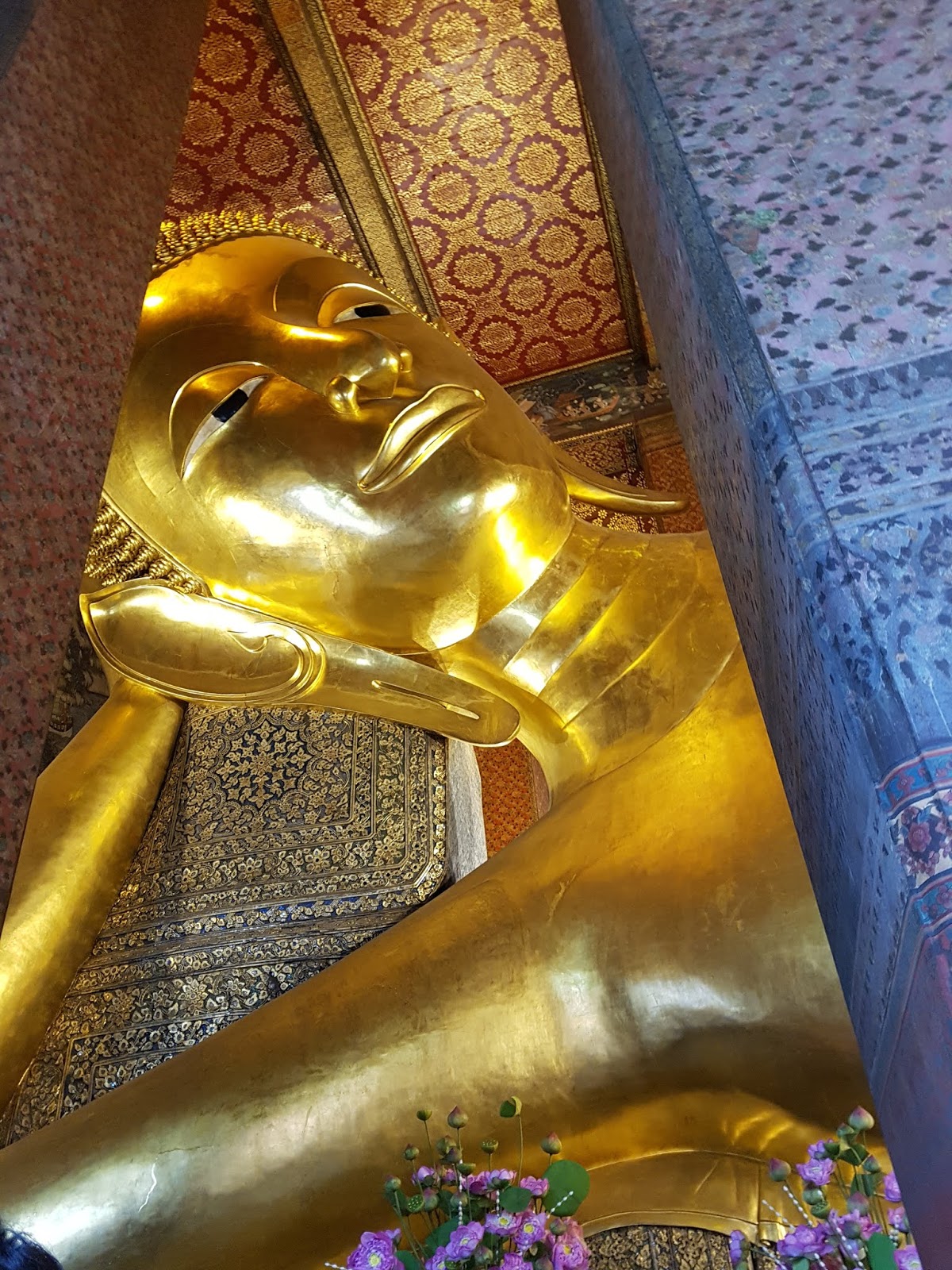
Wat Pho, Bangkok (photo by Littlelle)
Começo assim o ano de 2019 com a partilha de um exercício para cultivar a gratidão, para que esta possa crescer e fazer parte do nosso estilo de vida. Como o conteúdo deste exercício é pessoal e o blog The World painted by Littlelle é direcionado para quem gosta de viagens, o exercício que partilho é uma adaptação ao contexto das viagens. O mesmo pode ser feito, diariamente, focado na nossa vida quotidiana. Nesta adaptação fiz uma lista com 10 pequenas coisas que me possibilitaram e possibilitam viajar. O objetivo passa por agradecer por cada item da lista, antes, durante e/ou após cada viagem, por permitir desfrutar deste prazer que tenho na vida.

I begin the year 2019, sharing an exercise to cultivate gratitude, so that it can grow and be part of our way of life. As the content of this exercise is personal and the blog The World painted by Littlelle is aimed at those who enjoy traveling, the exercise I share is an adaptation to the travel context. The same can be done, daily, focused on our daily lives. In this adaptation I made a list of 10 small things that enable me to travel. The goal is to be grateful for having each item on the list, before, during and / or after each trip, for allowing me to enjoy this pleasure that I have in life.
Bali (photo by Littlelle)

Estou grata por | I am grateful for:


-1-

Ter olhos que me permitam ver a beleza do nosso mundo
Having eyes that allow me to see the beauty of our world
Cappadocia (photo by Littlelle)

-2-

Ter pernas para caminhar
Having legs to walk
Ubud, Bali (photo by Littlelle)

-3-

Ter mãos para fotografar
Having hands to photograph
Keukenhof gardens, The Netherlands (photo by Littlelle)

-4- 

Ter energia para passear
Having energy to wander
Parque das Nações, Lisbon (photo by Littlelle)

-5- 

Ter tempo para me dedicar
Having time to dedicate to it
London (photo by Littlelle)

-6- 

Ter trabalho que me permita investir em viagens
Having a job that allow me to invest in travels
Figueira da Foz, Portugal (photo by Littlelle)

-7- 

Ter pais que me fizeram descobrir este prazer
Having parents who made me discover this pleasure
New York (photo by Littlelle)

-8- 

Ter companhia para viajar

Having company to travel
Pura Lempuyang, Bali
Somewhere in Budapest (photo by Littlelle)

-9-

Quando não a tenho, por poder ser uma boa companhia para mim mesma
When I don’t have it, for being a good companion for myself
Me, my self and I in London (photo by Littlelle)

-10- 

Ter um lar para onde posso regressar
Having a home where I can return to
Home sweet home (photo by Littlelle)
Queres experimentar?
Would you like to try?
Bangkok (photo by Littlelle)

sábado, 29 de dezembro de 2018

14 Life skills that you can develop by travelling


De acordo com o dicionário, “viajar” significa partir de um lugar para outro, relativamente afastado; deslocar-se para um local distante.  Para algumas pessoas, viajar pode significar cruzar o oceano, para outras pode ser fazer uma refeição sozinho/a pela primeira vez ou aprender uma nova competência. Viajar pode ter tantos significados, dependendo da interpretação única que cada um de nós faz da mesma, de si e da vida.

According to the dictionary, "to travel" means to move from one place to another, relatively far away; move to a distant location. For some people, traveling can mean crossing the ocean, for others it may be eating alone for the first time or learning a new skill. Travel can have so many meanings depending on the unique interpretation that each of us makes of it, of themselves and of their life.
"To travel" what does it means? (photo by Littlelle)
Nesta altura do ano, normalmente, faz-se um balanço e realizam-se novos votos para o ano que se segue. Para além de toda a beleza dos sítios, ao viajar com a mente aberta e sem preconceitos, somos transportados para um lugar onde a cultura, normas sociais e linguagem podem ser completamente diferentes e desafiantes. Viajar de forma consciente, com curiosidade pelo desconhecido implica mergulhar nestas diferenças e respeitar os aspetos culturais de cada local. Independentemente da distância percorrida, viajar permite desenvolver várias competências. Vamos lá fazer um balanço das competências que trazemos na nossa bagagem de regresso e que transportamos connosco para a vida.

At this time of year, we usually make the balance of the year and new wishes are made for the following one. In addition to all the beauty of the sites you visit, when traveling with an open mind and without prejudice, we are transported to a place where culture, social norms and language can be completely different and challenging. Traveling in a conscious way, with curiosity for the unknown, implies plunging into these differences and respecting the cultural aspects of each place. Regardless of travelled distance, travel allows you to develop various skills. Let's figure out which skills we bring in our return luggage and that we carry with us for life.
What do you bring home with you inside your luggage? (photo by Littlelle)

1. Planeamento | Planning


A primeira competência essencial para quem planeia as suas próprias viagens! Um bom planeamento permite-te maximizar a viagem ao máximo e desfrutar dela com menos contratempos possíveis. Para além do planeamento do percurso e dos transportes a utilizar é importante também fazer um planeamento dos gastos. Deves fazer um orçamento para perceber quanto vais gastar e quanto dinheiro precisas levar contigo.

The first essential competence for anyone who usually plans their own travels! A good planning allows you to maximize your trip to the fullest and enjoy it with fewer setbacks. In addition to the planning of the route and the transport to be used it is also important to make an expenditure planning. You should make a budget to figure out how much you will spend and how much money you need to take with you.


Read, write and take coffee (photo by Littlelle)


2. Tomada de decisão | Decision making


Estritamente associada ao planeamento encontra-se a tomada de decisão.  Envolve definires os teus objetivos e priorizar. É preciso avaliar o custo-benefício das companhias aéreas, possibilidades de alojamento, dos horários e preços dos transportes, e até escolher sair fora da “zona de conforto”. Todas estas decisões vão estar em cima da mesa quando estás a escolher o destino, o que vais fazer, e os sítios a queres ir! Uma má decisão pode estragar as tuas férias, se não tiveres em conta, por exemplo questões de segurança. It’s up to you!

Strictly associated with planning is decision making. It involves defining your goals and prioritizing. It’s necessary to assess the cost-benefit of airlines, accommodation possibilities, transport schedules and prices, and even choose to move out of your "comfort zone". All these decisions will be on the table when you are choosing the destination, what you will do and the places you want to go! A bad decision can ruin your holiday, if you do not take it into account, for example security issues. It's up to you!


Where should I go? (photo by Littlelle)


3. Gestão de tempo | Time management


Quando queres ir a dois locais em pontas opostas do país ou fazer um roteiro bem denso, tens de gerir o teu tempo e decidir que transporte ou transportes, precisas. É preciso fazer um uso eficiente do tempo, definindo objetivos e priorizando sítios ou atividades.

When you want to go to two places on opposite sides of the country or make a very dense itinerary, you have to manage your time and decide what kind of transport you need. It’s necessary to make an efficient use of time, defining objectives and prioritizing sites or activities.


Do I have time for all of this? (photo by Littlelle)


4. Tolerância à frustração | Frustration tolerance


Muitas vezes, não se consegue ver tudo o que se queria. Outras vezes, acontecem imprevistos ou as condições meteorológicas não te permitem ir a onde querias. Ups! Ficas com um bom motivo para regressar.

Often you cannot see everything you wanted. Other times, unforeseen events occur or the weather conditions don't allow you to go where you want! Opss! You have a good reason to return.

What?? Really? I feel so irritated! (photo by Littlelle)


5. Resolução de problemas | Problem solving


Quando os imprevistos surgem, há que improvisar ou ativar o plano B. Encontrar um leque de possíveis soluções para a situação com que te deparas, avaliar os prós e contras de cada uma delas e perceberes os recursos que tens disponíveis no momento. No final tens a tua solução. Este processo pode requerer as duas competências que se seguem.

When unexpected events arise, you have to improvise or activate plan B. Find a range of possible solutions to the situation you face, evaluate the pros and cons of each one of them and understand the resources you have available at the moment. In the end you have your solution. This process may require the following two competencies.


Stop! Don't be a drama queen! Just breath and think! (photo by Littlelle)

6. Flexibilidade | Flexibility


Para além de te ajudar na resolução de problemas, a flexibilidade é também fundamental na adaptação a novos ambientes e culturas, permitindo vivenciar e respeitar a cultura local. Se conseguires absorver, transportar e incorporar novas aprendizagens e alguns aspetos culturais em tua “Casa”, a tua viagem e a tua vida tornam-se mais enriquecedoras. Por vezes, estamos presos à forma como a nossa cultura nos molda a determinada situação (ex. obrigar uma criança a comer sopa). Quando noutro país ninguém o faz e é simplesmente ok! Não é um caso de vida ou de morte.

In addition to helping you solve problems, flexibility is also fundamental in adapting to new environments and cultures, allowing you to live and respect the local culture. If you can absorb, transport and incorporate new learning and cultural aspects in your "Home", your journey and your life become more enriching. Sometimes we are stuck to the way our culture shapes us (eg, children must eat soup everyday). When in another country nobody does it and it's just ok! It’s not a matter of life or death. 


Be attentive, conscious, respect and integrate (photo by Littlelle)


7. Criatividade | Creativity


Esta competência envolve a criação de novas ideias, estabelecendo relações entre variáveis improváveis, sendo uma competência também relevante na resolução de problemas. Esta competência pode ser alimentada ao viajar uma vez que quanto mais vemos e experienciamos, mais combustível temos para dar asas à nossa imaginação. 

This competence involves the creation of new ideas, establishing relationships between improbable variables, being a relevant competence in solving problems. This competence can be nurtured when traveling since the more we see and experience, the more fuel we have to give wings to our imagination.


Art being religious in Bali (photo by Littlelle)


8. Competências sociais | Social skills


Ao viajar vais ter de interagir com muitas pessoas, quer seja no aeroporto, no alojamento, nos restaurantes ou na rua para pedir indicações. O facto de interagires com pessoas dos diferentes cantos do mundo poderá deixar-te com uma mente mais aberta, melhor ouvinte e mais compreensivo.

When traveling you will have to interact with many people, whether at the airport, at the accommodation, in restaurants or on the street to ask for directions. Interacting with people from the different corners of the world can leave you with a more open mind, and make you a better listener and more understanding.


Hi! Kon'nichiwa! (photo by Littlelle)


9. Desenvolver uma língua estrangeira | Develop a foreign language


Vais com certeza melhorar o teu inglês, uma vez que o vais ter de utilizar a bem ou a mal. O inglês aprende-se na escola, ouve-se em casa nas letras das músicas e nas séries da TV ou nos filmes no cinema, mas não há nada como treinar in loco!

You will certainly improve your English, since you will have to use it whether you want or not. English is learned at school, listened at home in the lyrics of the songs and in the TV series or in the movies in the cinema, but there is nothing like training in loco!


Excuse me, can you help me please? (photo by Littlelle)


10. Gestão de stress | Stress Management 


Viajar leva-te para o desconhecido e para fora da tua zona de conforto. Podes ter de enfrentar situações que te deixam com um nervoso miudinho ou mesmo a tremer. Mas tudo passa e o que não nos mata torna-nos mais fortes!

Traveling takes you into the unknown and out of your comfort zone. You may have to face situations that leave you a little nervous or even shaking. But everything passes and what does not kill us makes us stronger!


Just breath and accept (photo by Littlelle)

11. Lidar com os medos | Facing fears 


Por exemplo, eu não gosto de andar de avião, desde pequena que tenho medo. Tal como eu, sei que existem muitas pessoas. Contudo, é um meio necessário para quem quer fazer grandes viagens em pouco tempo. O prazer e gosto em viajar motivou-me a lidar com o meu medo e apesar de ainda sentir um desconforto, enfrento o mesmo com mais confiança e menos stress. Aceito e lido com isso. Desde que fui ao Japão, a viajem mais longa que fiz até ao momento, sinto que o medo diminuiu. Agora apesar da ansiedade ir sentada ao meu lado no avião, não me importava nada de ir à Austrália.

For example, I don’t like to fly, since I was a little I’m afraid of it. Just like me, I know that there are many other people. However, it’s a necessary mean for those who want to make long trips in a short period of time. The pleasure in traveling motivated me to deal with my fear and although I still feel a discomfort, I face it with more confidence and less stress. I try to accept it and deal with it. Since I went to Japan, the longest trip I've made so far, I feel the fear diminished. Now, despite my anxiety is sitting next to me on the plane, I wouldn’t mind going to Australia, if the opportunity came.


What happen when you are afraid of flying and you realize that you will have to travel in a plane like this?
(photo by Littlelle)

12. Autoconfiança | Self-confidence


Aprender a resolver problemas, a gerir situações de stresse e a lidar com os nossos medos, torna-nos mais fortes e com mais confiança em nós mesmos. Percebemos que se somos capazes de lidar com desafios sozinhos e longe de casa, lidar com desafios idênticos na nossa zona de conforto é peanuts!

Learning to solve problems, manage stressful situations and deal with our fears, makes us stronger and more confident. We realize that if we are able to handle challenges alone and away from home, dealing with identical challenges in our comfort zone is peanuts!


Problem solved, what's next? (photo by Littlelle)


13. Valorizar | Giving value


Para além de aprendemos a valorizar as nossas competências, quando somos confrontados com realidades bastante díspares das nossas, aprendemos a dar valor às pequenas coisas que possuímos na nossa vida e a estar gratos pelas mesmas.

In addition to learning to value our competencies, when we are confronted with very different realities of our own, we learn to value the little things we have in our lives and be thankful for that.

Extreme poverty in Delhi, India (photo by Littlelle)


14. Metacognição | Metacognition


Estar aberto às diferenças culturais e estabelecer comparações entre a realidade que te é familiar e o que vivenciaste noutra cultura, pode desafiar as tuas próprias crenças e convicções. A capacidade de pensar sobre o próprio pensamento dá-te oportunidade de reavaliares a tua forma de estar na vida, contigo mesmo, com os outros e no mundo.

Being open to cultural differences and making comparisons between your own reality and what you experienced in another culture can challenge your own beliefs. The ability to think about your own thinking gives you the opportunity to re-evaluate your way of being in life, with yourself, with others and in the world.

Absorb philosophies and change your life (photo by Littlelle)
Não esquecendo que uma viagem pode não implicar uma deslocação física, mas um movimento dentro da nossa própria mente, podemos compactar todas estas aprendizagens dentro da nossa caixinha e aquilo que nos for possível escolher, podemos fazê-lo de forma consciente e alinhado com os nossos valores e intenções para 2019.

Not forgetting that a trip may not imply a physical movement, but a movement within our own mind, we can pack all these learning into our little box and whatever we can choose, we can do it in a conscious way, aligned with our values and intentions for 2019.

“Nothing opens your mind or your eyes like travel”

Wish you a excellent 2019!