domingo, 7 de janeiro de 2018

10 Steps to face the fear of flying

Na passagem de ano fazem-se as clássicas resoluções de ano novo... E porque não começar o ano com novos desafios, como por exemplo, o de enfrentar algum dos nossos medos? Pode parecer-vos pouco provável, mas desde pequena que tenho muito medo de andar de avião. Até aos 12 anos, os meus pais tentaram de tudo, mas nem com uma promessa de viagem à Disneyland me conseguiram convencer! A primeira viagem foi à Suiça, onde fui comemorar o meu 12º aniversário... A partir daí fui fazendo pequenas viagens pela Europa, sempre com muita ansiedade do início ao fim da viagem. Posso dizer que a exposição gradual, ano após ano, foi resultando e apesar de sofrer ainda de algum nível de ansiedade, acaba por ser como se costuma dizer: quem corre, ou neste caso, quem voa por gosto, não cansa!

Deixo algumas dicas baseadas na minha experiência pessoal para quem partilha deste sofrimento, mas que tal como eu, não desiste de viajar!

During the New Year's Eve, resolutions are made... And why not start the year with new challenges, such as facing one of our fears? It may seem unlikely to you, but since I was little I'm too scared of flying. Until the age of 12, my parents tried everything, but even the promise of a trip to Disneyland had failed to convince me! My first flight was to Switzerland, where I celebrated my 12th anniversary... From then on, I made small trips to Europe, always with great anxiety from the beginning to the end of the flight. I can say that the gradual exposure, year after year, has been resulting and despite still suffering from some level of anxiety, but those who do stuff with enjoyment, never get tired.

I leave you with a few tips based on my personal experience for those who share this fear, but like me don’t give up of traveling!´

When you are up in the air (photo by Littlelle)

1º Step


Quando pensava em viajar, a minha cabeça só me dizia: Como é que uma coisa tão grande voa?? Pode cair, olha aquele acidente em que o avião desapareceu misteriosamente sem deixar rasto!!! Despenhou-se no meio do oceano!! Levou com um míssil!!! Foi contra um prédio!! Atentados!!! Pilotos suicidas!!! Se vais dar ouvidos a uma mente ansiosa, adivinha como te vais sentir? Aterrorizada! E claro que isso não vai ajudar em nada no sentido de tomares a decisão, de viajar para aquele sítio onde sempre desejaste ir! Sabes que nem tudo o que a tua mente te diz é sempre verdade, basta leres artigos sobre a segurança dos aviões ou falares com alguém que perceba sobre o assunto. Conversei com algumas pessoas que me tentaram explicar sucintamente o processo de voo e procedimentos de segurança das companhias aéreas.

When I was thinking of traveling, my head just said to me: How does such a big thing can ever fly? It can fall, look at that accident in which the plane disappeared mysteriously without leaving a trace!!! Crashed in the middle of the ocean!! It has been shot by a missile!!! It crashed into a building!! Terrorist attacks!!! Suicidal pilots!!! If you will listen to an anxious mind, guess how you will feel? Terrified! Of course, this will not help to make the decision of traveling to that place where you always wanted to go! You know that not everything your mind tells you is always true, just read articles on airplane safety or talk to someone who understands the subject. I talked to some people who tried to succinctly explain the flight process and airline safety procedures.

Sunset over there (photo by Littlelle)

2º Step


Para combater um medo, há que decidir acabar com ele! Pensa nos ganhos associados: 1) Conhecer o mundo; 2) Conhecer novas culturas; 3) Guardar momentos que ficam para a vida; 4) Ver paisagens inacreditáveis; 5) Tirar fotos inesquecíveis; 6) Viajar de forma rápida para não perder tempo de viagem. O que tens a perder: 1) A vida! Sim, mas a probabilidade de morrermos quando apanhamos um avião é de 0,000014%, tão improvável como ganhar o euromilhões! Mesmo que tivéssemos de andar de avião diariamente a probabilidade de morrermos num acidente só ocorreria uma vez em cada 19 mil anos. Enfim, já sabemos isto tudo, mas não deixamos de ter medo só com base em informação, é preciso mesmo entrar no avião e expormo-nos a viagens de forma gradual.

To fight a fear, you must decide to end it! Think about the gains: 1) Knowing the world; 2) To know new cultures; 3) Keep moments that remain for life; 4) See unbelievable landscapes; 5) Take unforgettable photos; 6) Travel quickly in order not to waste time on vacations. What can you lose: 1) Life! Yes, but the probability of dying when we travel by airplane is 0.000014%, as unlikely as winning the EuroMillions! Even if we had to flight every day, the probability of dying in an accident would occur only once in every 19,000 years. Anyway, we already know all this, but we do not stop being afraid only on the basis of information, we must get on the plane and expose ourselves to flights gradually.


Landing in Dubai (photo by Littlelle)

3º Step


Escolhe um destino que queiras muito conhecer! Quem está motivado, ganha mais força de vontade para arriscar!

Choose a place where you really want to go! When you are motivated, you will win more strength to try!

Landing in New York (photo by Littlelle)

4º Step


Nas primeiras viagens escolhe destinos com poucas horas de voo, o sofrimento dura menos tempo. Depois vais-te habituando e começas a alargar o leque de escolhas.

On your first trips, choose short flights, the suffering lasts less. Then you get used to it and you begin to widen the range of choices. 
Landing in Frankfurt (photo by Littlelle)

5º Step


Escolhe companhias aéreas que consideres de confiança. Por exemplo, quando decidi fazer a minha primeira viagem longa (fui ao Japão com quase um dia de viagem), fui na Emirates. Não quer dizer que não possam existir acidentes, mas vais mais tranquilo. A qualidade do serviço desvia a tua atenção para outros aspetos: inúmeras opções de filmes, jogos, programas, câmaras de voo, conforto. Se possível escolhe um lugar à janela, dá-te “uma falsa” sensação de controlo, sabes o que está acontecer à tua volta.

Choose airlines that you can trust. For example, when I decided to make my first long trip (I went to Japan, it was almost a day trip), my flight was with the Emirates. It doesn’t mean that there can’t be accidents, but you will feel more calm. The quality of the service turns your attention to other aspects: many options of movies, games, programs, flight cameras, comfort. If possible choose a place at the window, it gives you a "false" feeling of control, you know what is happening around you.

Luftansa airbus A380-800 (photo by Littlelle)

6º Step


Quando entras num avião os teus níveis de alerta vão ser ativados, a tua atenção pode começar a dirigir-se para pessoas com “um ar potencialmente estranho”, para cheiro a queimado, barulhos assustadores, pessoas a mexer no telemóvel sem desligar o wi-fi ou sem estar em modo de voo, condições atmosféricas desfavoráveis! STOP! Claro que vai ser difícil desligar, até porque quando mais tentamos deixar de pensar em algo, mais esse pensamento ganha força. Tenta progressivamente desviar o foco da tua atenção para a tua respiração. Senta-te confortável no teu assento (com o cinto de segurança sempre apertado, claro), fecha os olhos, se possível coloca uma música nos auscultadores e realiza um exercício simples de respiração abdominal. Mas não te esqueças de ouvir com atenção os procedimentos de segurança que a tripulação de bordo realiza antes de descolar.

When you enter on an airplane, your alert levels will be activated, your attention can start to address people with “potentially strange look”, to smell burned, scary noises, people using the phone without turning off the wi-fi or without being in flight mode, unfavorable weather conditions! STOP! Of course it's going to be difficult to turn it off, because even when we try to stop thinking about something, that thought seems to get stronger. Try progressively to change the focus of your attention to your breathing. Sit comfortably on your seat (with the seat belt always tight, of course), close your eyes, if possible put a song on the headphones and perform a simple abdominal breathing exercise. But do not forget to listen carefully to the safety procedures that the flight attendants performs before taking off.

Landing in Lisbon (photo by Littlelle)

7º Step


A descolagem continua a ser a fase mais crítica da viagem! O meu truque é colocar uma pastilha na boca para relaxar os maxilares, rodar repetidamente o botão que se encontra no braço do teu assento e segurar aos dois braços do assento. Quando a luz dos cintos de segurança se apaga, os níveis de ansiedade já baixam! Uff! Normalmente quem está ao meu lado percebe isso. Se forem pessoas conhecidas riem ou dão-me a mão, se forem desconhecidos perguntam se está tudo bem, mas pronto! Não há nada como sorrir, brincar com a situação e aceitar a tua condição.

For me, taking off is still today the most critical phase of the flight! My trick is to chew a chewing gum in order to relax the jaws, repeatedly turn the knob on your accent arm and hold tight the two arms of your seat. When the seatbelt light turns off, the anxiety levels are already low! Ugh! Usually those around me realize that. Those who know me, usually laugh or give me their hand, if they don’t know me, ask if everything is well! Well, there’s nothing like smiling, make fun of the situation and accepting your condition.


The Alps (photo by Littlelle)

8º Step


Se não tiveres a sorte de conseguir dormir, que é o mais provável, tendo em conta que estás ansiosa e sempre alerta. Leva o máximo de coisas para fazer durante a viagem para que o tempo literalmente voe. Um livro para ler, trabalho para fazer, palavras cruzadas e outros jogos no telemóvel, etc...

If you are not lucky enough to sleep, which is most likely to happen, considering that you are anxious and always alert. Take as many things to do on the flight as you can, so it looks like time literally flies. Take a book to read, work to do, crosswords and other games on the phone, etc...

Waiting for the landing time (photo by Littlelle)

9º Step


Quando sentires os habituais tremeliques com turbulências, tenta não entrar em pânico. Olha para as pessoas à tua volta e tenta te aperceber do ar de tranquilidade com que encaram a situação. Vais perceber que mais uma vez não é tão grave como a tua mente te diz.

When you feel the usual tremors with turbulence, try not to panic. Look at the people around you and try to perceive the air of tranquility with which they face the situation. You will realize that once again, it’s not as bad as your mind tells you.

Somewhere over Malaysia (photo by Littlelle)

10º Step


Quando o avião se prepara para aterrar, normalmente sente-se mais “tremeliques” e com eles a ansiedade aumenta. Recorre às mesmas estratégias da descolagem: pastilha, música, respiração. Nesta altura gosto de ir a ver a paisagem... quando o chão se está aproximar a queda não parece tão grande! Após a aterragem, apesar de ser parolo, bater palmas ajuda a libertar a tensão! É para isso que serve e não para parabenizar o piloto =P

When the aircraft prepares to land, usually one can feel more "trembling" and so the anxiety increases. Use the same take-off strategies: gum, music, breathing. At this point, I like to see the landscape... when the ground is approaching the fall doesn’t seem like a big deal! After landing, despite being a bit ridiculous, clapping helps to release tension! That's what it's for, and not to congratulate the pilot =P


Landing in Singapore (photo by Littlelle)

Comigo resulta! Hoje ainda sinto algum desconforto, nomeadamente durante a descolagem e aterragem, mas os níveis de ansiedade já não me incomodam! Confesso que quando realizei a primeira viagem longa, levei comigo ansiolíticos, mas nunca cheguei a tomar, é um comportamento de segurança que já não utilizo.

Posso afirmar que viajar ajuda-nos a combater os nossos medos! Não só o medo específico de voar, mas ajuda-nos a desenvolver a técnica de desenrasque, a melhorar a utilização de outras línguas, e a resolver problemas que se ficasses em casa nunca te iriam surgir. Basicamente melhora a tua autoconfiança, descobre que afinal tens aptidões que nem imaginavas!

It works with me! Today I still feel some kind of discomfort, especially during the take-off and landing, but the anxiety levels don’t bother me anymore! I confess that when I made the first long trip, I took anxiolytics with me, but I never got to take it, it's a security behavior that I no longer use.

I can say that traveling helps us to fight our fears! Not only the specific fear of flying, but it helps us to solve unexpected issues, to improve the use of other languages, and to solve problems that if you had stayed at home, it would never arise. Basically it improves your self-confidence, you will discover that after all you have skills that you never thought of!


Bonne voyage!

domingo, 31 de dezembro de 2017

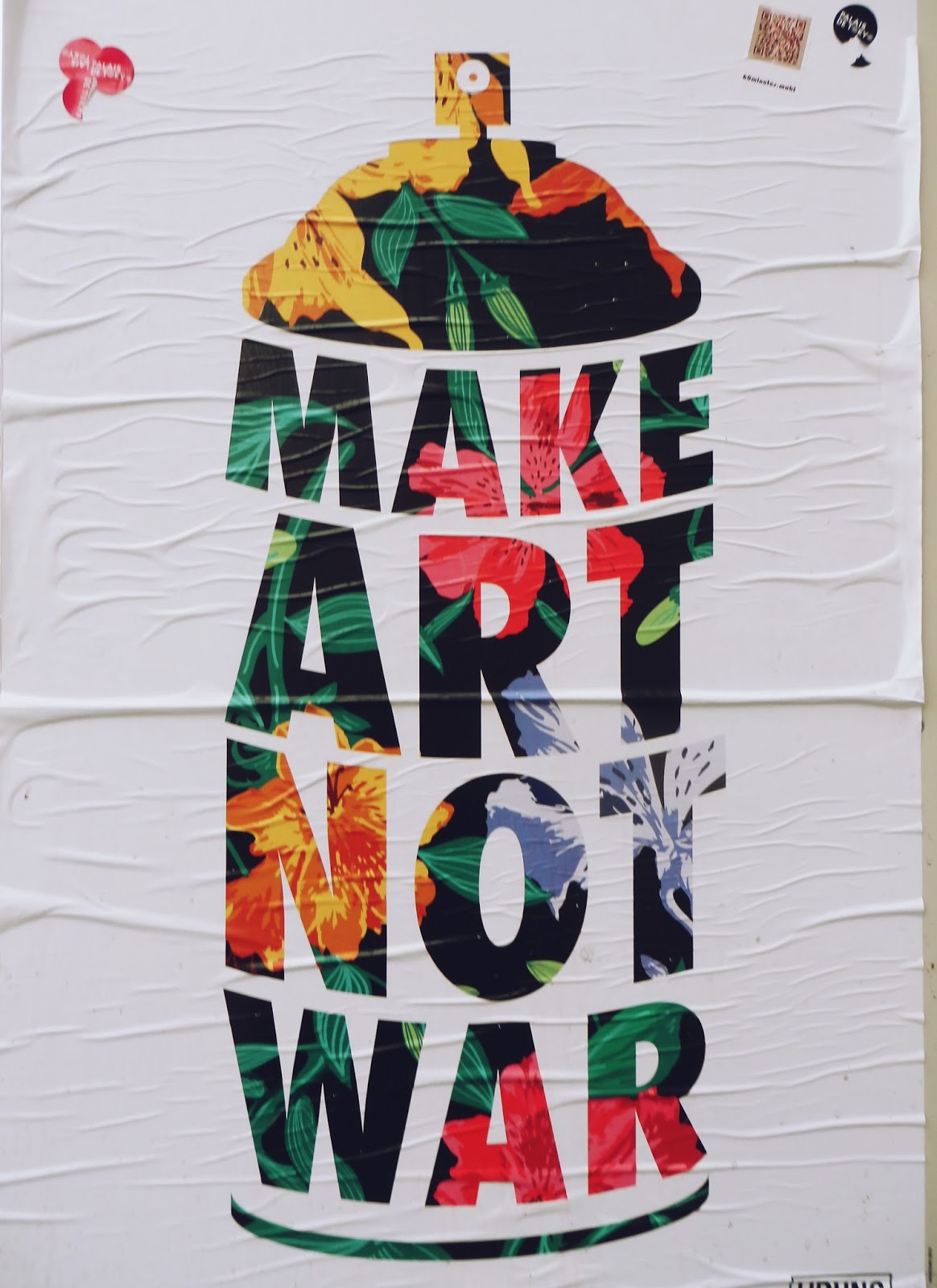
Make Art, not War


Mais um ano, novos desafios, os mesmos problemas na sociedade... Em 2017, assistimos a vários conflitos políticos, raciais, religiosos... Conflitos no Extremo Oriente, perseguições raciais no Myanmar, atentados em vários pontos do globo, ameaças nucleares???  O nível de alerta global ativa o medo nas populações, sendo o mesmo semeado diariamente tanto pelos chamados terroristas, como pelos Media e líderes políticos mundiais, considerando eu, terrorismo a outro nível.

One more year, new challenges, the same problems in society ... In 2017, we witnessed so many political, racial, religious conflicts... Conflicts in the Far East, racial persecution in Myanmar, terrorist attacks in various parts of the world, nuclear threats???? The level of global alert activates fear in populations, being sown daily by both the so-called terrorists, and by the media and world political leaders, which I consider, terrorism at another level.

Child maltreatment (photo by Littlelle, Paris, 2015)
Racial discrimination (photo by Littlelle, Barcelona, 2016)
Domestic violence (photo by Littlelle, Lisbon, 2013)
Danger & Fear (photo by Littlelle, London, 2015)
Media brainwash (photo by Littlelle, Lisbon, 2015)
Contudo, as mensagens positivas de paz são difundidas através de vários canais e meios de expressão, estando entre eles a arte. É neste contexto que alguns artistas urbanos procuram sensibilizar a sociedade para as injustiças, sendo possível encontrarem-se várias mensagens de Peace & Love. E é neste mood que o blog The World painted by Littlelle entra em 2018, com a máxima Make Art Not War!

However, the positive messages of peace are spread through many channels and means of expression, among them art. It’s in this context that some urban artists seek to sensitize society to injustice, being possible to find several messages of Peace & Love. It’s in this mood that the blog The World painted by Littlelle enters in 2018, with the maximum Make Art Not War!

Faire le bien (photo by Littlelle, Paris, 2015)
Freedom (photo by Littlelle, Cascais, 2016)
Love (photo by Littlelle, Hamburg, 2014)
Follow your heart (photo by Littlelle, Lisbon, 2012)
El món neix en cada besada from Juan Fontcuberta, 2014 (photo by Littlelle, Barcelona 2016)
Wake up for love (photo by Littlelle, Lisbon, 2017)
Listen to your heart (photo by Littlelle, Aveiro, 2017)
Fight the dark side (photo by Littlelle, London, 2017)
La stupidité humaine a des limites (photo by Littlelle, Marrakeck, 2014)
Spreading love (photo by Mário Santos, edited by Littlelle, New York, 2016)
Blinding love (photo by Littlelle, Rome, 2017)
All you need is (photo by Littlelle, Strasbourg, 2013)
Union & cooperation between nations (photo by Littlelle, Hamburg, 2014)
Peace around the globe (photo by Littlelle, Barcelona, 2016)
Believe in yourself (photo by Littlelle, Dublin, 2014)
Love is everything (photo by Littlelle, Macao, 2016)
Don't look back in anger (photo by Littlelle, Barcelona, 2016)
Live with the difference (photo by Littlelle, Rome, 2017)
Don't leave your dreams behind (photo by Littlelle, Paris, 2013)
Caring therapy (photo by Littlelle, Rome, 2017)
In 2018 the spirit is Make Love Not War (photo by Littlelle, Lisbon, 2015)

“The sound of a kiss is not so loud as that of a cannon, but its echo lasts a great deal longer” 
Oliver Wendell Holmes

 Inspire yourself...
Publicity in Singapore (photo by Littlelle, 2017)

sábado, 23 de dezembro de 2017

Conscious Christmas


Dizem que viajar é a melhor forma de nos inspirarmos! Aprendemos muito sobre História, Geografia, novas culturas e acabamos assim por combater preconceitos, pois por vezes deparamo-nos com diferentes crenças, valores e realidades. Somos confrontados, não só com as maravilhas de cada país, mas também com as suas dificuldades, e ficamos tocados pela fragilidade e pobreza das populações... Natal é tempo de presentear os nossos, mas também de refletir. Partilho convosco algumas realidades com que me tenho vindo a confrontar...

It is said that traveling is the best way to inspire us! We learn a lot about History, Geography, new cultures and we end up fighting prejudices, since we come across with different beliefs, values and realities. We are confronted not only with the wonders of each country, but also with their difficulties, being touched by the fragility and poverty of the populations ... Christmas is a time to give something to our beloved ones, but also to think over. I share with you some realities with which I have been confronted...

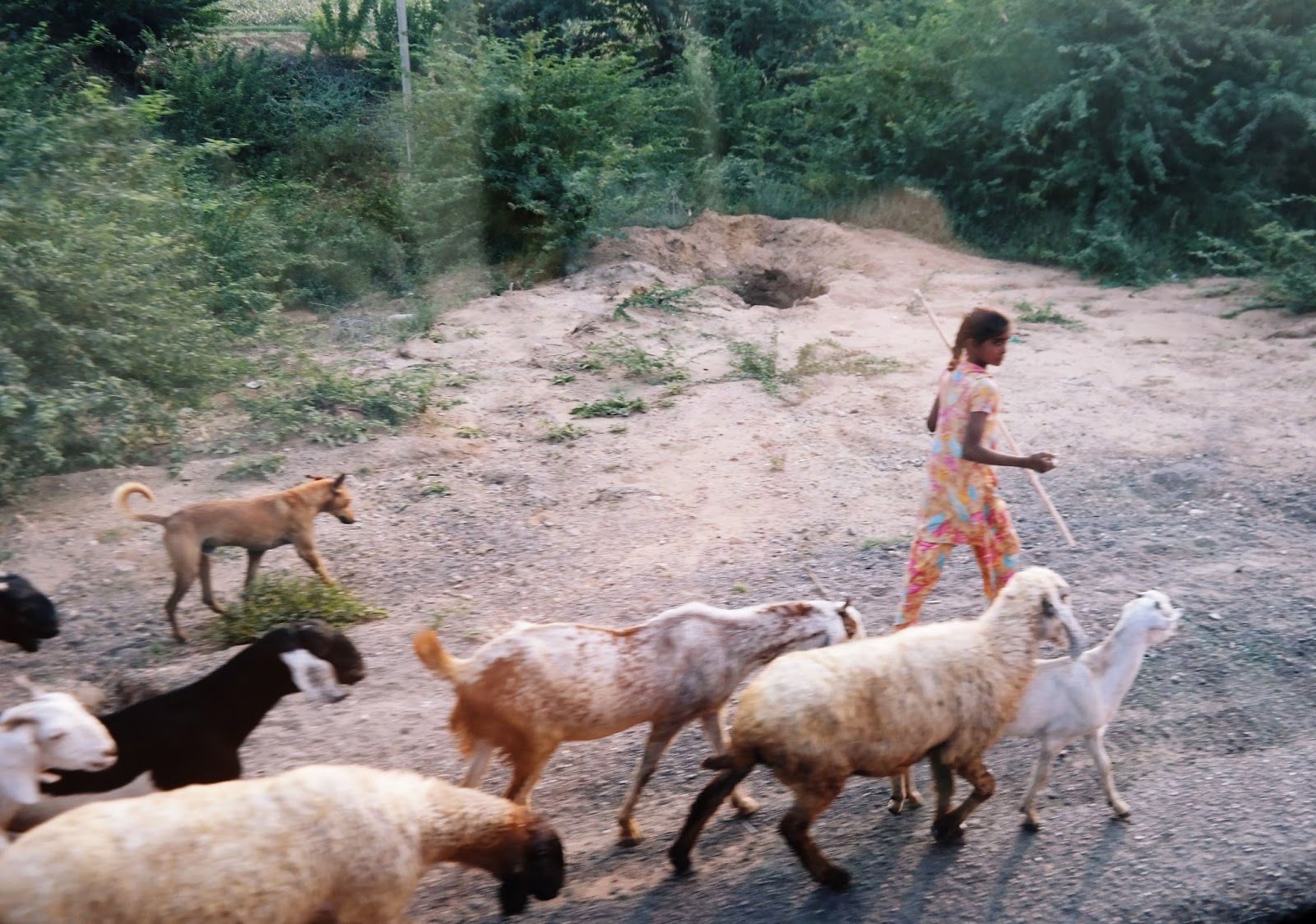
Crianças que não conhecem a realidade da escola. Por exemplo, na Índia apesar de recentemente a escolaridade se tornar obrigatória, vi muitas crianças pelas ruas, nomeadamente nas grandes cidades com um aspeto mal cuidado. Apesar de haver uma grande procura pelas escolas nos centros urbanos, estas são procuradas devido às suas refeições gratuitas.

Children, who don’t know the reality of going to school. For example, in India, although schooling has recently become compulsory, I saw many children on the streets, especially in large cities who give a feeling of being poorly looked after. Although there is a great demand for schools in urban centers, these are sought after due to their free meals.

Child labour (photo by Littlelle)
What's the child role in the family? (photo by Littlelle)
Children going to school in Jodhpur (photo by Littlelle)
A school in Pushkar (photo by Littlelle)
Também na Índia, o saneamento básico ou a falta dele, é gritante. Observas frequentemente pessoas a fazerem as suas necessidades na via pública, a tomar banho ou a lavar a loiça e roupa na rua... 

Also in India, basic sanitation or lack of it, is glaring. You can often observe people doing their needs on the street, taking a shower or washing dishes and clothes...

Poverty in Delhi (photo by Littlelle)
Doing the laundry in Pushkar (photo by Littlelle)
Have a shower (photo by Littlelle)
Do the dishes (photo by Littlelle)
Public toilets in Jaipur (photo by Littlelle)
Em Marrocos, pude observar muitas crianças a brincar pelas ruas. Que bom! Sim, na nossa sociedade hoje em dia, mal se vêem crianças a brincar ao ar livre. Contudo, nas suas brincadeiras, era frequente observar comportamentos agressivos, dava mesmo vontade de interferir e ensinar àquelas crianças que existem outras formas de interagir...

In Morocco, I could see many children playing in the streets. How nice! Yes, in our society today, children are hardly seen playing outside. However, in their games, it was frequent to observe aggressive behaviors, we even wanted to interfere and teach those children that there are other ways of interacting...


Na China, crianças filhas de um condenado à morte, são quase que igualmente sentenciadas a uma vida de descriminação. Abandonadas pelas famílias por serem fruto de vergonha, não são legítimas para adoção (Documentário: “Os filhos da vergonha” https://www.rtp.pt/programa/tv/p33004). Qual será o seu futuro?

In China, sons of those who are condemned to death, are almost equally sentenced to a life of discrimination. Abandoned by families as a result of shame, they are not legitimate for adoption. (Documentary: “Children of Shame” https://www.rtp.pt/programa/tv/p33004). What kind of future will they have?

Every chil need to be cared and loved (photo by Littlelle) 
Não nos podemos esquecer do papel da Mulher em determinados países... Por exemplo, só este ano é que a Mulher conquistou o direito a tirar a carta de condução na Arábia Saudita. Em Marrocos os locais de lazer como cafés, estão repletos de homens. Onde estão as mulheres? Na Índia, ouvi dizer que ter uma filha mulher é quase um fardo...

We can’t forget the role of Women in some countries ... For example, it’s only this year that Women have earned the right to take the driving license in Saudi Arabia. In Morocco, leisure places such as cafes are filled with men. Where are the women? In India, I have heard that having a daughter is almost a burden...


Woman in Tangier (photo by Littlelle)
Woman in Pushkar (photo by Littlelle)
Na República Dominicana, a principal indústria do país é a produção de cana de açúcar… Grande parte dos trabalhadores são emigrantes ilegais provenientes do Haiti, os seus salários são extremamente baixos e baseados na quantidade de cana apanhada, e não no número de horas de trabalho. Quando lá estive ouvi falar em 1 dólar por 1 tonelada de cana?? Escravidão no século XXI? 
No âmbito da exploração laboral, o artista brasileiro Vik Muniz tenta através da arte retratar e sensibilizar para a exploração nas lixeiras do Brasil e para a questão ambiental do excesso de resíduos. A sua obra encontra-se documentada por Lucy Walker, João Jardim e Karen Harley  em "Lixo extraordinário" (2010). Na exposição "Pictures of Garbage" patente no CCB em 2011, uma retrospectiva do trabalho de Vik, entre os vários retratos expostos construídas com resíduos e lixo, encontrei um dedicada aos trabalhadores da cana de açúcar de Punta Cana. 

In the Dominican Republic, the main industry in the country is sugar cane production. Most of the workers are illegal immigrants from Haiti, their wages are extremely low and based on the amount of cane caught, not the number of hours job. When I was there, I heard about 1 dollar for 1 ton of sugarcane ?? Slavery in the 21st Century?
In the context of labor exploitation, the Brazilian artist Vik Muniz tries through art to portray and sensitize the exploration in the rubbish dumps in Brazil and to the environmental issue of excess waste. His work is documented by Lucy Walker, João Jardim and Karen Harley in "Waste Land" (2010). At the exhibition "Pictures of Garbage" displayed at CCB in 2011, a retrospective of Vik's work, among the exposed portraits constructed with waste, I found one dedicated to sugarcane workers in Punta Cana.
. 

Atlas, after Guercino (2007) display at Musac in Léon (photo by Littlelle)
Em Cuba, quem trabalha no sector público ganha 20 CUC por mês (aproximadamente 17€), independentemente da profissão que exerça, seja médico, advogado, professor ou jardineiro. A comida e outros bens são racionados e totalmente controlados nos supermercados estatais. Obter autorização para sair do país é quase impossível! Prisioneiros dentro do próprio país?

In Cuba, those who work in the public sector earn 20 CUC per month (around 17€), no matter what the profession they carry out, they can be a doctor, lawyer, teacher or gardener. Food and other goods are rationed and fully controlled in state supermarkets. Getting permission to leave the country is almost impossible! Prisoners within their country?

Cuban way? (photo by Littlelle)
Nas principais cidades dos países ditos desenvolvidos, como Nova Iorque, Tóquio, Londres ou Paris, somos confrontados com a discrepância entre o luxo e consumismo em massa, com pessoas que vivem nas ruas, abrigando-se às portas das grandes lojas e boutiques de luxo. Não é irónico?

In the major cities of so-called developed countries, such as New York, Tokyo, London or Paris, we are faced with the discrepancy between luxury and mass consumerism, with people living on the streets, sheltering themselves at the doors of large stores and luxury boutiques. Ironic, isn’t it?

A homeless at the Central Park (photo by Littlelle)
Às portas de 2018 existem ainda países onde a escolaridade não é obrigatória, o saneamento básico é um mito, muita pobreza, exploração e sociedades machistas... Onde está o respeito pelos Direitos Humanos? Por tudo isto, nem "Todos os seres humanos nascem livres e iguais em dignidade e em direitos" (art.º 1 Declaração Universal dos Direitos Humanos, 1948). Aquilo que tanto custou a estabelecer a 10 de dezembro de 1948, continua a ser hoje questionável e ameaçado!

We are almost entering in 2018, and there are still countries where schooling is not compulsory, basic sanitation is a myth, a lot of poverty, exploitation and male chauvinist societies... Where is the respect for human rights? For all of this, not all "All human beings are born free and equal in dignity and rights" (article 1 Universal Declaration of Human Rights, 1948). What it cost so much to establish on December 10, 1948, remains today questionable and threatened!

What about poverty? (photo by Littlelle)
What about women's rights and education? (photo by Littlelle)
Neste Natal fica a mensagem de não pensar apenas naqueles que nos são mais próximos, mas nos problemas globais da sociedade. Não fará essa consciência parte da globalidade exigida nos dias de hoje? Não feches os olhos, pequenos gestos podem fazer a diferença…

This Christmas’ message is not only to think about those who are closest to us, but also about the global problems of society. Isn’t this consciousness part of the globality and isn’t it demanded nowadays? Do not close your eyes, small gestures can make a difference...

Let's make the difference (photo by Littlelle)