sábado, 17 de dezembro de 2016

Neuschwanstein Castle, a dream come true


Localizado no topo de um íngreme rochedo, entre montes e vales na Baviera, encontra-se o idílico castelo de Neuschwanstein, que segundo alguns, serviu de inspiração a Walt Disney como cenário para o castelo da Bela Adormecida. Pela quantidade de cisnes na decoração interior, diria que poderia também ter servido de inspiração a Tchaikovsky.  Isto não me espanta, uma vez que o Castelo parece efetivamente saído de um conto de fadas, tendo sido no entanto, motivo para o final trágico do seu proprietário.

Located on the top of a steep rock, between Bavarian hills and valleys, there is the idyllic Neuschwanstein Castle, which according to some people, served as an inspiration to Walt Disney as the setting for the Sleeping Beauty Castle. By the amount of swans within interior decoration, I would dare to say that could also serve as inspiration to Tchaikovsky. This does not surprise me, since the castle seems that came out of a fairy tale, however, that was the actual motive to the tragic end of its owner.


Consegues ver as semelhanças? Can you see the similarities?

Disneyland Castle in Paris (by Littlelle)

Neuschwanstein Castle (by Mário Santos)
O Castelo de Neuschwanstein foi mandado construir pelo Rei Luís II da Baviera (1845-1886), que possuía um castelo nessa zona – Castelo de Hohenschwangau. Amante das artes e devastado pela perda de uma importante batalha no seu reino, o rei decidiu construir o castelo como refúgio e escape da realidade. Inspirado em outros castelos que visitara, lendas da idade média e nas óperas de Wagner, de quem era um fervoroso admirador, foi o próprio Luís II que decorou o castelo. Durante a construção do mesmo, o Rei tinha um binóculo no seu quarto no castelo Hohenschwangau, através do qual, pela janela, via as obras do seu novo castelo.

The Neuschwanstein Castle was built by the King Ludwig II from Bavaria (1845-1886), who had a castle in that zone – the Hohenschwangau Castle. Lover of the arts and devastated by the loss of an important battle, the king decided to build the castle as a refuge and an escape from reality. Inspired in another castles that he visited, legends of the Middle Ages and the operas of Wagner, of whom the King was a fervent admirer, it was the King himself who decorated the castle. During its construction, the King had binoculars on his room at the Hohenschwangau Castle, whereby, through the window, he could see the works of his new castle.

Neuschwanstein Castle seen by Hohenschwangau Castle (photo by Littlelle)

Amante de ciência e arte e com uma visão e estilo de vida incompatíveis com a sua posição e cargo, foi declarado insano e aprisionado, tendo sido encontrado morto juntamente com o médico psiquiatra que o declarou insano, no dia seguinte ao seu internamento.  Seria um génio incompreendido? Talvez... não sei. Para mim, um visionário que deixou um legado que traz milhares de visitantes a Füssen, na Baviera.

Being an art and science lover and with a vision and lifestyle which were incompatible with his position and role, he had been declared insane and imprisoned. On the day after his internment, he was found dead along with the medical psychiatrist who declared him insane. Could he be a misunderstood genius? Maybe, I don’t know. For me, he was a visionary who left a legacy that brings thousands of visitors to Füssen, in Bavaria.

Neuschwanstein Castle by night (photo by Littlelle)
Uma das formas mais cómodas e económicas para ir ao castelo é de comboio. Se fores em grupo (até 5 pessoas), podes adquirir o Bayern Ticket, bilhete diário para grupos que permite utilizar todos os comboios regionais na zona da Baviera. Pagas 23€ por um bilhete e mais 5€ por cada pessoa adicional do grupo. Com este bilhete podes sair e entrar em qualquer transporte público da Baviera, das 9h da manhã até às 3h da manhã. Eu fui visitar o castelo durante uma estadia em Munique. Apanhei o comboio em München Hauptbahnhof (estação central de Munique), em direção a Füssen, localidade próxima ao castelo, que fica a cerca de 2 horas de distância de Munique. Junto à estação existem autocarros públicos (bus nº 73 ou 78) para a zona do castelo, que demoram cerca de 10 minutos a chegar à zona das bilheteiras, restaurantes e lojas de souvenirs.

One of the most comfortable and economical ways to go to the castle is by train. If you are going on a group (until 5 people), you can buy the Bayern Ticket, a daily ticket for groups that allows you to use all the regional trains in Bavaria zone. You pay 23€ for one ticket and 5€ more for each additional person on the group. With this ticket you can get out and get in any public transport in Bavaria, from 9 am to 3 am of the next day.  I visited the castle during my stay in Munich. I took the train at München Hauptbahnhof (Munich central station), in direction to Füssen, near the castle, which is about 2 hours away from Munich. Next to the train station in Füssen there are public buses (nº73 and 78) to the castle, which take about 10 minutes to arrive at the ticket zone, restaurants and souvenirs shops. 

Little village near the Castle (photo by Littlelle)

House at the castle surroundings (photo by Littlelle)

House at the castle surroundings (photo by Littlelle)

Details of a house at the castle surroundings (photo by Littlelle)

House at the castle surroundings (photo by Littlelle)
Uma vez que o castelo se localiza numa montanha, para o alcançar é necessário subir a mesma, caminho esse que se pode fazer de charrete (por vezes existem filas, mas a charrete leva cerca de 12 a 15 pessoas; 6 € por pessoa a subir e 3€ para descer) ou a pé. Via-se muitas pessoas a subir a pé, no entanto, eu aconselho subir de charrete, uma vez que o declive ainda é um pouco acentuado, e descer a pé. Como o velho ditado diz: “Para baixo todos os santos ajudam”.

Once the Castle is on a top of a mountain, to reach it, it is necessary to climb it. The way can be made by carriage (sometimes there are queues, but the carriage takes about 12 to 15 people; € 6 per person to go up and € 3 to go down) or go on foot. It was possible to see many people going on foot, however, I advise doing it by carriage, since the slope is still a bit steep, and return by walking. As the old Portuguese saying says, "Going down all the saints help".

View of the castle from the village (photo by Mário Santos, edited by Littlelle)

Horse car to go to the Castle (photo by Mário Santos, edited by Littllelle)

Way to the Castle by walk (photo by Mário Santos, edited by Littlelle)
É possível visitar o interior dos 2 castelos - Neuschwanstein e Hohenschwangau, e um museu. Eu fui visitar apenas os 2 castelos, o bilhete combinado custa 23€. Cada visita tem uma duração de aproximadamente 30 minutos e é feita obrigatoriamente em grupo guiado ou com áudio-guia, que apresenta várias línguas (incluindo português). Não é permitido tirar fotografias no interior dos castelos. Quando se adquire os bilhetes é-nos automaticamente atribuída uma hora de visita, está tudo muito bem organizado. Os castelos encontram-se abertos diariamente, variando os horários de acordo com a estação do ano.

It’s possible to visit the interior of two castles - Neuschwanstein e Hohenschwangau, and a museum. I only visited the two castles, the combined ticket is 23€. To the Hohenschwangau Castle it is possible to go on foot. Each visit has a duration of approximately 30 minutes and is obligatorily to go in a guided group or audio guide, which has several languages. It’s not allowed to take photos inside the castles. When you get the tickets you are automatically assigned one hour to visit, everything is very well organized. The castles are open daily, varying the schedules according to the season of the year.

Neuschwanstein Castle (photo by Littlelle)
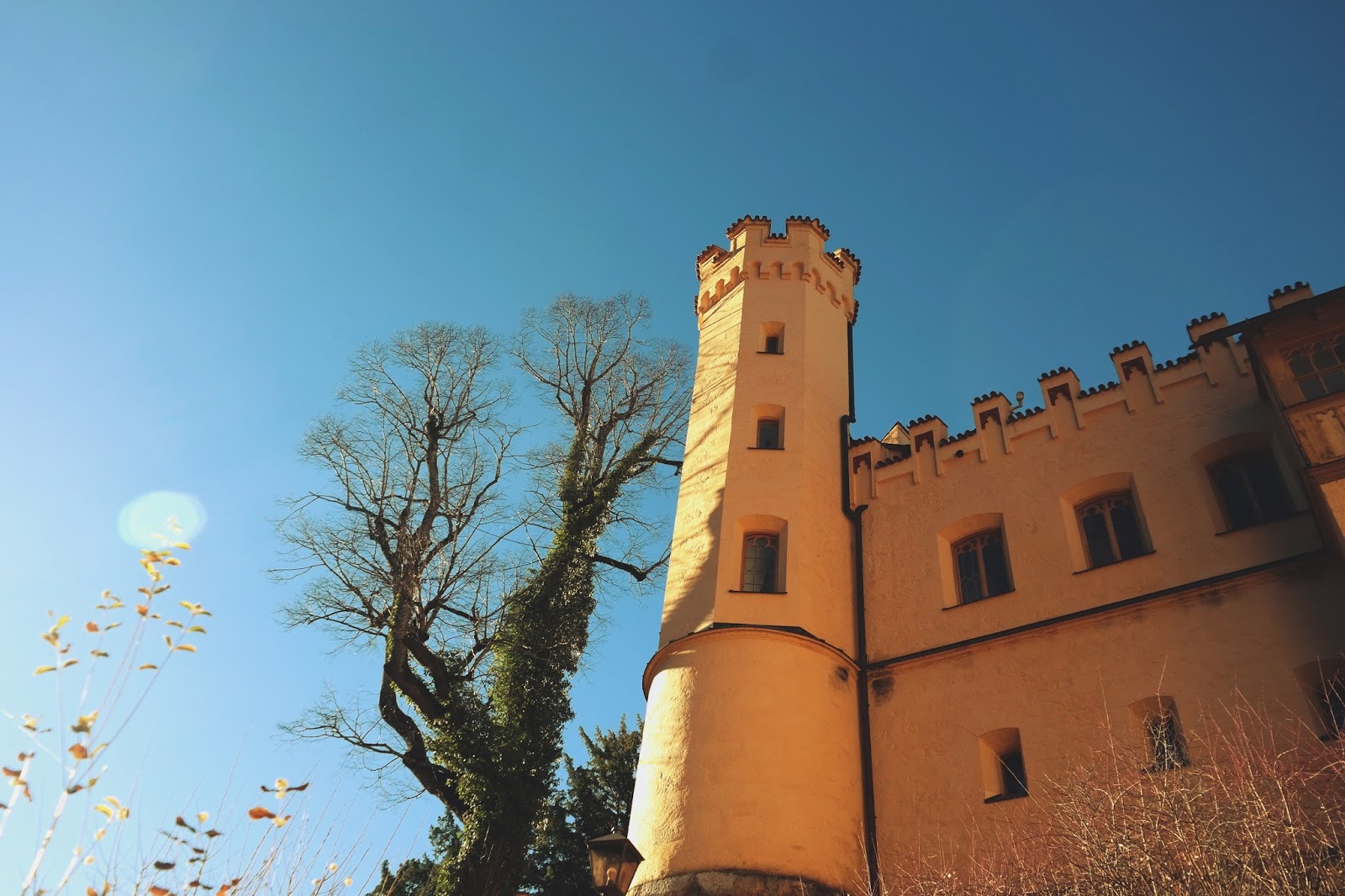
Hohenschwangau Castle (photo by Littlelle)
O Castelo Hohenschwangau, do século XIV, foi mandado reconstruir pelo pai de Luís II, sendo uma das residências de infância de Luís II. Fica no topo de uma colina entre dois lagos com os Alpes como pano de fundo. Para este castelo vai-se a pé.

The Hohenschwangau Castle, from the 14th century, was built by the father of Luwdig II, being one of his childhood residences. It sits on the top of a hill between two lakes with the Alps as the background.

Hohenschwangau Castle (photo by Littlelle)

Detail of Hohenschwangau Castle (photo by Littlelle)

Lake near the castle (photo by Littlelle)
A visita ao interior do Castelo Neuschwanstein é interessante e as extravagâncias não ficam apenas pelo seu exterior. Existe uma sala mourisca, um jardim de inverno e até uma passagem a imitar uma gruta com estalactites e estalagmites. As divisões são ricamente ornamentadas, baseadas em temáticas religiosas e da idade média. O Cisne, enquanto símbolo da pureza, surge em vários ornamentos do palácio. Apesar do aspeto medieval, o castelo foi construído com alta tecnologia para a época, como sistema de aquecimento, água quente, autoclismos, telefones e elevadores.

The visit to the interior of the Neuschwanstein Castle is interesting and the extravagances are not only in its exterior. There is a Moorish room, a winter garden and even a passage to imitate a grotto with stalactites and stalagmites. The divisions are richly ornamented, based on religious themes and the middle ages. The Swan, as a symbol of purity, appears in various ornaments of the palace. Despite the medieval look, the castle was built with high technology for the season, such as heating system, hot water, toilet, telephones and elevators.


Neuschwanstein Castle (photo by Mário Santos, edited by Littllelle)

View from the Neuschwanstein Castle (photo by Mário Santos, edited by Littllelle)

View from the Neuschwanstein Castle (photo by Mário Santos, edited by Littllelle)

O Rei Luís iria ficar orgulhoso da sua obra prima que encanta qualquer pessoa que por lá passe.
King Ludwig would be proud of his masterpiece that enchants anyone who passes by.

Christmas time at Neuschwanstein Castle (photo by Littllelle)


domingo, 11 de dezembro de 2016

NY painted by Littlelle | Day 4 - Museums and Central Park


A manhã foi dedicada à visita do Metropolitan Museum of Art (MET) (Nycity pass; 10h - 17h, à 6ª e sábado aberto até às 21h, http://www.metmuseum.org/). Localizado-se junto ao Central Park e com entrada pela 5ª Avenida, o MET é um dos museus mais importantes do mundo, quer pela quantidade como pela qualidade das obras-primas que expõe. Apresenta uma ampla coleção de arte, que compreende desde as civilizações antigas como Egipto e Grécia, a arte tribal da Oceânia, às obras impressionistas, como Degas ou Monet e arte americana dos séculos XVIII e XIX. O museu é tão grande que até um templo egípcio apresenta no seu interior. Este museu poderia levar semanas a ver, o visitante tem de assumir a difícil tarefa de selecionar os pontos a que quer dar destaque. Tentei dar prioridade à arte americana, uma vez que é de mais difícil acesso na Europa, e claro, não pude deixar de lado as grandes obras de pintores europeus do início do séc. XX, como as bailarinas de Degas e autorretrato de Van Gogh.

In the morning I paid a visit to the Metropolitan Museum of Art (MET) (Nycity pass; 10am – 5pm, on Fridays and on Saturdays it is opened till 9pm, http://www.metmuseum.org/). Located next to the Central park and with the main entrance at the Fifth Avenue, MET is one of the most important museums in the world, both for the quantity and quality of the masterpieces that it exhibits. It features a wide art collection, from the old civilizations such as Egypt and Greece, to the tribal art of Oceania, and to the impressionist masterpieces like Degas or Monet and American art from 18th and 19th centuries. The museum is so huge that even has an Egyptian temple in its interior. This museum could take weeks just to see it, however, I had the hard task of selecting the places I would like to go. I tried to give priority to the American art, once it is more difficult to access it in Europe, and of course I could not leave aside great masterpieces of European painters of the beginning of the 20th century, such as the ballet dancers of Degas and Van Gogh’s self-portrait. 


The Metropolitan Museum of Art (photo by Mário Santos, edited by HRebelo)

Dendur Temple (15 BC) at the Sacker wing (photo by Mário Santos, edited by HRebelo)

General view of the inner courtyard of the MET American wing (photo by Littlelle, edited by HRebelo)

Fantastic surrealiste table by Costa Achillopoulo (1934), behind a paint by Miró and another by Max Ernst (Gala Éluard, 1924) (photo by Littlelle, edited by HRebelo)

Painters are often seen at the museum, recreating the works of the great masters (photo by Littlelle, edited by HRebelo)
Fleur de Lis by Robert Reid (photo by Littlelle, edited by HRebelo)

Madame X by Jonh Singer Sargent (photo by Littlelle, edited by HRebelo)
Degas (photo by Littlelle)

Van Gogh Self portrait (photo by Littlelle)
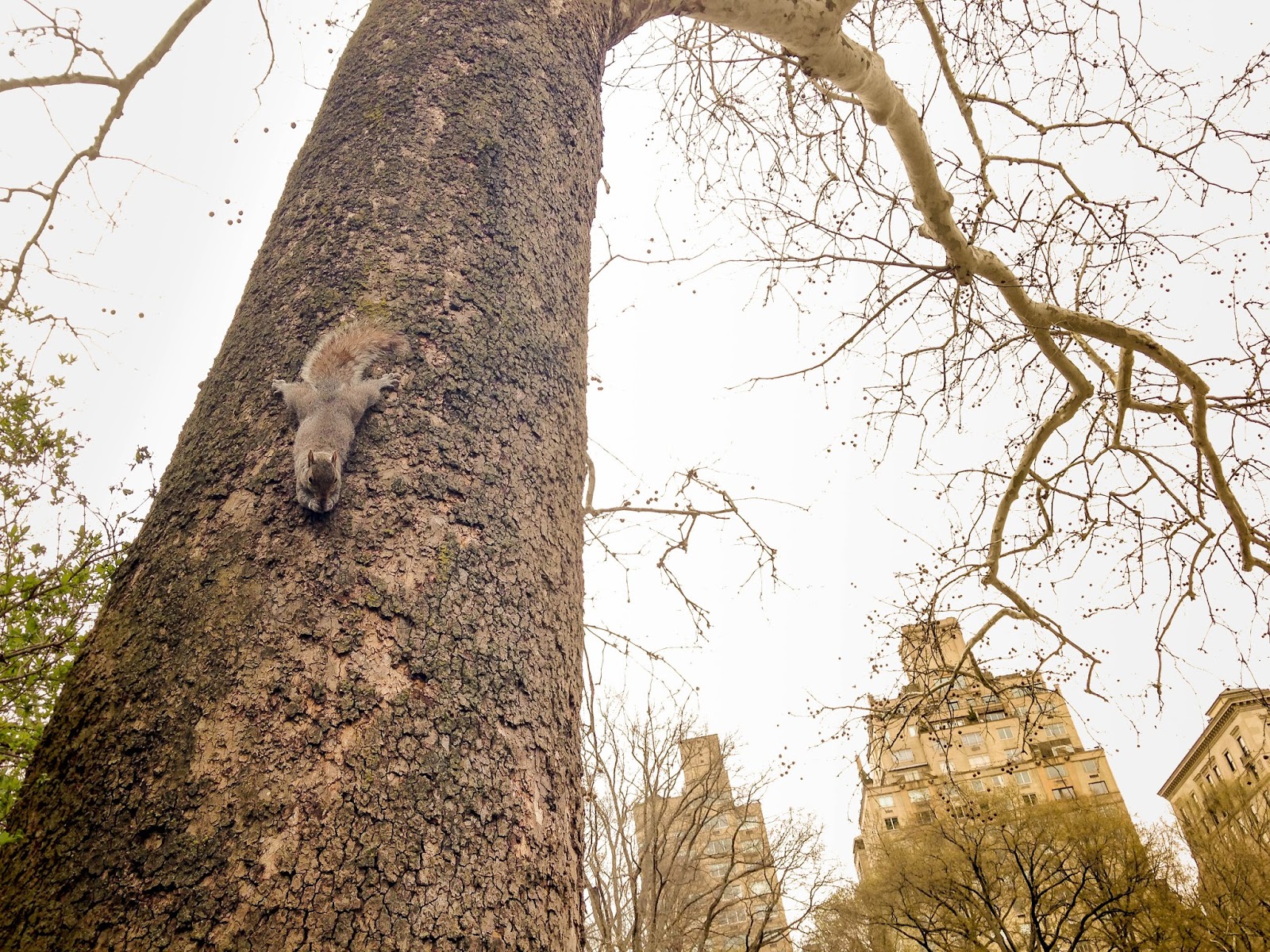
Depois de almoçar no museu com uma bonita vista para o Central Park, é impossível deixar de dar lá um passeio. O Central Park possui cerca de 341 ha, com 26000 árvores, mais de 9000 bancos, 36 pontes, 21 parques desportivos, 7 lagos, 1 castelo e 1 jardim zoológico (supostamente onde vivia o Alex, Marty, Melman e a Gloria do filme Madagáscar). Acho que bate qualquer parque público em números! Um verdadeiro oásis rodeado por arranha-céus! A caminhada pelo parque é bastante agradável, podemos apreciar os habituais passeios dos locais a fazer jogging, a passear os cães, ouvir música de artistas de rua, ou ler o jornal, etc. Eu gostei de toda a envolvência, com destaque para o Castelo Belvedere que se encontra situado no topo de uma rocha natural, apresentando do seu terraço uma bonita vista para o parque e para a cidade. Gostei também da estátua da Alice no País das Maravilhas e a Bethesda Terrace and Fountain. O passeio foi completado com a interacção com a fauna local, nomeadamente os esquilos, que simpaticamente, vinham comer à minha mão.

After having lunch at the museum with a beautiful view to the Central Park, it is impossible not going there for a walk. Central Park has around 341 ha. with 26000 trees, more than 9000 benches, 36 bridges, 21 sport parks, 7 lakes, 1 castle and 1 zoo (supposedly where Alex, Marty, Melman and Gloria, from the movie Madagascar, used to live). I think numbers wise, it beats any public park out there! A true oasis surrounded by skyscrapers! Walking around the park is quite pleasant, to observe the usual walks from the locals, doing some jogging, walking their dogs, listening to music of streets artists or reading the newspaper, etc. I liked all the surroundings especially the Belvedere Castle, located at the top of a natural rock, which presents in its terrace a beautiful view to the park and the city. I also liked the statues of Alice in Wonderland and the Bethesda Terrace and Fountain. The walk was completed by interacting with the local fauna, namely the squirrels, that very nicely, would come to eat in my hand.


Lake at the Central Park (photo by Littelle, edited by HRebelo)
Central Park (photo by Mário Santos, edited by HRebelo)

Walking at Central Park (photo by Littlelle, edited by HRebelo) 

Spring at the Central Park (photo by Littlelle, edited by HRebelo)

Reading the newspaper at Central Park (photo by Littlelle, edited by HRebelo) 

Central Park (photo by Littlelle, edited by HRebelo)
House at the Central Park (photo by Mário Santos, edited by HRebelo)
Belvedere Castle (photo by Mário Santos, edited by HRebelo)

View from the top of the Belvedere Castle (photo by Littlelle, edited by HRebelo)
Alice in Wonderland, sculture by José de Creeft (1959) (photo by Mário Santos, edited by HRebelo)

Romeo and Juliet near the Delacorte Theatre at the Central Park (photo by Mário Santos, edited by HRebelo)
Bethesda Terrace and Fountain (photo by Mário Santos, edited by Littlelle) 
Squirrel (photo by Littelle, edited by HRebelo)

Cute squirrels (photo by Littlelle, edited by HRebelo)

Ao final do dia ainda foi possível visitar com o mesmo bilhete de entrada do MET, o na altura recém inaugurado MET Breuer (entre a Madison Av. e 75st), dedicado à arte moderna e contemporânea. Visitei a exposição temporária Unfinished Thougths left visible (http://www.metmuseum.org/exhibitions/listings/2016/unfinished), que apresenta várias obras inacabadas de pintores conhecidos como Rembrandt, Cézanne, Jackson Pollock, entre outros. Esta exposição temporária esteve patente até ao dia 4 de setembro de 2016.

In the end of the day it is still possible to visit with the same entry ticket of MET, the newly opened MET Breuer (between the Madison Av. and 75st.), which is more dedicated to modern and contemporary art. I visited the temporary exhibition Unfinished Thoughts left visible (http://www.metmuseum.org/exhibitions/listings/2016/unfinished), that presents many unfinished artworks of well-known painters such as Rembrandt, Cézanne, Jackson Pollock, among others. This temporary exhibition was on till 4th September 2016. 

Unfinished work by Picasso (photo by Littlelle, edited by HRebelo)

Unfinished work by Kerry James Marshall (photo by Littlelle, edited by HRebelo)

Visitei ainda a exposição temporária - Fairy Tale Fashion, no Museum at FIT - Fashion Institute of Technology (entrada gratuita; entre a 7ªAv. e 27st), onde se encontravam expostos figurino de alta costura que caracterizavam  os clássicos contos de fadas clássicos - Perfect match (http://www.fitnyc.edu/museum/exhibitions/fairy-tale-fashion.php) para quem gosta de moda e cresceu rodeado pelos filmes da Disney. Na entrada da exposição fui logo surpreendida por uma peça feita pela marca portuguesa Storytaillors!

I also visited the temporary exhibition Fairy Tale Fashion at FIT - Fashion Institute of Technology (free entrance; between 7ªAv. and 27st), where were exposed haute couture costumes that characterized the classic fairytales - A perfect match (http://www.fitnyc.edu/museum/exhibitions/fairy-tale-fashion.php) for those who like fashion and grew up with Disney movies. At the entrance of the exhibition I was surprised by a piece made by the Portuguese brand Storytaillors!

Little Red Riding Hood made by StoryTaillors (photo by Littlelle, edited by HRebelo)

Estes 3 museus vão ser explorados em publicações futuras.
These 3 museums will be explored in future posts. Stay tuned! 


Para conheceres o roteiro de 6 dias vê a publicação New York painted by Littlelle

To know the 6 days guide, see New York painted by Littlelle post.

quinta-feira, 1 de dezembro de 2016

10 Unbelievable things that happen in India, that if someone told me, I wouldn’t believe it!


Quando ouvimos histórias de pessoas que visitaram a Índia, ouvimos imensas peripécias que não lembram a ninguém, por vezes achamos exagerado e até desvalorizamos. Mas efetivamente, quando chegas à Índia tens de colocar de lado o conceito que tens da sociedade ocidental e aos poucos ires-te abrindo a toda uma forma de estar diferente… ora vê…

When we listen to stories from people who visited India, we hear a lot of things that seem nonsense, sometimes we find it exaggerated and even devalue it. But actually, when you arrive in India you have to put aside the concept that you have of western society and step by step open yourself to a different mode of being, check this out…

1. Cows everywhere


Que as vacas são sagradas na Índia, não é novidade para ninguém! São consideradas os veículos dos deuses e daí serem respeitadas, podendo vaguear à vontade pelas ruas das cidades. Mas poderem circular até nas autoestradas, pastar no separador central e até em parques infantis, já não esperava! Algumas encontram-se pintadas e com colares. Algumas pessoas aproveitam as fezes das vacas e apanham-nas com a mão. Sim, sem luvas, nem nada! Aproveitam para fazer, por exemplo, esculturas ou para fazer sabão.

Cows are sacred in India, and that’s no news for anyone! They’re regarded as the vehicle of gods and therefore they are respected, being able to wander through the streets of the cities. But to walk on the highways, graze on the central separator and even at children´s playgrounds, that I wouldn’t expect! Some cows are painted and have necklaces. Some people utilize the cow feces with their hands. Yes, no gloves or anything! They use to make, for example, sculptures or to make soap.

Cow wandering in Jaipur city (photo by Littlelle)

Good parking (photo by Littlelle)

A cow grazing on the highway central separator (photo by Littlelle)

Highly decorated cows (photo by Littlelle)

Something made of cow's fences (photo by Mário Santos, edited by Littlelle)

2. Every kind of animals 


Para além das vacas, outros animais circulam na via pública: cabras, porcos, camelos, cães, galinhas, burros, macacos...

Besides cows, other animals walk on the streets: goats, pigs, camels, dogs, chickens, donkeys, monkeys...


Monkey life in Ranakpur (photo by Littlelle)

Pigs eating in the trash in Fatehpur Sikri (photo by Littlelle) 

Goats grazing in the streets of Jaipur (photo by Littlelle)

Goats wandering in the streets (photo by Littlelle)

What about a Camel ride? (photo by Mário Santos, edited by Littlelle) 

Camel (photo by Mário Santos, edited by Littlelle)

Little donkey (photo by Littlelle) 

3. Two wheeled family vehicle


As motas circulam por todo o lado, sendo um dos principais veículos para andar no meio da loucura que é o trânsito! Para alguns é um veículo familiar, vi motas com 5 pessoas em cima! E sem capacete, claro!

The motorcycles circulate everywhere, being one of the main vehicles to walk in the middle of the madness that is the traffic! For some it is a family vehicle, I saw motorbikes with 5 people on top of it! And no helmet, of course!


3 in 1 (photo by Mário Santos, edited by Littlelle)

4 in 1 (photo by Mário Santos, edited by Littlelle)

5 in 1 (photo by Littlelle)


5 in 1 (photo by Mário Santos, edited by Littlelle)


4. How to carry things?


Para além de transporte familiar, as motas podem também servir de transporte de mercadorias, entre outras coisas, para transportar bilhas de leite ou botijas de gás, sim, várias! Se não tiverem motas, as bicicletas ou outros pequenos veículos de 4 rodas puxados por uma pessoa, podem ser uma alternativa também para carregar de tudo um pouco: caixotes, canos, fruta, tapetes, fardos de palha.

Besides being a familiar vehicle, motorcycles can also serve as a freight transport, among other things, to carry milk bottles or gas cylinders, yes, several! If they don’t have motorcycles, bicycles or other small 4-wheeled vehicles pulled by a person can be an alternative to carry a bit of everything: bins, pipes, fruit, rugs, bales of straw.

A motorcycle carrying milk bottles (photo by Littlelle)

A motorcycle carrying bales of straw (photo by Mário Santos, edited by Littlelle)
Everything you can imagine (photo by Mário Santos, edited by Littlelle)

A bicycle carrying a gas cynlinder (photo by Mário Santos, edited by Littlelle)
A rickshaw carrying something big in Jaipur (photo by Littlelle)
A bicycle full of rugs (photo by Littlelle)

Things and more things (photo by Littlelle)

An auto rickshaw completely full in the streets of Jaipur (photo by Littlelle)
Carry pipes over the head in the middle of the road (photo by Littlelle)

Everything is possible (photo by Littlelle)
In the middle of the traffic in Mumbai (photo by Littlelle)

Every kind of transportation is good! (photo by Littlelle)

When you think that you have seen everything (photo by Littlelle)

5. Chaotic traffic


Com todas estes animais e diferentes meios de transporte, o trânsito nas cidades só poderia ter uma descrição: é o caos! Ouve-se constantemente buzinadelas a toda a hora, ou melhor, a todo o segundo, e não… não estou a exagerar! Para além da poluição atmosférica, a poluição sonora é imensa.

With all these animals and different kind of means of transport, the traffic in the cities could only have one description: it’s the chaos! We are always hearing a constant beeping, or rather every second, and no, I am not exaggerating! Besides the air pollution, the noise pollution is immense.

Traffic in Agra (photo by Littlelle)


6. Highway - Where there is no rule


Para além disso, a desordem estende-se às autoestradas. Que tal como por cá são vias com portagem pagas e um separador central, mas onde a regra não impera. Para além de vacas, existem pessoas a caminhar na autoestrada, motas e bicicletas. Existem passadeiras a cruzar as autoestradas e é possível fazer inversão de marcha, circulando os veículos em contra mão!

Besides all that, the disorder extends to the highways. Indian highways are much alike ours, they are paid roads with a central separator, but where there are no rules. Besides cows, there are people walking on the highway, motorcycles and bicycles. There are crosswalks crossing the highways and it is possible to drive in reverse gear, so the vehicles circulate on the opposite way.

On the Highway (photo by Littlelle)

7. Overcrowed transportations


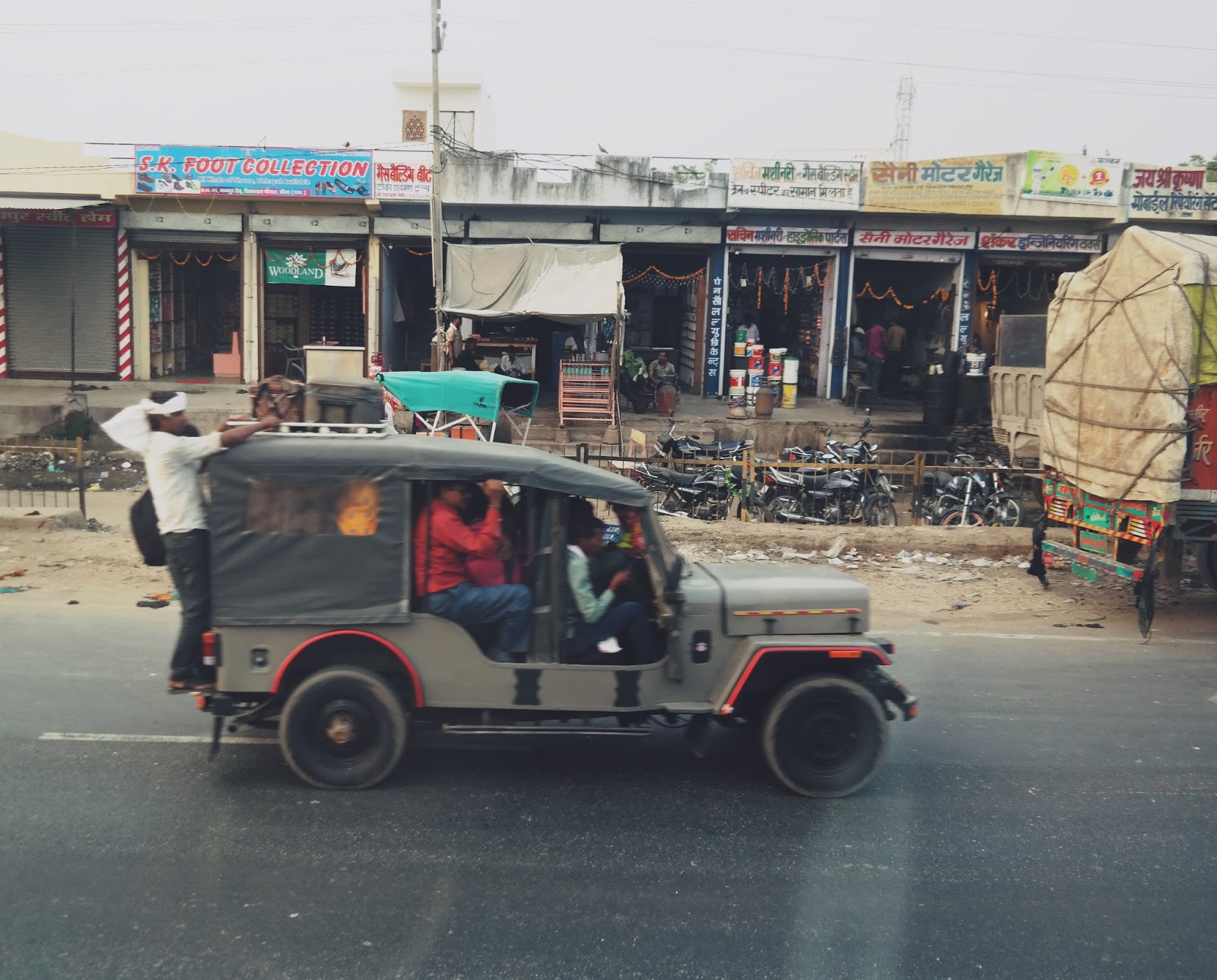
Os transportes públicos andam a abarrotar pelas costuras! Os comboios circulam de portas abertas com pessoas até às portas e os autocarros levam pessoas nos tejadilhos. Até mesmo quando circulam nas autoestradas!

The public transportation is too crowded! Trains run with open doors full of people and buses carry people on their roofs. Even when they drive on the highways!

A van (photo by Littlelle)

A bus with people on his roof (photo by Littlelle)

A bus totally over crowded (photo by Littlelle)

How many people do you can see? This is on the highway! (photo by Mariana Valente, edited by Littlelle)

Train in Mumbai (photo by Littlelle)

8. Daily life in the streets


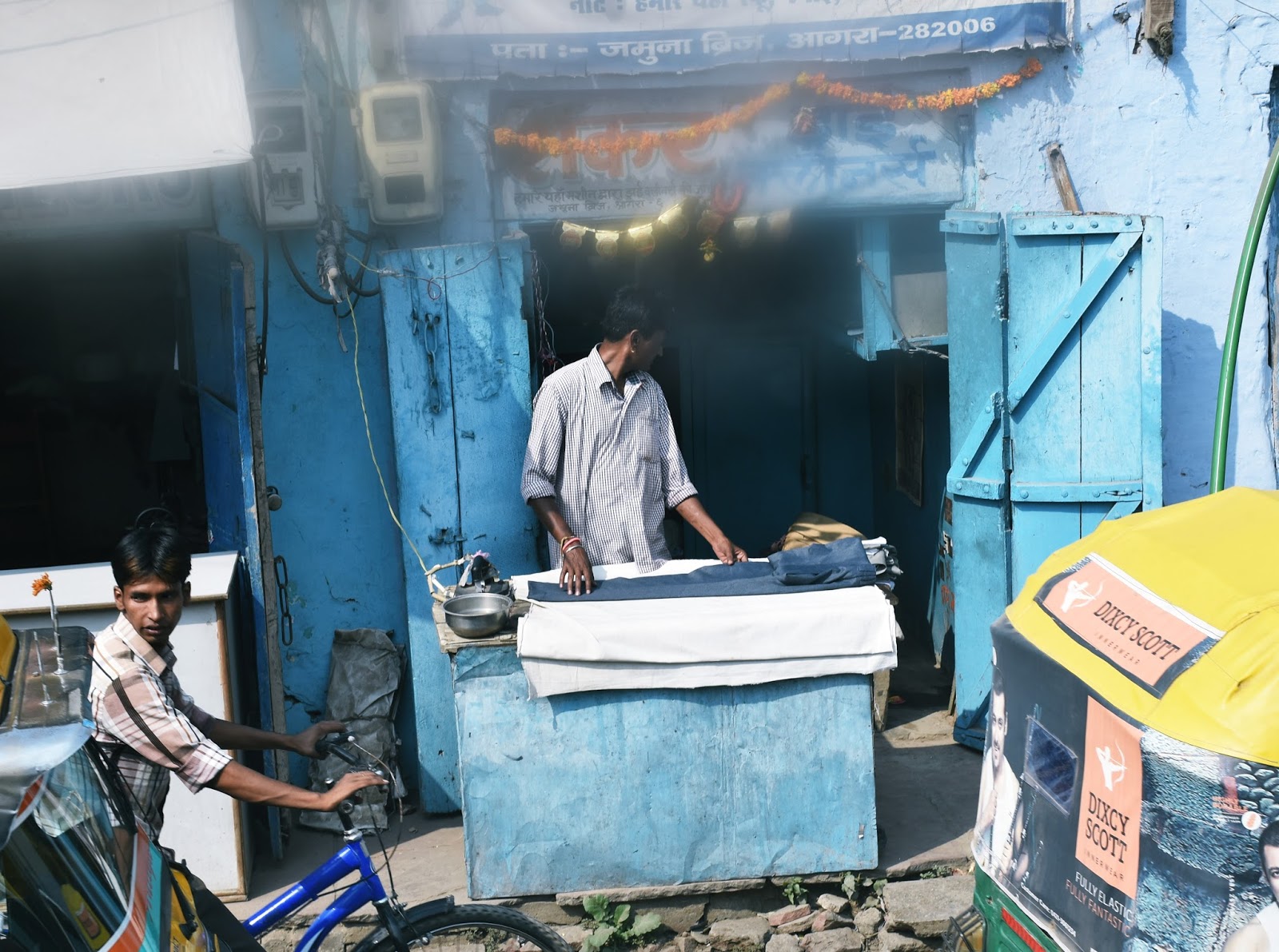
As ruas das cidades são a casa de todos! As pequenas coisas do quotidiano doméstico são feitas ao ar livre, em plena via pública. Ora, é possível observar pessoas a: lavar a roupa no chão, estender a roupa em vedações ou muros na cidade, lavar os dentes, fazer a barba, vender leite em sacos de plásticos... Para além disso há quem faça também as suas necessidades na rua à vista de qualquer um que passa.

Cities’ streets are everybody’s home! The small domestic daily tasks are done outdoors, in the middle of the public thoroughfare. So, you can see people washing their clothes on the floor, spreading their clothes on fences or walls of the city, brushing their teeth, shave and selling milk in plastic bags... Besides some people use the street as their toilet in the sight of anyone who passes by.


Having shower (photo by Littlelle)

Washing clothes (photo by Mário Santos, edited by Littlelle)

Ironing clothes (photo by Mário Santos, edited by Littlelle)

Shaving (photo by Littlelle)

Watching the time goes by (photo by Littlelle)

Washing the dishes (photo by Littlelle)

Public WC in Jaipur (photo by Littlelle)

And... (photo by Littlelle)

9. A naked guy walking down the street, pretty normal!

Um homem a andar completamente nu na cidade (em Agra) apenas com um leque de penas na mão. Percebi mais tarde que deveria pertencer a um grupo religioso extremista da religião Jainista, uma das religiões mais antigas da Índia, que seguem totalmente uma doutrina de não-violência. Não consomem nada de origem animal nem tubérculos. Interessante!

A man walking totally naked on the street (in Agra) only with a feather fan on his hand. I realized later that he should belong to an extremist religious group of the Jain religion, one of India's oldest religions, wholly following a doctrine of non-violence. They consume neither animal origin products nor tubers. Interesting!

10. Open air laundry


Em Mumbai existe uma lavandaria a céu aberto, a maior do mundo, com quase 100 anos de existência, que ocupa um espaço de 1 km! Dhobi Ghat Laundry, como é conhecida, é gerida por uma comunidade local que se dedica a lavar as roupas dos hotéis e hospitais.
In Mumbai, there’s an open air laundry, the biggest of the world, almost 100 years old, with an area of nearly 1 km! Dhobu Ghat Laundry, as is known, is managed by a local community that dedicates itself to wash the hotels and hospital clothing.


O que nos é primeiramente estranho e até mesmo chocante, passado uns dias entranha-se e este modo indiano de viver preenche a viagem à Índia, que tem uma cultura riquíssima para explorar!

What is firstly strange and even shocking to us, after a couple of days you get used to it and this Indian way of life will fill your trip to India, which has a very rich culture to explore!