sábado, 25 de fevereiro de 2017

Dali’s surreal world at his Theatre-Museum in Figueres


“O palhaço não sou eu, mas sim esta sociedade monstruosamente cínica e tão ingenuamente inconsciente que joga ao jogo da seriedade para melhor esconder a loucura.” Salvador Dali

“It is not me who is the clown, but this monstrously cynical and so unconsciously naive society, which plays the game of seriousness in order better to hide its madness.” Salvador Dali

Será? Salvador Dali é indiscutivelmente uma figura excêntrica e extravagante, com uma visão que pode ser considerada bizarra ou em contrapartida simplesmente genial! Para mim é uma figura que pessoalmente admiro por ter o poder de transportar a magia dos sonhos para o mundo real através das suas magníficas pinturas. E também pelo seu estilo de vida, que parecia não ter tabus ou preconceitos, como por exemplo quando passeava o seu animal de estimação, um papa formigas pelas ruas de Paris em 1969, como se tratasse de um cão. Se calhar Dali tinha alguma razão na sua apreciação sobre a sociedade “que joga ao jogo da seriedade para esconder a loucura”. Talvez seja por isso que muitas pessoas gostam de ter um dia por ano para poderem se mascarar e brincarem, pois no Carnaval ninguém (goza ou) leva a mal! Bem, eu concordo de certa forma com Dali, para quê colocar a máscara apenas um dia por ano, se podemos transformar a nossa loucura em arte sempre que quisermos?

Really? Salvador Dali is undoubtedly an eccentric and extravagant figure, with a vision that can be considered bizarre or in contrast simply genius! For me it is a figure that I personally admire for having the power to carry the magic of dreams into the real world through his amazing paintings. And also by his lifestyle, that seemed not having taboos or prejudices, for example when walking his pet, an anteater in the streets of Paris in 1969, as if it was a dog. Perhaps Dali had some reason in his appreciation of society that is “which plays the game of seriousness in order better to hide its madness.”. Maybe it’s the reason why, many people like the idea of having one day a year to be able to mask and play, because in Carnival no one (make fun of) or takes it as offensive! Well, I agree in some way with Dali, why put on the mask only one day a year, if we can turn our madness into art whenever we want?


Dali's painting in Dali Theatre Museum (photo by Littlelle)

Realidade, sonho ou loucura, deixo-vos para este Carnaval o mundo surreal de Dali, espelhado no seu museu-teatro em Figueres, o maior objecto surrealista do mundo!

Reality, dream or craziness, this Carnival I leave you with the surreal world of Dali, mirrored at his Theatre-Museum in Figueres, the biggest surreal object of the world!


Theatre Museum in Figueres (photo by Littlelle)
Salvador Dali, nasceu no dia 11 de maio de 1904 em Figueres, uma pequena cidade na Catalunha. Tendo sido precisamente na sua cidade natal que deixou um dos seus maiores legados, o seu teatro-museu. Teatro esse onde realizou em 1919 a sua primeira exposição pública.

Salvador Dali was born on May 11, 1904 in Figueres, a small town in Catalonia. It was precisely in his hometown that he left one of his greatest legacies, his theater-museum. This theater hosted his first public exhibition in 1919.


Theatre Museum Dali (photo by Littlelle)
O facto do museu ter sido desenhado e concebido pelo próprio Dali, a partir do que restava do antigo teatro municipal, transporta-nos automaticamente para o seu mundo surreal. É uma experiência que vale a pena para quem gosta ou não da obra inigualável deste artista, genial a todos os níveis.

The fact that the museum was designed by Dali himself, from what was left of the old municipal theatre, automatically transports us to his surreal world. It’s a priceless experience for those who like or not this artist's unequalled work, genius at all levels.


Central hall of Theatre Museum (photo by Littlelle)
Main Hall (photo by Littlelle)
Sculpture at the main entrance (photo by Littlelle)


Eggs everywhere (photo by Littlelle)

O museu apresenta cerca de 1500 obras entre elas, pinturas, esculturas, desenhos, fotografias, mobiliários, objetos... Sendo a própria arquitetura e disposição do museu, uma das obras que por si só justifica a deslocação a Figueres. Mais recentemente, abriu também num edifício adjacente, a exposição de jóias desenhadas por Dali, que pode ser visitada com o mesmo bilhete do museu. Esta exposição ficará para uma próxima publicação.

The museum features around 1500 artworks among them, paintings, sculptures, drawings, photos, furniture, objects... Being the architecture and layout of the museum, one of the works that justifies the trip itself to Figueres. More recently, it has also opened in an adjoining building, the exhibition of jewels designed by Dali, which can be visited with the same ticket of the museum. This exhibition will be for an upcoming post.


Leda atómica (1949) by Salvador Dali (photo by Littlelle)

Dali's sculpture (photo by Littlelle)

What do you see? It's all an illusion (photo by Littlelle)

Ceiling painting (photo by Littlelle)

Room furniture (photo by Littlelle)

Dali's portraits (photo by Littlelle)


Interior design (photo by Littlelle)

Simply surprising! (photo by Littlelle)

Jewels designed by Dali (photo by Littlelle)
As obras expostas percorrem várias das suas fases artísticas, bem como a sua paixão por Gala, a sua musa inspiradora. No museu, encontra-se também a cripta, onde Dali se encontra sepultado.

The works exhibited cover several of his artistic phases, as well as his passion for Gala, his inspirational muse. In the museum, there is also the crypt, where Dali is buried.


Dali painting Gala, his eternal love (photo by Littlelle)

Dali headstone (photo by Littlelle)

Como chegar? How to get there?

La Rambla in Figueres (photo by Littlelle)


Eu fui a Figueres durante umas férias em Barcelona, que fica a cerca de 150 km de distância. Em Barcelona, podes apanhar um comboio direto para Figueres na estação Barcelona Sants. Tens comboios mais rápidos (cerca de 1h) ou regionais (cerca de 2 horas), que ficam mais baratos (12€ cada viagem). Da estação de comboio de Figueres até ao museu são cerca de 10 minutos a pé. O percurso está devidamente assinalado. Pelo caminho podes passar pela casa onde o pintor nasceu (nº20 do carrer Monturiol) e outros marcos alusivos a Salvador Dali, como o Museu do Brinquedo da Catalunha, onde é possivel encontrar brinquedos e fotografias de infância do pintor.

I went to Figueres during a vacation in Barcelona, which is about 150 km way. In Barcelona, you can catch a direct train to Figueres at Sants Station. You have faster trains (about 1h) or regional trains (about 2hours), which are cheaper (12€ each trip). From the Figueres train station to the museum are about 10 minutes walking. The course is properly marked. Along the way you can pass by the house where the painter was born (Carrer Monturiol, nº20) and other landmarks alluding to Salvador Dali, as the Toy Museum of Catalonia, where it is possible to find toys and childhood photographs of the painter.

Casa de Puig, house where Dali was born (photo by Littlelle)

Dali reflection monument (photo by Littlelle) 

Dali's childhood photos in Toy Museum of Catalonia (photo by Littlelle)

Informações úteis | Useful information

O bilhete do Museu-Teatro dá 50% de desconto na entrada no Museu do Brinquedo e possibilita a entrada gratuita no Museu De L'Empordà (museu local de arte), onde existe uma pintura da autoria de Dali.

The ticket of Theatre-Museum gives 50% of discount on Toy Museum entrance and free entrance in the Museu De L'Empordà, a local art museum, where there’s one painting of Dali.


Museu de l'Empordà (photo by Littlelle)

Sant Narcís (1962) artwork by Salvador Dali at Museu de l'Empordà (photo by Littlelle)

Borrasca (1978) by Àngel Planells Cruañas at Museu de l'Empordà (photo by Littlelle)

Don Osito Marquina, toy of Dali, his sister and his friend Federico Garcia Lorca at Toy Museum of Catalonia (photo by Littlelle)

Localização|Adress: Plaça Gala i Salvador Dalí, 5, 17600 Figueres, Girona, Spain
Horário| Open time: Das10h30 às 18h, fechado às 2ªs feiras/ From 10:30am to 6pm, closed on Mondays
Preço| Price: 14€ (the jewels are included in the ticket price)

“O mundo pode ter um propósito ou não, mas não é totalmente desprovido de um tipo de magia” Salvador Dali

"The world can have a purpose or not, but it is not totally devoid of a kind of magic" Salvador Dali

Dali's face at his Theatre-Museum (photo by Littlelle)


domingo, 19 de fevereiro de 2017

Japan, a 10-day guide tour


O Japão é um arquipélago situado no Pacífico ao largo da costa leste do continente asiático. O seu território apresenta uma superfície montanhosa composta por vulcões, vários em atividade, o que dá lugar a frequentes terramotos nesta zona, mais de 1000 por ano. À parte disso, tanto a paisagem, com os vales, lagos e floresta (70% do território), como a herança cultural são deslumbrantes. Sendo um país que desperta a curiosidade a muitas pessoas para viajar e para alguns mesmo para viver.

Japan is an archipelago located in the Pacific Ocean on the East coast of Asia. Its territory presents a mountainous surface composed by volcanoes, several in activity, which gives rise to frequent earthquakes in this zone, more than 1000 a year. Besides that, both the landscape, with lakes, valleys and forest (70% of the country), and the cultural heritage are stunning. It’s a country that arouses the curiosity of many people to travel and to some even to live.

Melhor altura para viajar | The best time to travel

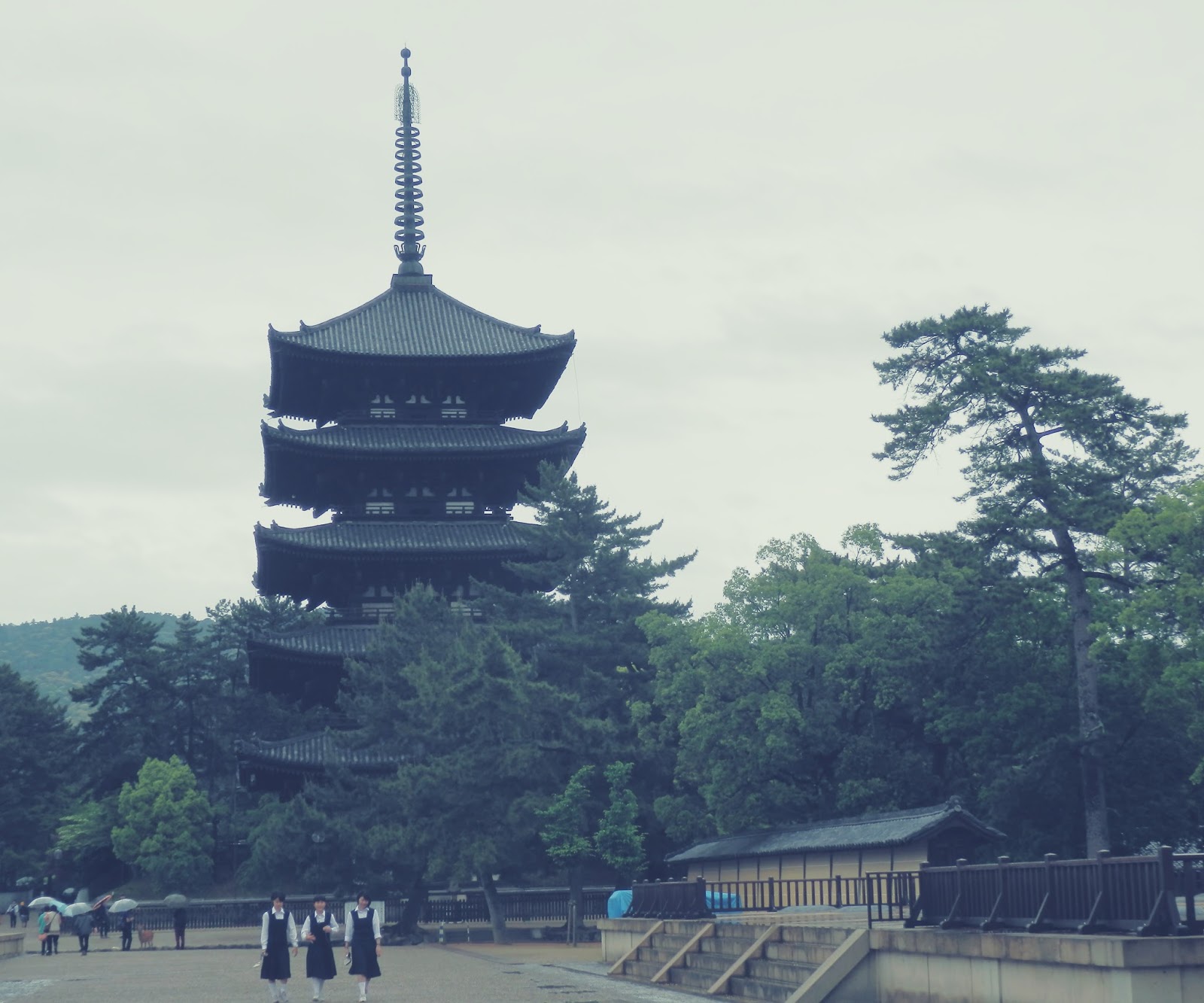
Place of worship in Kyoto (photo by Littlelle)


Não existe a melhor altura, o Japão é sempre um país fotogénico e uma boa opção para conhecer em qualquer altura do ano. A escolha vai depender das prioridades de cada um.
Na primavera, se tiveres sorte podes conseguir apanhar o tempo das cerejeiras em flor que dão um toque ainda mais belo a este país. Na altura da Sakura (florir das cerejeiras em japonês) os parques e jardins enchem-se de pessoas que vão contemplar a beleza das suas flores (Hanami, costume tradicional japonês). Eu viajei no início de maio e já não tive essa sorte, nesse ano as cerejeiras começaram a florir em meados de março. Se quiseres ver este festival natural que geralmente ocorre entre março e maio, com duração de apenas duas semanas, podes planear a tua viagem de acordo com as previsões da Agência Meteorológica do Japão.
Se a tua prioridade é observar o Monte Fuji, a melhor altura do ano para viajar será o Inverno que beneficia de condições meteorológicas favoráveis à visibilidade do mesmo. No Outono, o Japão fica pintado de vermelho-dourado, sendo a altura das colheitas, realizando-se por isso vários festivais e encontros desportivos e culturais. Cabe-te a ti escolher!

There’s no best time! Japan is always a photogenic country and a good option to get to know it any time of the year. Your choice will depend on your priorities.
In spring, if you have luck you can catch the cherry blossom, which give an even more beautiful touch to Japan. In Sakura time (cherry blossom in Japanese) parks and gardens are empty of people who go contemplate the beauty of flowers (Hanami, traditional Japanese habit). I traveled in early May and I was not so lucky, that year the cherry blossom began to flower in mid-March. If you want to see this natural festival that usually takes place between March and May, lasting only two weeks, you can plan your trip according to the forecasts of the Japanese Meteorological Agency.
If your priority is to watch the Mount Fuji, the best time of the year to travel is in winter which benefits from weather conditions favorable to the visibility of the same. In autumn, Japan is painted golden-red, being the crops time, thus happening several festivals and sporting and cultural meetings. So it’s up to you!


Percurso e duração da viagem| Journey and duration of the trip

We love nippon (photo by Littlelle)


Eu realizei a minha viagem no início de maio durante cerca de 10 dias (8 dias de passeio e 2 dias para chegar e regressar do outro lado do mundo). Durante esta semana consegui ir a 7 localidades e conhecer inúmeros templos e outros ícones e costumes da cultura japonesa. O percurso que fiz foi o seguinte...

I traveled in the beginning of May during 10 days (8 days for the trip and 2 days to go and come back from the other side of the world). During this week I went to 7 places and got to know so many temples and other Japanese icons and traditions. The journey I took was the following...

Osaka
Uma cidade industrial | An industrial city
Osaka seen by the Umeda Sky Building (photo by Littlelle)

Nara
Primeira capital do império japonês, situada a 32 Km a leste de Osaka, onde se encontra o maior Buda de bronze do mundo. 
The first capital of the Japanese empire, located 32Km east of Osaka, where is the largest bronze Buddha in the world.
Nara (photo by Littlelle)

Kyoto
Centro histórico e cultural do Japão, onde é possível visitar inúmeros templos e santuários.
Historic and cultural center of Japan, where is possible to visit several temples and shrines.
Kiyomizu temple in Kyoto (photo by Littlelle)

Hakone
Parque natural no meio das montanhas e vulcão.
Natural park in the middle of the mountains and volcano.
Ashi lake in Hakone (photo by Littlelle)

Kamakura
Cidade junto ao oceano pacífico com 65 templos e 19 santuários. 
City next to the Pacific Ocean with 65 temples and 19 shrines.
Tsurugaoka Hachiman-gu in Kamakura (photo by Littlelle)

Nikko
Combinação harmoniosa entre a natureza e religião.
The perfect match between nature and religion.
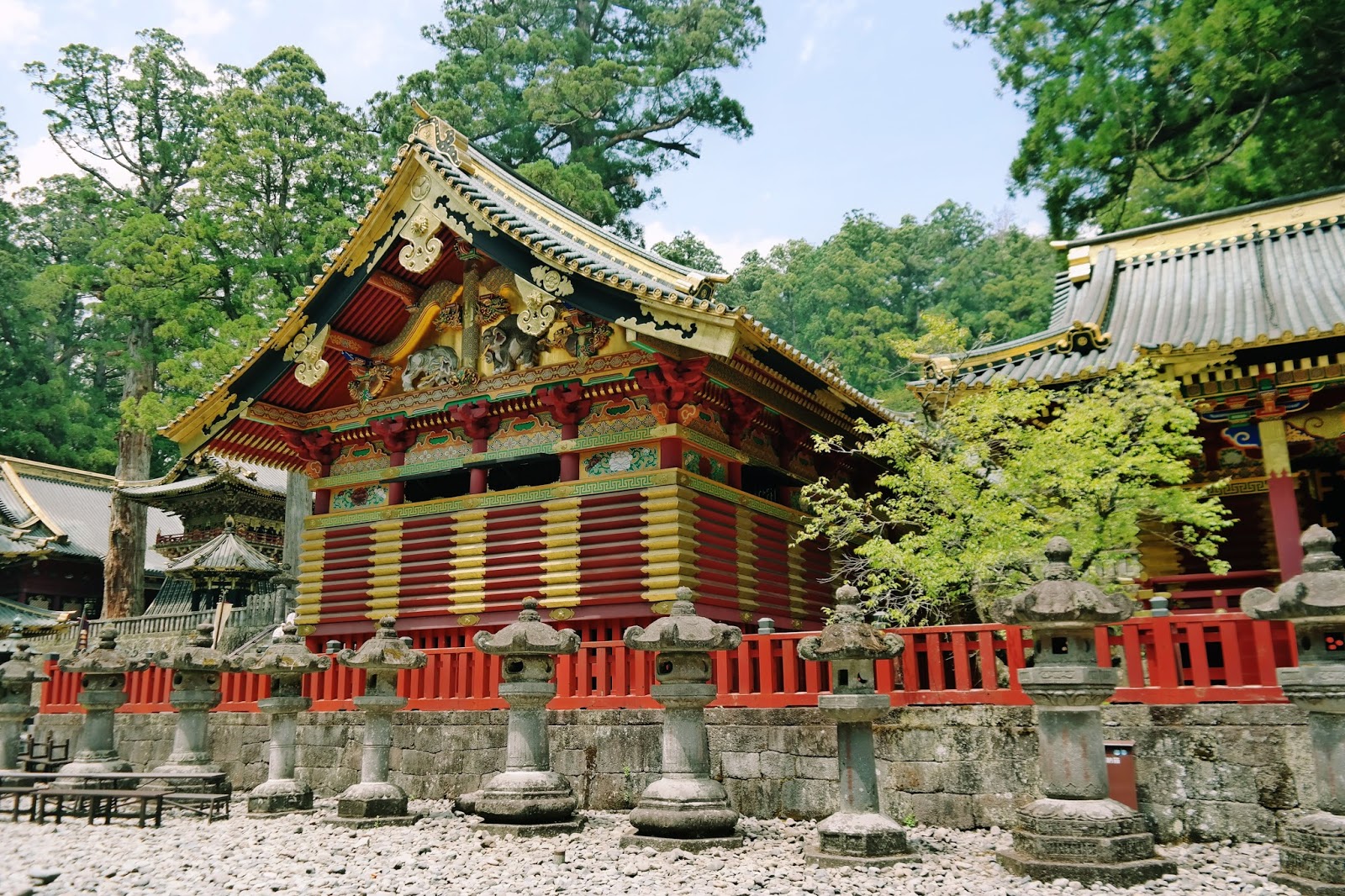
Toshogu shrine in Nikko (photo by Littlelle)

Tokyo
A capital envolta em alta tecnologia nipónica.
The capital surrounded by Japanese high-tech.
Shinjuku by night (photo by Littlelle)
Ficava mais tempo em Tóquio. É uma enorme metrópole que se perde de vista! Merece uma especial atenção... Espero um dia poder regressar J Cada cidade será explorada mais pormenorizadamente em futuras publicações. 

I would stay more time in Tokyo. It’s a huge metropolis that you lose the sight of! Deserves a special attention... I hope one day I will be able to return J Each place will be explored in detail in future posts.

Tokyo (photo by Littlelle)

Como ir | How to go

Time in the world (photo by Littlelle)


Como o tempo de voo é bastante longo, conta com pelo menos dois dias de viagem (ida e regresso). Deixo a minha sugestão.
  • Ida: Voo a partir de Lisboa (14h25) pela Emirates com escala no Dubai (cerca de 5 horas de voo). No Dubai, voo Emirates com destino a Osaka (tempo de voo de aproximadamente 9h, chegada prevista as 17h10 do dia seguinte).
  • Regresso: Voo a partir do Aeroporto Narita em Tóquio (21h20) pela Emirates  com destino ao Dubai (cerca de 11 horas de voo). No Dubai voo Emitares com destino a Lisboa (cerca de 6 horas com chegada prevista ao 12h45 do dia seguinte).

As the duration of the flight is quite long, it’s better to count at least with two days of travel (go and return). I leave you with my suggestion.
  • To go: Flight by Emirates from Lisbon (2.25 p.m.) with stopover in Dubai (around a 5 hour flight). In Dubai, flight by Emirates to Osaka (around a 9 hours flight duration, arrival time at 5.10 p.m of the next day).
  • Return: Flight from Narita International Airport in Tokyo (9.20 p.m.) by Emirates to Dubai (around 11 hours of duration). In Dubai, Emirates flight to Lisbon (around 6 hours of fight, expected arrival time at 12.45 p.m. of the next day).

Onde ficar | Where to stay

Kyoto city map (photo by Littlelle)


Deixo algumas sugestões, tendo em conta a qualidade e localização dos hotéis no centro das cidades. São apenas sugestões, de certeza que haverão outras opções que serão igualmente boas!

I leave you with some suggestions, considering the good quality and location of those hotels in the city center. Once they’re only suggestions, there will be for sure a lot of good other options!

  • Hotel Cross Osaka (próximo de Dotonbori, zona com muitos restaurantes e luzes neon/closed to Dotonbori, area with many restaurants and neon lights)
  • Hotel Monterey (Quioto)
  • Hotel Hakone Palace
  • Hotel Keio Plaza (Shinjuku, um dos 23 bairros de Tóquio, considerado o centro comercial e administrativo da cidade/Shinjuku, one of the 23 districs of Tokyo, considered as the commercial and administrative area of the city)

Deslocações | Journeys

Traffic in Kyoto (photo by Littlelle)


No Japão existe uma boa rede de transportes, quer urbanos como entre as cidades. O Shinkansen, conhecido por nós, como o comboio bala (Japanese Bullet Train) é sempre uma opção interessante pela sua engenharia e funcionamento. Antes do comboio chegar as pessoas organizam-se numa fila, havendo apenas 1 minuto para entrar. Este comboio prima pela pontualidade, sendo a média de atraso no ano de 30 segundos!

In Japan there’s a good transport network, both urban and between cities. The Shinkansen, known to us as the Japanese Bullet Train is always an interesting option for its engineering and functioning. Before the train arrives people organize themselves in a queue, having only 1 minute to enter. This train is punctual, with an average delay of 30 seconds a year!

Kyoto train station (photo by Mário Santos, edited by Littlelle)

The bullet train (photo by Mário Santos, edited by Littlelle)
Suspended train line in Tokyo (photo by Littlelle)

Japanese taxi (photo by Littlelle)

 Como comunicar | How to communicate

Japanese smile (photo bu Littlelle)


No geral as pessoas são muito simpáticas e atenciosas, apesar de não falarem maioritariamente inglês, parecem predispostas para ajudar o outro. Especialmente no Japão a linguagem não verbal pode facilitar a comunicação. Não esquecer da tradicional vénia de cumprimento e agradecimento, gesto contagiante! Nas ruas a maioria das placas está em japonês e em inglês. 

Overall the people are very friendly and gracious, although most of them do not speak English, they seemed predisposed to help the other. Especially in Japan non-verbal language can facilitate communication. Don't forget to make the traditional bonding to compliment or to thanks, it's contagious! In the streets most of the signs are in Japanese and English.

Tokyo streets (photo by Littlelle)

Segurança | Security

Cute security barriers in Kyoto (photo by Littlelle)


Apesar da conhecida máfia japonesa tão descrita em filmes, o Japão pareceu-me um país seguro. Tóquio enquanto grande metrópole evidencia, mesmo que aparentemente em pouca escala, mais pobreza comparativamente às outras cidades que visitei. É visível observar o contraste entre os grandes arranha-céus, high tech e grandes marcas por um lado e os sem-abrigo na rua, pelo outro.
A maior insegurança que senti não foi relativamente às pessoas, mas à Natureza. Ao passear pelas ruas somos confrontados diariamente com planos de evacuação em caso de terramoto. Efetivamente durante a semana que passei no Japão passou um Tufão, um vulcão entrou em atividade e senti vários terramotos. Dada a regularidade deste tipo de fenómenos naturais, as cidades estão aparentemente preparadas para os terramotos e todos os hotéis onde fiquei possuem um kit de emergência com lanterna. 

Despite the well-known Japanese mafia so described in films, Japan seemed to me a safe country. Tokyo as a great metropolis shows, yet apparently on a small scale, more poverty compared to the other cities I visited. It’s possible to watch the contrast between the great skyscrapers, high-tech and big brands, on one hand, and the homelessness, on the other.
The biggest insecurity I felt was not about people, but about nature. When we are walking the streets we are confronted daily with evacuation plans in case of earthquake. Effectively during the week I spent in Japan passed a typhoon, a volcano went into activity and I felt several earthquakes. Given the regularity of this type of natural phenomena, the cities are apparently prepared for earthquakes and all hotels where I stayed have an emergency kit with a lantern.

Questões práticas | Practical issues

Moeda| Currency: Yene (JPY)
Fuso horário| Time zone: GMT +8 (depende da altura do ano/ depending on the time of the year)
Língua oficial| Official language: Japonês, a maioria das pessoas não falam inglês./ Japanese, most of people don’t speak english
Fumadores| Smokers: Existem locais próprios assinalados nas ruas para fumadores/there’s properly marked places to smoke on streets

Vais precisar| You will need:
- Passaporte com validade superior a 6 meses/ Passport valid for more than 6 months
- Visto/Visa;
- Adaptadores para os aparelhos elétricos, corrente eléctrica funciona a 100V, sendo necessárias tomadas de dois pernes achatados/ Adapters for electrical appliances, electric current runs at 100V, requiring two flattened legs
- Não são necessárias vacinas específicas/ No specific vaccines are required.


sábado, 11 de fevereiro de 2017

Six lovely Sunsets


Muita gente é da opinião que atualmente o dia dos namorados encontra-se totalmente absorvido pelo consumismo, sendo uma boa oportunidade para floristas e restaurantes encherem os bolsos. No entanto, a história deste dia remonta, segundo o que dizem, à Roma Antiga. É associado ao Festival pagão da fertilidade, Lupercalia, que se realizava precisamente no dia 14 de fevereiro. Esta festividade celebrada em honra de Juno (deusa da mulher e casamento) e Pan (deus da natureza), tinha como ritual um cortejo onde os sacerdotes batiam em mulheres com correias de couro de cabra para assegurar a fecundidade. Que triste forma de celebrar o amor! Mas o que é realmente triste é que ainda hoje a violência continua a estar presente nos relacionamentos íntimos, registando-se de ano para ano um aumento de casos de violência no namoro e de violência doméstica.

Many people share the opinion that nowadays St. Valentine’s Day is totally absorbed by consumerism, being a good opportunity to florists and restaurants to fill their pockets. However, the history of this day dates back to the Ancient Rome, as it is said. It’s associated with the Pagan Festival of Fertility, Lupercalia, which was held precisely on February 14. This feast celebrated in honor of Juno (goddess of women and marriage) and Pan (god of nature), had as ritual a procession where the priests used to beat women with straps of leather of goat to ensure the fecundity. That’s such a sad way to celebrate love! But what is really sad is that still today violence continues to be present on intimate relationships, registering year after year an increase on cases of violence in the relationship and domestic violence. 

Temporary exhibition at Palais de Tokyo in Paris, 2015 (photo by Littlelle)

Regressando à história, também na Roma Antiga, no século III, são também apontados os feitos de um padre chamado Valentim, que deu literalmente a sua vida pelo direito ao casamento, proibido na época pelo imperador. Ao lutar pela união daqueles que se amavam, Valentim acabou por ser condenado à morte, recebendo o apoio incondicional daqueles que “ainda acreditavam no amor”. Bem, o amor pode mesmo ser trágico! Não sei se vocês acreditam ou não no amor, mas a verdade é que todos nós precisamos dele para construir e guiar a nossa vida logo desde a nascença e como se costuma dizer: “até que a morte nos separe”. Quer seja na sua forma romântica, maternal/paternal, fraternal, familiar ou entre amigos! Penso que relativamente ao amor aplica-se bem a regra matemática dos sinais: mais com mais dá mais! Ele é bem-vindo de qualquer parte, principalmente quando cuidamos compassivamente de nós próprios! 

Back to History, also in Ancient Rome, in the third century, there are also pointed out the achievements of a priest named Valentine, who literally gave his life for the right to marriage, forbidden at the time by the emperor. By fighting for the union of those who loved each other, Valentine was condemned to death, receiving the unconditional support of those who "still believed in love". Well, love can be such a tragedy! I don’t know if you believe or not in love, but the truth is that everyone needs it to build and conduct our lives, since our birth “until the death do us apart”, as it is usually said.  Whether it is in a romantic way, maternal / paternal, fraternal, family or friends! I think that concerning to love it can be applied the math’s signs rule: more plus more is more! It’s welcomed from everywhere, especially when we take compassionately care of ourselves! 

Por isso, para assinalar o dia dos namorados, S. Valentim, ou do que tu bem entenderes, deixo ficar 6 pores do sol que realmente me encheram o coração! 

So, to mark the St. Valentine’s Day, I leave you with the six sunsets that really fulfilled my heart! 

1. Goa

Sunset in Goa, India (photo by Littlelle)


As praias de Goa, localizadas no sul da Índia e banhadas pelas águas quentes do Mar da Arábia, são um dos destinos preferidos dos indianos para passar a lua de mel (lua-de-mel). Ao ver este pôr do sol percebe-se bem o porquê. 

Goa’s beaches, located in the south of India and bathed by the warm water of the Arabian Sea, are one of the preferred destinations of Indians to pass their honey moon. Watching this sunset we understand the reason why! 


Sunset in Goa, India (photo by Littlelle)

Sunset at a beach in Goa (photo by Littlelle)

2. Dubrovnik 

Dalmatian islands in Croatia (photo by Littlelle)


Banhada pelo Mar Adriático, a cidade de Dubrovnik tem vista para algumas das muitas ilhas que ficam ao largo da costa e que compõem a Dalmacia. Efetivamente quando avistadas do avião, as ilhas sarapintam a costa. Pensando bem, até fazem lembrar as pintas dos 101 dálmatas. Para além das ilhas, a costa croata é bastante recortada, apresentando reentrâncias e baías, que ficam ainda mais bonita com os tons do intenso pôr do sol.

Bathed by the Adriatic Sea, the city of Dubrovnik has a view to some of the many islands that lie off the coast and make up the Dalmatia. Effectively when sighted from the plane, the islands mottle the coast. Thinking about it, it even makes us remember the spots of the 101 dalmatians. Beyond the islands, the Croatian coast is quite jagged, presenting recesses and bays, which are even more beautiful with the tones of the intense sunset.


Sunset over the Adriatic sea (photo by Littlelle)

Sunset in Dubrovnik (photo by Littlelle)

3. Desert

Everyone wants to watch the sunset in the desert (photo by Mário Santos, edited by Littlelle)


O pôr do sol no deserto, com a areia a perder-se de vista no horizonte, parece mesmo uma miragem. A cor da areia altera-se de hora para hora consoante o Sol!

The sunset in the desert, with a losing sight sand on the horizon, is really like a mirage. The color of the sand changes hour by hour depending on the sun!


In direction of the sunset (photo by Mário Santos, edited by Littlelle)

The colors of sand (photo by Mário Santos, edited by Littlelle)

Sunset in the desert (photo by Littlelle)

4. On board 

Sunset on board in Dubai (photo by Littlelle)


Se o pôr do sol no deserto é grandioso, no mar também deixa qualquer um absorvido pela sua magnitude. O reflexo da cor do Sol nas ondas do mar pode transmitir uma grande sensação de paz. A não ser que enjoes a andar de barco! O que é de certeza ultrapassado se viajares num navio de cruzeiro, onde nem se sente a navegação. Aí podes ter um pôr do sol.com um cenário de fundo diferente todos os dias. O difícil vai ser escolher o melhor.

If the sunset in the desert is great, in the sea it also leaves anyone absorbed by its magnitude. The reflection of the color of the sun in the waves of the sea can convey a peaceful state of mind. Unless you feel really sick when travelling by boat! That situation can be overcome for sure, if you travel in a cruise ship, where you don’t even feel the navigation. There you can have a sunset with a different background scenario every day. The difficulty will be choosing the best one.


Sunset on board (photo by Littlelle)

Sunset on board (photo by Littlelle)

5. Cais Palafítico da Carrasqueira

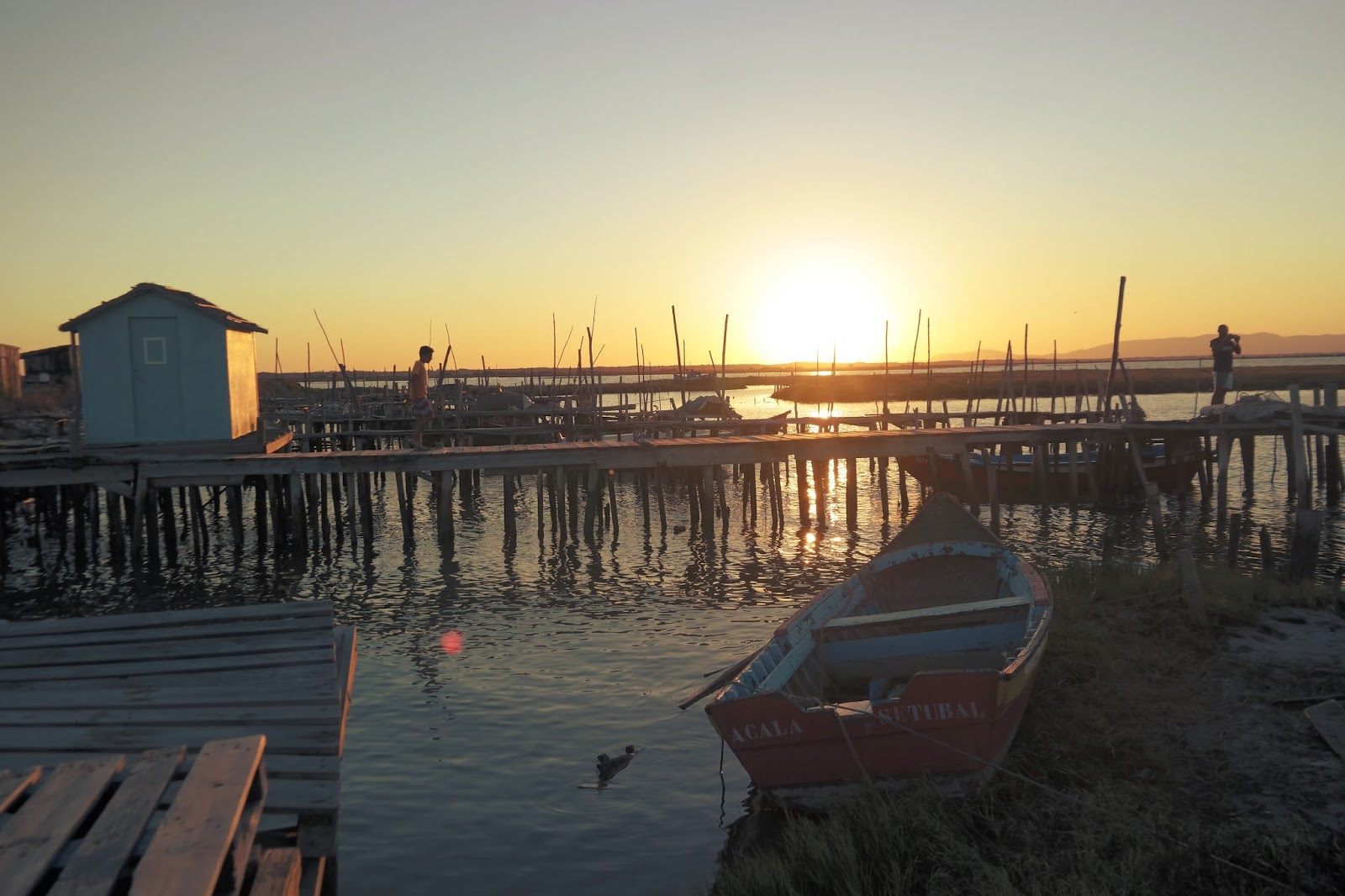
Magical sunset in Carrasqueira Pier (photo by Littlelle)


Se preferes ter os pés bem assentes na terra e gostas de cenários mais rústicos, vais adorar o Cais Palafítico da Carrasqueira. Este cais utilizado pelos pescadores do Sado, fica pertinho da Praia da Comporta. É um local super tranquilo e relaxante, que ultimamente tem atraído vários curiosos e fotógrafos pela sua beleza natural. Para saberes como lá chegar vê, neste blog, a publicação sobre a Comporta. 

If you prefer to have your feet firmly on the ground and like more rustic scenarios, you'll love the Carrasqueira Palafitic Pier. This pier used by the River Sado fishermen, stays near the Comport beach. It’s a very relaxing and peaceful place, that lately has attracted many curious and photographers by its natural beauty. To know how to get there, you can see on this blog, the post about Comporta beach.  


Sunset in Carrasqueira Pier in Portugal (photo by Littlelle)

Sunset in Carrasqueira Pier in Portugal (photo by Littlelle)

Sunset in Carrasqueira Pier, Portugal (photo by Littlelle, edited by HRebelo)

Sunset in Carrasqueira Pier, Portugal (photo by Littlelle, edited by HRebelo)

Sunset in Carrasqueira Pier, Portugal (photo by Littlelle, edited by HRebelo)

6. Helsinki

Heksinki at 10 pm (photo by Littlelle)


Não existe uma melhor hora para ver o pôr do sol, prova disso são os longos dias de Verão na Escandinávia, onde o Sol se esconde quase à meia noite! A sensação de serem 22 horas e o dia ainda ser longo é algo estranho. Em Helsínquia, capital da Finlândia, em pleno mês de julho, às 23 horas os prédios começam a ganhar uma cor quente, como reflexo de um até amanhã do Sol. Um pôr do sol diferente, não haja dúvida.

There’s no such thing as a better hour to watch the sunset, the proof of it, are the long summer days of Scandinavia, where the sun hides itself by midnight! The sensation of being 10 p.m. and it is still going to be a long day, it’s strange. In Helsinki, capital city of Finland, in the middle of July, at 11 p.m., the buildings begin to take on a warm color, as a reflection of the sun farewell to the following day. No doubt that it’s a different sunset.


Shining Uspenski Cathedral (photo by Littlelle)

Cathedral of Helsinki (photo by Littlelle)

E para ti, qual foi o pôr do sol  que melhores recordações te traz? 

And for you, which sunset brings you the best memories?