Provavelmente
ainda te lembras de dar a moedinha ao elefante no Jardim Zoológico de Lisboa
para vê-lo a tocar o sino. Pois é, ainda bem que os tempos passam e a
mentalidade das pessoas muda e não fica presa a tradições que colocam em causa
a integridade e bem-estar dos animais.
Apesar disso, a evolução leva o seu tempo e a exploração dos animais continua a acontecer. Por outro lado, as leis vão mudando e existem associações cada vez mais atentas e com atuação na proteção dos direitos dos animais. Aproximando-se o Dia Mundial dos Animais, quero destacar nesta publicação o trabalho desenvolvido na Tailândia por vários projetos que pretendem promover o ecoturismo sustentável.
Quando se
planeia uma viagem à Tailândia, normalmente pensa-se em incluir praias
paradisíacas, visita a templos budistas, regatear pechinchas nos mercados e
estar com os elefantes. Contudo, grande parte das ofertas turísticas
disponíveis incluem andar de elefante. Para esse efeito, os elefantes estão
muitas vezes acorrentados, amarrados e sujeitos a maus-tratos.
A fim de
evitar esta exploração e preservar a sua rotina num ambiente aproximado do seu
habitat natural, surgiram vários projetos com a missão de criar “santuários”
para proteger e cuidar de elefantes. Estes pretendem resgatar os elefantes maltratados
ou “reformados” e integra-los (integrá-los) em comunidades de elefantes, num ambiente
que apesar de não ser totalmente selvagem, se aproxima do seu habitat. Exemplos
disso são o Elephant Nature Park (https://www.elephantnaturepark.org/),
Elephantsworld (https://www.elephantsworld.org/) ou o Elephant Jungle Sanctuary
(https://elephantjunglesanctuary.com/). Estes Santuários, para além de zelarem
pelo bem-estar dos elefantes, englobam também projetos de preservação da
natureza e programas educativos para visitantes. Eu tive a oportunidade de
visitar o Elephant Jungle Santuary durante a minha estadia em Chiang Mai, com a
minha amiga Gisel (mais conhecida por Travelocalwithme no Instagram). O projeto existe também noutros pontos da Tailândia,
como Phuket e Pattaya. De entre a vasta oferta de programas destes parques,
desde passar a noite com os elefantes, caminhar na selva na sua companhia, ou
programas mais extensos de voluntariado, eu optei por passar 1 dia no parque
com uma família de elefantes a cuidar deles e a acompanhar a sua rotina. Neste
parque, o programa de 1 dia inteiro que inclui almoço, transporte e pick-up no hotel, custou 2.400 THB,
aproximadamente 63€/pessoa.
You probably still remember to give the elephant a coin at the Lisbon Zoo to see him ringing the bell. Well, fortunately that time passes by and the mentalities change and are not stuck to traditions that have a negative impact in the integrity and well-being of animals.
Despite this, evolution takes time and the exploitation of animals continues to occur. On the other hand, laws are changing and there are associations that are more and more attentive and active in the protection of animal rights. With the World Animal Day approaching, I would like to highlight in this post the work done in Thailand by several projects that aim to promote sustainable eco-tourism.
When planning a trip to Thailand, we usually think of including paradisiacal beaches, visiting Buddhist temples, haggling bargains at markets and being with the elephants. However, most of the tourist attractions available include elephant riding. To this end, elephants are often chained, tied and subjected to maltreatments.
In order to avoid this exploitation and
preserve its routine in an environment closer to its natural habitat, several
projects have emerged with the mission of creating "sanctuaries" to
protect and care for elephants. They intend to rescue the abused or
"retired" elephants and integrate them into elephant communities, in
an environment that although not totally wild, approaches their habitat.
Examples are Elephant Nature Park (https://www.elephantnaturepark.org/),
Elephantsworld (https://www.elephantsworld.org/) or Elephant Jungle Sanctuary
(https://elephantjunglesanctuary.com/). These Sanctuaries, besides ensuring the
well-being of elephants, also include nature conservation projects and
educational programs for visitors. I had the opportunity to visit the Elephant
Jungle Sanctuary during my stay in Chiang Mai with my friend Gisel (known for Travelocalwithme
on Instagram). The project also exists in other parts of Thailand, such as
Phuket and Pattaya. From the wide range of programs in these parks, from
spending the night with elephants, walking in the jungle with them, or more
extensive volunteer programs, I opted to spend one day in the park with a
family of elephants caring for them and be with them in their routine. In this
park, the 1-day program that includes lunch, transportation and pick-up at the
hotel cost THB 2,400, approximately € 63 per person.
 |
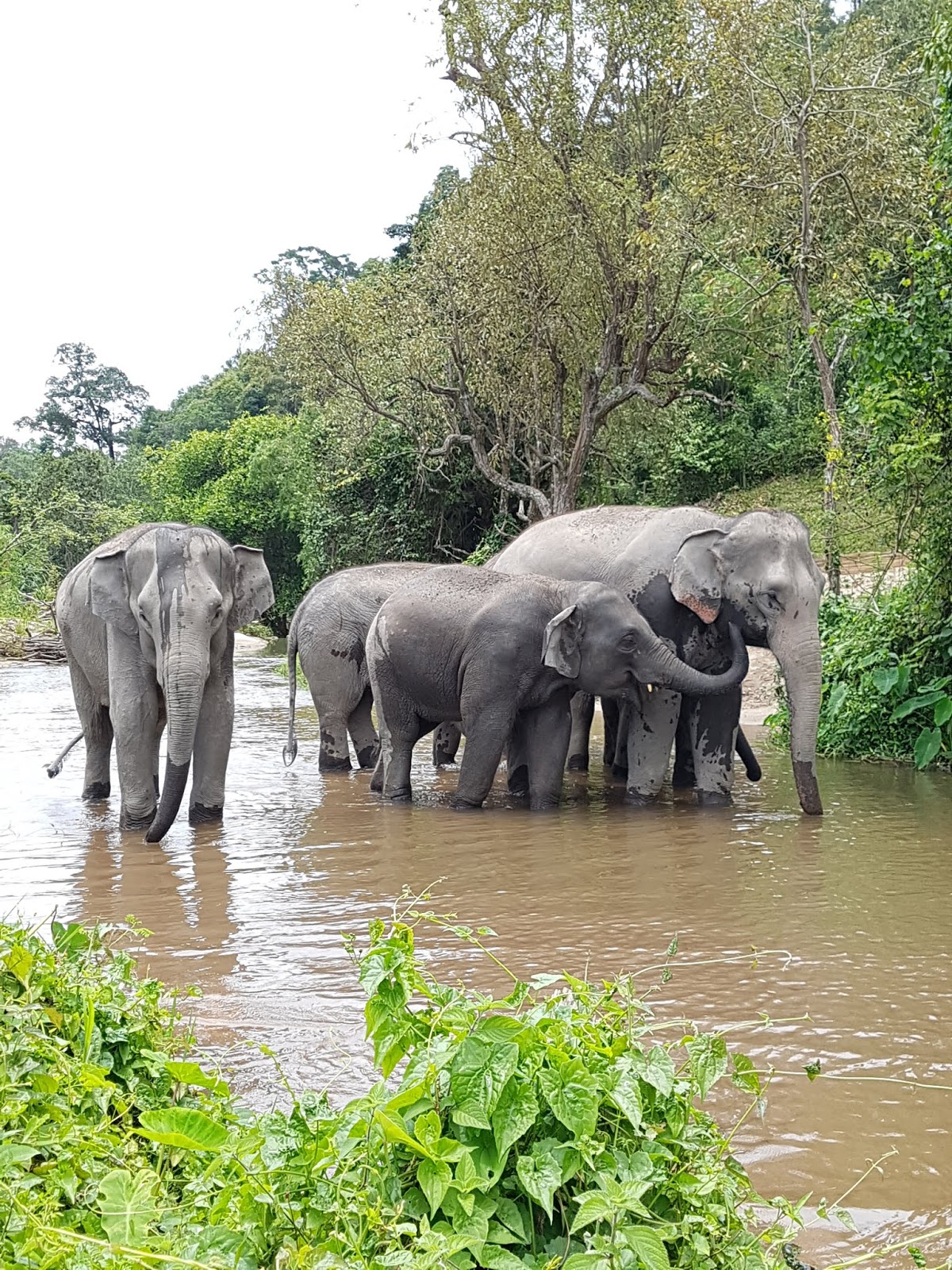
| Elephant Jungle Sanctuary (photo by Littlelle) |
O dia
começa por volta das 8 da manhã, com o
pick-up
no Hotel. Deves levar fato de banho, chinelos, toalha e repelente (este não
pode faltar onde quer que estejas na Tailândia!). A viagem até à selva, no meio
da montanha onde residem os elefantes, demora cerca de 2 horas num
jeep de caixa aberta. Apesar do percurso
ser um pouco moroso, vais expectante pelo dia e quando chegas deparas-te com um
cenário verdejante, junto a uma zona com rio e cascata.
The day begins around 8 in the morning, with
the pick-up at the Hotel. You should bring bathing suit, slippers, towel and
repellent (this cannot be missed out wherever you are in Thailand!). The trip
to the jungle, in the middle of the mountain where the elephants live, takes
about 2 hours in an open box jeep. Although the route is a bit slow, you will
be excited for the day and when you arrive you will encounter a green scenery,
next to an area with a river and waterfall.
 |
| Elephant Jungle Sanctuary (photo by Littlelle) |
 |
| Elephants new home (photo by Littlelle) |
Quando
chegas és guiado até um campo, onde fazem uma receção ao grupo de visitantes e
realizam uma breve explicação do projeto, relativamente à sua missão e valores.
São também apresentadas regras de segurança, para que possas aproveitar o dia
da melhor maneira na companhia destes mamíferos que podem pesar 5 toneladas.
Por exemplo, há que ter atenção à cauda do elefante. Quando eles abanam ou
sacodem a mesma, se fores aleatoriamente “chicoteado”, podes imaginar a força
que deve ter. Não podes mexer nas unhas dos elefantes (quem se poderia lembrar
disso) e deves sair da frente deles quando se movimentam, claro. Quanto aos
elefantes bebés, esses são mais brincalhões e imprevisíveis, por isso ter
especial atenção quando se deslocam ou correm, para não seres atropelado. Após
as boas-vindas, é entregue a cada elemento do grupo uma camisola. Estás pronto
para te juntares ao
team de
cuidadores de elefantes!
When you arrive, you are guided to a camp,
where they make a reception to the group and make a brief explanation of the
project, regarding its mission and values. There are also safety rules, so that
you can enjoy the day in the best way in the company of these mammals that can
weigh 5 tons. For example, attention must be paid to the elephant's tail. When
they shake it, if you are randomly "whipped", you can imagine the
strength it should have. You cannot touch the elephant's nails (who could
remember that) and you should get out of their way when they move, of course.
As for baby elephants, they are more playful and unpredictable, so take special
care when they are moving or running, so you will not get run over. After the
welcome, each member of the group is given a sweater. Now you're ready to
join the elephant caregivers team!
 |
| Wecolme venue at Elephant Jungle Sanctuary (photo by Elephant Jungle Sanctuary) |
O teu
primeiro contacto propriamente dito com os elefantes começa com um momento de
alimentação. Enches os bolsos da camisola com canas de açúcar e bananas. Dizes
“bome bome” e os elefantes esticam logo a tromba para serem alimentados. Pelo
que percebi o seu petisco preferido são mesmo as bananas!
Your very first contact with the elephants
begins with a feeding moment. Fill your sweater pockets with sugar canes and
bananas. You say "bome bome" and the elephants immediately stretch
their trunks to feed. From what I noticed, bananas are their favorite snack!
 |
| Meal time (photo by Littlelle) |
 |
| Bome bome! (photo by Littlelle) |
Depois da
refeição, o grupo de cuidadores vai conhecer as outras 3 famílias de elefantes
que o projeto ajuda em Chiang Mai. Cada família tem cerca de 6 a 7 elefantes.
Após estes momentos de interação, regressámos ao campo em que é servido um
almoço volante com comida típica tailandesa (ou seja, arroz)!
After lunch, caregivers are asked to prepare a
kind of porridge. It is a supposed vitamin for elephants made from sugarcane,
rice, banana and other things, all well kneaded. Then small balls are made with
the hand and gives itself in the mouth of the elephant (or tries). For this,
you should say again "Bome bome" and they open the mouth and you put
the multivitamin ball inside of it.
 |
| Cooking for elephants (photo by Elephant Jungle Sanctuary) |
Depois
deste reforço, é a hora da brincadeira. Acompanhas os elefantes até a uma poça
gigante de lama! Toca a entrar no lamaçal e atirar lama aos elefantes. É uma
forma deles brincarem e se refrescarem! Por vezes os elefantes retribuem e
atiram também lama com a tromba! Depois da brincadeira o dia acaba com uma
banhoca no rio. Há que ajudar os elefantes a tirar a lama. Eles até rebolam no
rio de satisfação! Tão fofos! É melhor também aproveitares para tomar banho
juntamente com os elefantes no rio, se não vais repleto de lama para o hotel!
After this reinforcement, it's play time.
Accompany the elephants to a giant puddle of mud! Now it’s time to enter in
that puddle of mud and throw mud at the elephants. It's a way for them to play
and get cooler! Sometimes the elephants give back and also throw mud with their
trunk! After this playful time the day ends with a bath in the river. We must
help the elephants to remove the mud. They even roll in the river full of
satisfaction! So cute! Better you also take a bath together with the elephants
in the river, if you do not want to go muddy to the hotel!
 |
| Playing in puddle of mud (photo by Littlelle) |
 |
| Shower time in the river in the river (photo by Littlelle) |
É uma
experiência única! Não passa pelo ver e aplaudir, mas interagir com estes
animais, aprender sobre a sua vida e contribuir para o seu bem-estar. Espero
ter uma memória de elefante para guardar esta vivência e aprendizagem para a
vida.
Com base nestes projetos, pode ser que outros países e associações se possam inspirar e seguir este conceito de turismo. E tirem assim os animais das arenas, circos ou parques, promovendo uma forma de interação entre o Homem e o animal mais naturalista, baseada no respeito.
It is a unique experience! It is not about observing
or applauding, but rather interact with these animals, learn about their life
and contribute to their well-being. I hope to have an elephant memory to keep
this experience and learning for life.
Based on these projects, it may be that other
countries and associations can be inspired and follow this concept of tourism.
And therefore taking the animals out of the arenas, circus or parks, promoting
a form of interaction between Man and animals in a most naturalistic way, based
on respect.
 |
| Elephant Jungle Sanctuary (photo by Littlelle) |