domingo, 9 de dezembro de 2018

The sound of Salzburg


Aproxima-se a época natalícia, uma das alturas do ano em que gosto particularmente de viajar (contudo, se me perguntarem se quero viajar, se tiver disponibilidade, estou sempre pronta para descolar, seja em que mês for). Salzburgo na Áustria, é uma boa opção para destino de férias nesta altura do ano. A cidade, rodeada pelas montanhas, é conhecida como o cenário para o famoso filme “Música no Coração” (1965), que normalmente passa na TV todo o santo Natal. Este filme foi inspirado na verdadeira história da família Von Trapp, que na realidade foi mesmo constituída por um oficial da marinha viúvo com 7 filhos que casou com uma freira e que posteriormente formaram um coro familiar. A família, quase já na bancarrota, teve de emigrar para os Estados Unidos da América para fugir ao regime de Hitler. Para além da música ligada ao grande ecrã, Salzburgo encontra-se ligada aos grandes clássicos, sendo a cidade berço de Mozart. Para além de toda esta musicalidade, nesta altura Salzburgo enche-se de mercados de natal. As ruas e praças encontram-se por isso decoradas a rigor para acolher esta festividade, com a particularidade de ser típico pendurar ovos pintados à mão. O centro da cidade não é muito grande, por isso podes percorrê-lo a pé. Bem, vamos partir para o passeio…

The holiday season is approaching, it’s one of the times of the year when I especially like to travel (however, if I am asked if I want to travel, if I am available, I am always ready to take off, whatever month it is). Salzburg in Austria, is a good choice for a holiday destination at this time of year. The city, surrounded by the mountains, is known as the setting for the famous movie "The Sound of Music" (1965), which usually goes on TV all Christmas. This film was inspired by the true story of the Von Trapp family, which actually consisted of a widowed marine officer with 7 children, who married a nun and who later formed a family choir. The family, almost on the bankruptcy, had to emigrate to the United States to escape the Hitler regime. In addition to the music connected to the big screen, Salzburg is linked to the great classics, being the birthplace of Mozart. In addition to all this musicality, Salzburg is filled with Christmas markets. The streets and squares are therefore very well decorated to welcome this festivity, with the peculiarity of being typical to hang eggs painted by hand. The center of the city is not too big, so you can walk though it. Well, let's go on the tour...
The streets of Salzburg (photo by Littlelle)
Mozart everywhere (photo by Littlelle)
Salzburg by Christmas (photo by Littlelle)
Even Mozart celebrates Christmas time (photo by Mário Santos, edited by Littlelle)
Painted Eggs for Christmas time (photo by Mário Santos, edited by Littlelle)
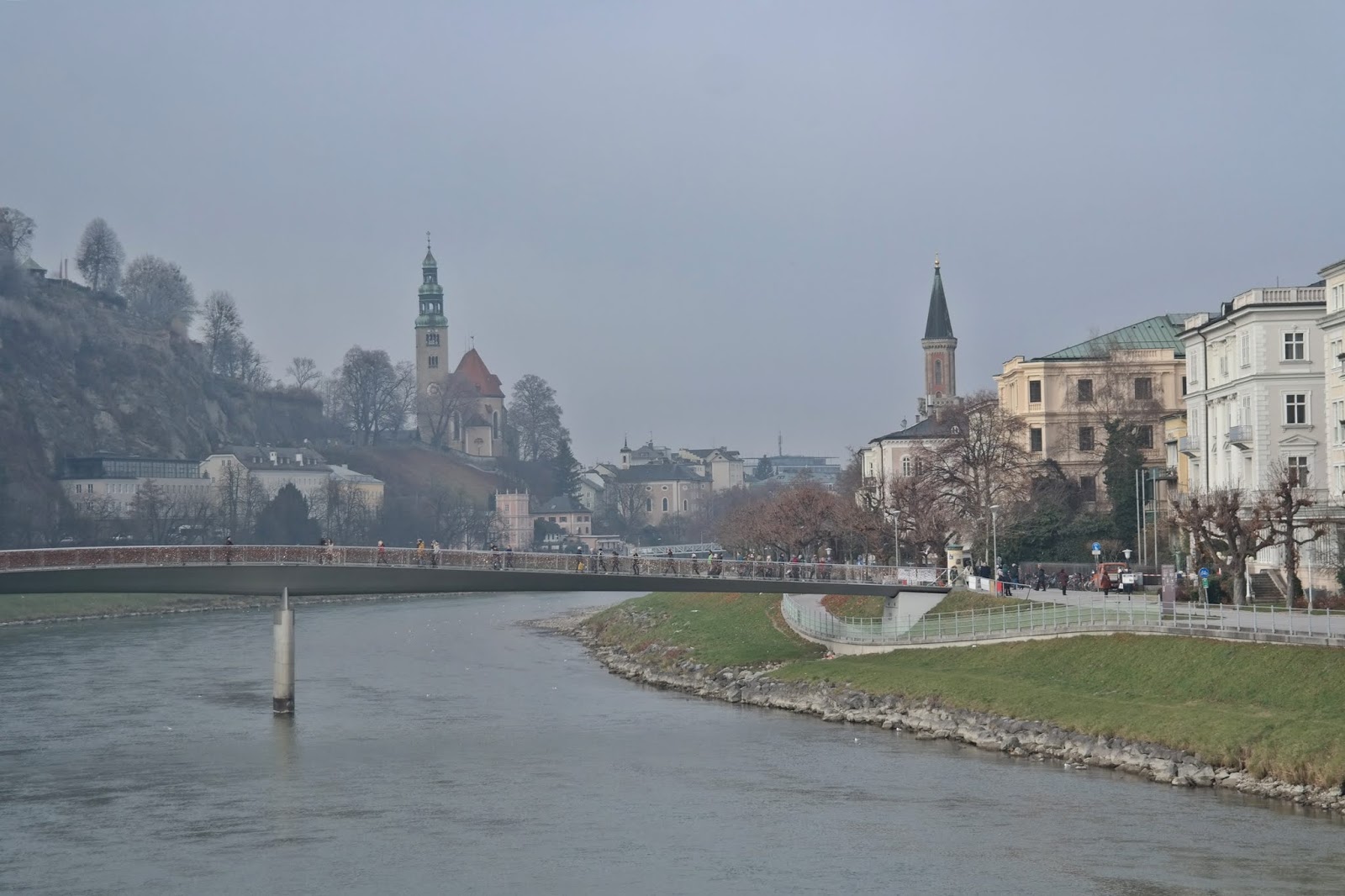
O rio Salzach divide a cidade de Salzburgo ao meio. Do seu lado esquerdo, encontras o centro histórico repleto de igrejas, a casa do arcebispo e a casa onde nasceu Mozart. Na margem direita encontra-se a cidade nova, onde fica o conservatório de Mozart. Existe ainda uma terceira área a conhecer: a fortaleza de Hohensalzburg, de onde tens uma bonita vista para a cidade.

The Salzach River divides the city of Salzburg. On the left-hand side, you will find the historical center full of churches, the house of the archbishop and the house where Mozart was born. On the right bank is the new town, where the Mozart conservatory is located. There is also a third area to explore: the Fortress of Hohensalzburg, from where you have a beautiful view of the city.
Salzburg (photo by Mário Santos, edited by Littlelle)
Salzach River (photo by Littlelle)
Loretto Spiritual Center of St. Blaise at the historical center (photo by Littlelle)
New town (photo by Littlelle)
Fortress of Hohensalzburg (photo by Mário Santos, edited by Littlelle)
Começando pelo pitoresco centro histórico, considerado património cultural pela Unesco, encontramos edifícios barrocos que preenchem as ruazinhas pedestres cheias de lojinhas, com a tradicionais placas em ferro a identificar cada loja. No nº9 da Getreidegasse, localiza-se a casa onde nasceu e viveu Mozart até aos seus 17 anos. Atualmente, encontra-se nesse local um museu sobre a vida do compositor. Não muito longe fica a torre da antiga Câmara Municipal, datada do século XV. Ao longo da caminhada, vais-te deparar com inúmeras igrejas, e de entre elas vais forçosamente reparar na Cúpula da Catedral de S. Ruperto e S. Virgílio. Os mercados de natal estão espalhados pelas várias praças e pracetas da cidade velha. O cheiro a vinho quente com canela enche as ruas e são várias as guloseimas que te vão tentar. É bom que caias em tentação e proves pelo menos o vinho quente ou chocolate quente, pois ao meio da tarde o frio começa realmente a apertar. 

Starting at the picturesque historic center, considered a cultural heritage by Unesco, we find baroque buildings that fill the pedestrian streets full of little shops, with traditional iron plaques identifying each store. In number 9 of Getreidegasse, the house where Mozart was born and lived until he was 17 years old. Currently, there is a museum about the life of the composer. Not far away is the tower of the old town hall, dating from the 15th century. Along the walk, you will come across with countless churches, among them you will see the Dome of the Cathedral of S. Ruperto and S. Virgílio. The Christmas markets are spread around the various squares of the old town. The smell of hot wine with cinnamon fills the streets and there are several goodies that you will want to try. It’s good that you fall into temptation and at least taste the hot wine or hot chocolate, because in the middle of the afternoon the cold begins to really “tighten”.
Old town (photo by Mário Santos, edited by Littlelle)
Old town streets (photo by Littlelle)
House where Mozart was born (photo by Mário Santos, edited by Littlelle)
Mozart museum (photo by Mário Santos, edited by Littlelle)
Getreidegasse (photo by Littlelle)
Traditional iron plaques at Getreidegasse (photo by Littlelle)
Zara at Getreidegasse (photo by Mário Santos, edited by Littlelle)
McDonald's at Getreidegasse (photo by Mário Santos, edited by Littlelle)
Louis Vuitoon at Getreidegasse (photo by Mário Santos, edited by Littlelle)
Stift St. Peter Salzburg (photo by Littlelle)
Cathedral (photo by Littlelle)
Mozartplatz (photo by Littlelle)
Mozartplatz (photo by Littlelle)
Christmas market (photo by Mário Santos, edited by Littlelle)
Christmas market stands (photo by Mário Santos, edited by Littlelle)
Christmas delicacies (photo by Littlelle)
Sweet pretzel (photo by Littlelle)
Christmas Market by night (photo by Mário Santos, edited by Littlelle)
Salzburg by night (photo by Mário Santos, edited by Littlelle)
Old Town by night (photo by Littlelle)
Se quiseres visitar a fortaleza Hohensalzburg tens de subir até ao topo de Monchsberg. Podes ir no funicular de Festungsgasse que sai de 10 em 10 minutos, ou a pé, para queimar as calorias que, entretanto, ingeriste no mercado de natal.

If you want to visit the fortress Hohensalzburg, you have to climb to the top of Monchsberg. You can go on the Festungsgasse funicular that goes out every 10 minutes, or on foot, to burn off the calories you have ingested in the Christmas market.
Hohensalzburg (photo by Mário Santos, edited by Littlelle)
No caminho podes visitar o Cemitério de São Pedro, cemitério do século VII, no qual foi inspirado o cenário de uma das cenas de fuga da família Von Trapp dos tropas alemães. Podes também ir ao Felsenreitschule (Summer riding school), sala de espetáculos onde Maria, o Capitão Von Trapp e as crianças subiram ao palco para encantar o publico antes de fugir para a Suiça. Ainda como cenário do filme, tens o Frohnburg Palace e o Schloss Leopoldskron, ambos cenário para a residência da família Von Trapp, o último também residência oficial do arcebispo Leopoldo.

Do outro lado do rio, podes ir passear até aos jardins do palácio de Mirabell, atual edifício pertencente à administração pública, que foi em tempo residência da amante do arcebispo. O palácio é rodeado por uns bonitos jardins barrocos, que aparecem no filme “Música do Coração”, durante um dos momentos musicais. Não muito longe, na Makartplatz, no nº8 Tanzmeisterhaus, encontra-se a casa onde Mozart residiu entre 1773-1787.

Along the way, you can visit the Saint Peter's Cemetery, a 7th century cemetery, which was inspired by the scene of one of the escape of the Von Trapp family from German troops. You can also go to the Felsenreitschule (Summer riding school), where Maria, Captain Von Trapp and the children went on stage to delight the public before fleeing to Switzerland. Still as scenery of the film, you have the Frohnburg Palace and the Schloss Leopoldskron, both setting for the residence of the Von Trapp family, the last also official residence of Archbishop Leopold.

Crossing the river, you can stroll to the gardens of Mirabell Palace, the current building belonging to the public administration, which was once the residence of the archbishop's mistress. The palace is surrounded by beautiful baroque gardens, which appear also in the movie "The Sound of Music", during one of the musical moments. Not far away, at Makartplatz, at 8 Tanzmeisterhaus, lies the house where Mozart resided between 1773-1787.


Mirabell gardens (photo by Littlelle)
Mirabell palace (photo by Mário Santos, edited by Littlelle)
Garden of statues at Mirabell (photo by Littlelle)
Muitos dos cenários ficam nos arredores de Salzburgo, para além dos lagos e montanhas que compõem as paisagens fantásticas do filme, podes por exemplo ir até à Igreja onde foi filmado o casamento de Maria e o Capitão, chama-se Kollegienkirche e fica em Mondsee (Collegiate Church of Saint Micheal). Na vida real, o verdadeiro casamento decorreu em Nonnberg Abbey (Stift Nonnberg), convento em estilo gótico no centro de Salzburgo, onde Maria residiu enquanto freira.

Much of the scenery is on the outskirts of Salzburg, in addition to the lakes and mountains that make up the fantastic landscapes of the film, you can go, for example, to the Church where the wedding of Mary and the Captain was filmed, it’s called Kollegienkirche and it’s in Mondsee (Collegiate Church of Saint Micheal). In real life, the real marriage took place at Nonnberg Abbey (Stift Nonnberg), a Gothic-style convent in the center of Salzburg, where Mary resided as a nun.


Collegiate Church of Saint Micheal (photo by Mário Santos, edited by Littlelle)
Para além dos amantes de música e fãs do filme, Salzburgo é também uma boa escolha para quem gosta de praticar desportos de inverno. Eu prefiro ficar mesmo só pelo chocolate quente <3

In addition to music lovers and film fans, Salzburg is also a good choice for those who enjoy winter sports. I'd rather just get the hot chocolate <3


Welcome to Salzburg (photo by Littlelle)
Have a nice Christmas (photo by Mário Santos, edited by Littlelle)

sábado, 24 de novembro de 2018

Copenhagen painted by Littlelle


Copenhaga, a capital da Dinamarca, é uma cidade onde se respira tolerância e aceitação (pelo menos foi o que senti). A Dinamarca bate alguns recordes. Em 2011 foi considerado o país com menor índice de desigualdade social do mundo, em 2009 o segundo país mais pacífico do mundo e em 2008 o país menos corrupto do mundo.

Copenhagen, the capital of Denmark, is a city where one can breathe tolerance and acceptance (at least that's what I felt). Denmark hits a few records. In 2011 it was considered the country with the lowest level of social inequality in the world, in 2009 it was the second most peaceful country in the world and in 2008 the least corrupt country in the world.
Radhuspladsen (photo by Littlelle)
Peaceful atmosphere (photo by Mário Santos, edited by Littlelle)
LGBT festival (photo by Littlelle)
Copenhaga era originalmente uma vila piscatória de Vikings. Hoje é um dos principais centros financeiros do norte da Europa. É considerada uma das cidades mais amiga do ambiente do mundo, é bastante limpa, e apesar do frio, circula-se bastante de bicicleta. Ao seu redor, junto à costa em Middelgrunden, existem imensos geradores de energia eólica. Para além de ser uma cidade bonita, todos estes motivos tornam a cidade ainda mais atrativa, não só para visitar, mas para residir. O bem-estar social que se faz sentir devido a esta cultura, parece dar aos seus habitantes um bom nível de qualidade de vida, encontrando-se no top de rankings também a este nível. Mas por agora ficamos pelos passeios…

Copenhagen was originally a fishing village of Vikings. Today, it’s one of the main financial centers of northern Europe. It’s considered one of the most environmentally friendly cities in the world, it’s quite clean, and despite the cold, a lot of people circulate by bike. Around it, by the coast at Middelgrunden, there are huge wind power generators. Apart from being a beautiful city, all these reasons make it even more attractive, not only to visit, but to live in. The social welfare that is felt due to this culture, seems to give its inhabitants a good level of quality of life, being in the top of rankings also at this level. But for now it’s just for tours…
Danish way of life (photo by Littlelle)
Cycling all day (photo by Littlelle)
Wind power generators on the coast (photo by Mário Santos, edited by Littlelle)

Sendo uma cidade costeira, composta por ilhas e canais, para ficar com uma primeira impressão da cidade, aconselho começar por dar um passeio de barco. É possível observar melhor o estilo de vida dos habitantes, as casas flutuantes, as praias junto aos canais. Alguns passeios passam junto ao emblemático símbolo da cidade, a pequena estátua de bronze da Pequena Sereia (Den Lille Havfrue), dos contos de Hans Christian Andersen. Esta foi, à mesma escala, uma pequena desilusão.

Being a coastal city, made up of islands and canals, to get a first impression of the city, you should start by taking a boat trip. It’s possible to observe better the life style of the inhabitants, the floating houses, the beaches next to the canals. Some trips pass next to the emblematic symbol of the city, the small bronze statue of the Little Mermaid (Den Lille Havfrue), from the tales of Hans Christian Andersen. This was, on the same scale, a small disappointment.
Lifestyle on board (photo by Littlelle)
Hans Christian Andersen (photo by Mário Santos, edited by Littlelle)
Little Mermaid (photo by Mário Santos, edited by Littlelle)
Little Mermaid (photo by Mário Santos, edited by Littlelle)
Deixando o barco, podes percorrer o Stroget, composto por ruas pedonais, cheias de lojas e restaurantes, que ligam as praças principais da cidade - Radhuspladsen e Kongens Nytorv. Não muito longe tens o famoso porto colorido – Nyhavn ou porto novo. Este porto agora composto por canais ladeados por restaurantes com esplanadas, era antigamente a red light dinamarquesa, bem representada no filme “The Danish Girl” (2015). Se visitares a cidade este é um bom sítio para almoçar, jantar ou simplesmente beber uma Carlsberg ou qualquer outra cerveja dinamarquesa. Mas atenção, faz contas ao dinheiro, pois Copenhaga é uma das cidades mais caras do mundo. Se um almoço é caro, à noite os preços ao jantar tendem a aumentar.

Leaving the boat, you can walk through the Stroget, which are pedestrian streets full of shops and restaurants, that connect the main squares of the city - Radhuspladsen and Kongens Nytorv. Not far away, you have the famous colorful port - Nyhavn or new port. This port now comprised of canals flanked by restaurants with terraces, was formerly the Danish red light, well represented in the film "The Danish Girl" (2015). If you visit the city this is a good place to have lunch, dinner or just drink a Carlsberg or any other Danish beer. But be careful with your budget, because Copenhagen is one of the most expensive cities in the world. If a lunch is expensive, in the evening prices at dinner tend to increase or even double.
City Hall Square (photo by Mário Santos, edited by Littlelle)
Stroget (photo by Mário Santoos, edited by Littlelle)
Radhuspladsen (photo by Mário Santos, edited by Littlelle)
Nyhavn (photo by Mário Santos, edited by Littlelle)
Nyhavn (photo by Mário Santos, edited by Littlelle)
Sunset at Nyhavn (photo by Mário Santos, edited by Littlelle)
Outro ponto de passagem obrigatório são os Tivoli Gardens (entrada 120 Dkk). Abriu portas em 1843, sendo o segundo parque de diversões mais antigo do mundo. Nele encontras várias atrações e restaurantes. É um parque muito bonito e fotogénico.

Another must go is the Tivoli Gardens (entrance 120 Dkk). It opened in 1843, being the second oldest amusement park in the world. In it you will find many attractions and restaurants. It’s a very beautiful and photogenic park.
Tivoli Gardens (photo by Mário Santos, edited by Littlelle)
Tivoli Gardens (photo by Littlelle)
Cfaés at Tivoli Gardens (photo by Mário Santos, edited by Littlelle)
Tivoli Gardens (photo by Mário Santos, edited by Littlelle)
Tivoli Gardens at night (photo by Mário Santos, edited by Littlelle)
Falando de coisas mais sérias, a Dinamarca apresenta uma monarquia constitucional, regida pela Rainha Margarida II. Por este motivo apresenta vários palácios que podem ser visitados. Da lista constam o Amalienborg Slot, a residência oficial da rainha, o Charlottenborg ou o Christiansborg Slot. Eu visitei o Castelo Rosenborg, erguido em 1606 para servir de palácio de verão e é hoje um museu repleto de objetos da realeza dinamarquesa, estando rodeado por uns bonitos jardins.

Speaking of more serious things, Denmark presents a constitutional monarchy, ruled by Queen Margaret II. For this reason, it presents several palaces that can be visited. On the list you can find the Amalienborg Slot, the queen's official residence, Charlottenborg or Christiansborg Slot. I visited the Rosenborg Slot, built in 1606 to be a summer palace. Now it’s a museum filled with Danish royalty, surrounded by beautiful gardens.
Rosenborg Castle (photo by Mário Santos, edited by Littlelle)
Rosenborg Castle (photo by Mário Santos, edited by Littlelle)
Museum at Rosenborg Castle (photo by Mário Santos, edited by Littlelle)
Rosenborg Castle (photo by Mário Santos, edited by Littlelle)
Amalienborg Palace (photo by Mário Santos, edited by Littlelle)
Christiansborg (photo by Mário Santos, edited by Littlelle)
Kunsthal Charlottenborg (photo by Littlelle)
Em Copenhaga os Museus são sempre uma boa opção. Gostei bastante dos museus que visitei, mas particularmente do Ny Carlsberg Glyptotek, que se encontra no meu top 10 de museus. O museu contempla cerca de 10 mil obras de arte e objetos arqueológicos que ilustram 6 000 anos de história e cultura humana, entre eles podes encontrar desde artefactos egípcios, gregos e de outras civilizações antigas, até à pintura francesa do século XIX. O museu nasceu da coleção privada de esculturas de Carl Jacobsen, fundador da fábrica de cerveja Carlsberg, outra atração que fica já fora do centro da cidade.

In Copenhagen the Museums are always a good option. I really enjoyed the museums I visited, but particularly the Ny Carlsberg Glyptotek, which is on my top 10 museums. The museum features some 10,000 works of art and archaeological objects that illustrate 6,000 years of human history and culture, including Egyptian artefacts, Greek and other ancient civilizations, and nineteenth-century French painting. The museum was born from Carl Jacobsen's private collection of sculptures, founder of the Carlsberg brewery, another attraction that is outside the city center though.
Ny Carlsberg Glyptotek (photo by Mário Santos, edited by Littlelle)
Winter garden of Ny Carlsberg Glyptotek (photo by Littlelle)
Sculptures room (photo by Mário Santos, edited by Littlelle)
Ballerinas by Degas (photo by Littlelle)
Lioness by Delacroix (photo by Littlelle)
Outro museu que achei interessante foi a Galeria Nacional Dinamarquesa - Statens Museum for Kunst, que possui um grande acervo de arte europeia dos séculos XIII ao XIX. Lembro-me particularmente das obras de Matisse.

Another interesting museum was the Danish National Gallery - Statens Museum for Kunst, which has a large collection of European art from the 13th to the 19th centuries. I remember especially the works of Matisse.
Matisse (photo by Littlelle)
Leonardo Da Vinci (photo by Littlelle)
André Derain (photo by Littlelle)
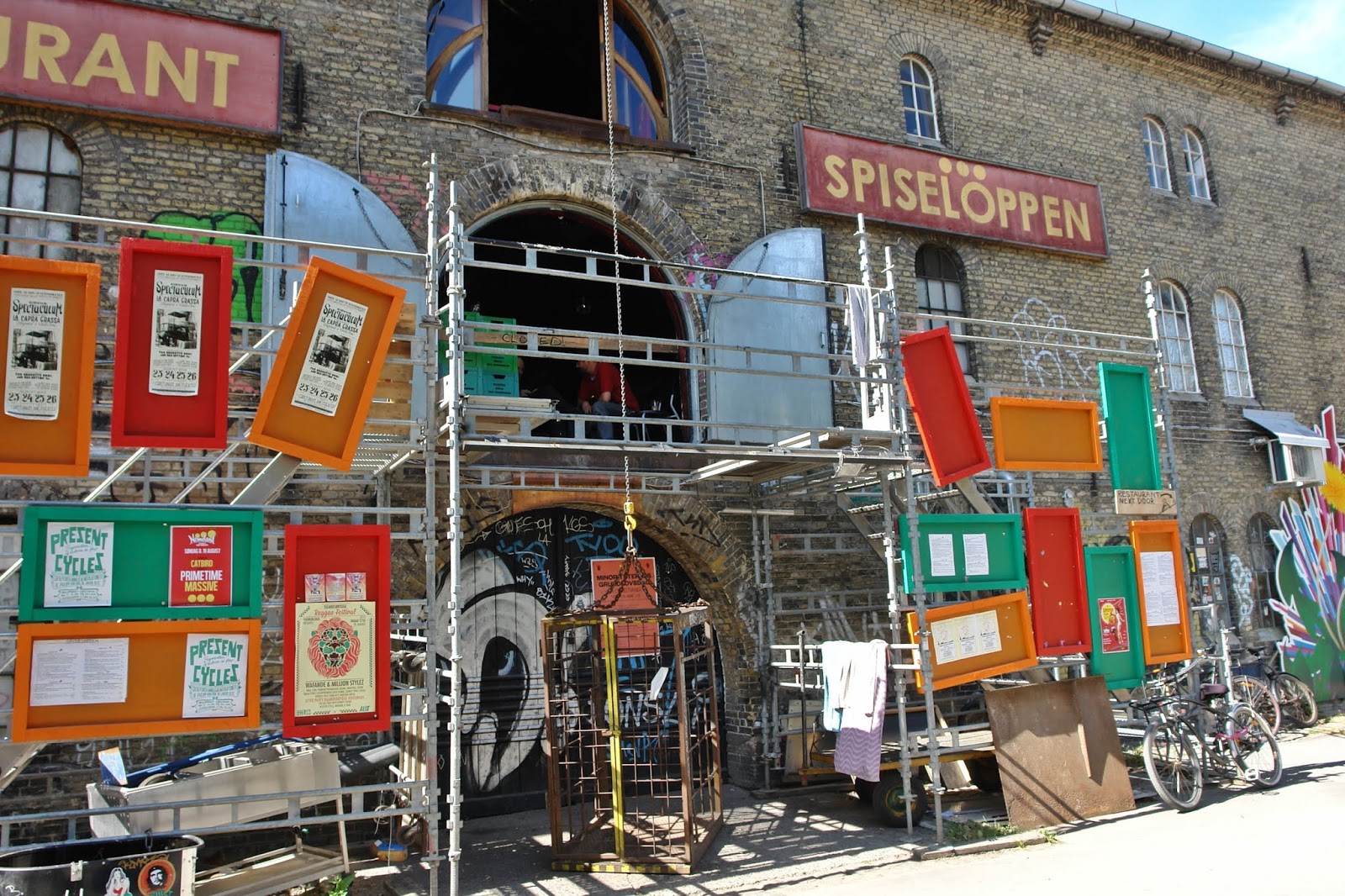
Num registo bem mais alternativo, na ilha Christianshavn, podes visitar a Christiania, uma comunidade alternativa que ali se instalou desde os anos 70.  Nesta comunidade independente, conhecida como um estado livre dentro de Copenhaga, habitam 900 pessoas. A comunidade com 34 hectares, tem as suas próprias regras, não tem polícia, nem se paga renda.

Para além de estar em contacto com uma sociedade com um funcionamento diferente, Christiania oferece uma grande variedade de atrações artísticas e culturais e existem vários cafés e restaurantes, onde podes petiscar.

On a much more alternative record, on Christianshavn Island, you can visit Christiania, an alternative community that has settled there since the 1970s. In this independent community, known as a free state within Copenhagen, 900 people live in. The 34-hectare community has its own rules, no police, and no income.

In addition to being in contact with a society with a different functioning, Christiania offers a wide variety of artistic and cultural attractions and there are several cafes and restaurants where you can go for a snack or a drink.
Christiania (photo by Mário Santos, edited by Littlelle)
Christiania commom law (photo by Littlelle)
Christiania art exhibition (photo by Littlelle)
De regresso à União Europeia (como se pode ler numa placa quando sais da Christiania), se quiseres alargar horizontes, para além da Dinamarca, podes ir de comboio à vizinha Suécia. A cidade mais próxima é Malmo, encontrando-se ligada a Copenhaga através de um comboio que passa pela ponte de Oresund, que faz parte do percurso debaixo de água.

Returning to the European Union (as you can read on a sign when you leave Christiania), if you want to broaden horizons beyond Denmark, you can go by train to the neighboring Sweden. The nearest town is Malmo, being linked to Copenhagen via a train that passes by the Oresund bridge, which is part of the underwater journey.
Colorful trains (photo by Littlelle)

Informações úteis | Useful information:

- Fuso horário/ Timezone: UTC/GMT +1 hora/hour
- Moeda/Currency: Coroa dinamarquesa/ Danish krone (DKK)
- Língua oficial/Official language: Dinamarquês/ Danish
- Sugestão de Alojamento/accomodation: Tivoli Hotel (https://www.tivolihotel.com/)
- Indicativo local/ Local call sign: +45
- Emergências/ Emergencies number: 112
Color of Copenhagen (photo by Littlelle)