domingo, 1 de julho de 2018

Russia, a country where the past and the present meet each other


Com uma mão na Europa e os restantes membros na Ásia, a grande Rússia tem um carácter muito próprio derivado à sua história, regime político e da própria geografia, que numa primeira impressão pode não transmitir as melhores boas vindas para o visitante. Contudo, essa mesma história deixou rastos que dificilmente não cativam aqueles que por lá passam. Desde as cúpulas coloridas, passando pelos majestosos palácios, até aos memoriais soviéticos, são muitos os ícones que encantam quem vem de fora.

With one hand in Europe and the other members in Asia, the great Russia has a very own character derived from its history, political regime and geography, which in a first impression may not convey the best welcome to the visitor. However, this same story left tracks that easily those who pass by. From the colorful domes, the majestic palaces to the Soviet memorials, there are many icons that delight the foreigners.


Saint Basil's Cathedral (photo by Littlelle)
Moscow perspectives (photo by Littlelle)
Após aterrares no Aeroporto Domodedovo em Moscovo, começas a aperceber-te da confusão desta cidade com cerca de 10 milhões de habitantes. Quando estás no trânsito, o que fica “já ali” pode demorar horas. Como consequência, o cumprimento de horários não é uma coisa que ali assiste, pelo menos no que toca ao turismo. Fiquei por várias vezes à espera do autocarro da companhia de turismo por um tempo considerável.

After landing at Domodedovo Airport in Moscow, you begin to realize the city's confusion, which has around 10 million inhabitants. When you're in traffic, what is "just around the corner" can take hours. As a result, arriving on time can be really complicated, at least as far as tourism is concerned. I was several times waiting for the tour company's bus for a considerable time.


Streets of Moscow (photo by Littlelle)
Depois, nas ruas e no famoso metro de Moscovo, tudo está exclusivamente escrito em russo, com alfabeto cirílico, Ou seja, a não ser que tenhas tido umas aulinhas, a orientação e comunicação não é fácil. Para te deslocares, os táxis são caros e a maioria não apresenta taxímetro, há que negociar antes de entrar. A maioria das pessoas não fala inglês e não aparentam ser muito simpáticas. Claro que esta foi a minha impressão da semana que passei na Rússia, não quero generalizar. Por exemplo, em São Petersburgo andei 1h à procura de um posto de correios que o rececionista do hotel indicou que existia naquela rua. Não o encontrei, mesmo pedindo ajuda a várias pessoas na rua.  

Then, on the streets and on the famous Moscow metro, everything is exclusively written in Russian, with Cyrillic alphabet. So, unless you have had a few little lessons, guidance and communication are not easy. To get around, taxis are expensive and most do not have a meter, so you have to negotiate before getting on. Most people do not speak English and do not appear to be very friendly. Of course this was my impression of the week I spent in Russia, I don´t want to generalize. In St. Petersburg, for example, I was in search of a post office that the hotel receptionist indicated to be on the hotel street. I didn't find it, even when I asked for help from several people on the street.


Metro map 

A gastronomia pareceu-me pouco variada, pelo que percebi devido ao bloqueio europeu e ao facto do clima não facilitar a agricultura. Não sei se tive azar, mas comi pratos com beterraba do almoço ao jantar. Um dos pratos é os Pelmeni, uma espécie de raviollis que se come na sopa. A bebida é vodka, claro!

The gastronomy seemed to be little varied, maybe because of the European blockade and the fact that the climate doesn't facilitate agriculture. I don't know if I was unlucky, but I ate beet dishes from lunch to dinner. One of the dishes is the Pelmeni, a kind of raviollis that is eaten in the soup. The drink is vodka, of course!


Beet (photo by Littlelle)
More beet (photo by Littlelle)
Pelmeni soup (photo by Littlelle)
Estive 5 dias na Rússia, divididos entre Moscovo, símbolo do poder, e São Petersburgo, capital cultural, cidades que se encontram separadas por cerca de 720 Km, aproximadamente 5 h de comboio. A paisagem entre as cidades é maioritariamente rural e pobre, o que contrasta com a riqueza imperial das duas grandes cidades. Das atrações que pude visitar nestes poucos dias na grande Rússia, destaco as seguintes:

I have been 5 days in Russia, splitted between Moscow, symbol of power, and St. Petersburg, cultural capital, cities that are separated by about 720 km, approximately 5 h by train. The landscape between the cities is mostly rural and poor, which contrasts with the imperial wealth of the two great cities. Of the attractions that I could visit in these few days in the great RussiaI visited, I highlight the following:

Churches

Apesar de não ser fã de arte sacra, para mim na Rússia as basílicas com as cúpulas coloridas em forma de chantilly no topo do gelado, são ícones de destaque. Uma vez que o culto religioso gira em torno da Igreja Ortodoxa Russa, os interiores das igrejas não apresentam estátuas, mas pinturas dos ícones de culto.
  • Igreja do Sangue Derramado em São Petersburgo (Church of the Savior on blood), construída no local onde foi assassinado o czar Alexandre II
  • Praça das Catedrais no Kremlin: Igreja da Deposição do Manto, Catedral do Arcanjo, Catedral da Anunciação, Catedral da Assunção.
  • Catedral de Cristo Redentor - mandada ser demolida por Estaline, foi convertida numa piscina, tendo sido mais tarde novamente mandada construir como igreja.
  • Convento Novodevichiy - Um mosteiro do século XVI em Moscovo, para onde os Czares enviavam as ex-mulheres e irmãs. Junto ao convento existe um lago, que supostamente inspirou Tchaikovsky na composição de o Lago dos Cisnes.
  • Fortaleza de S. Pedro e S. Paulo onde fica a igreja com túmulos dos Romanov, incluindo o de Anastásia.
  • Catedral de Nossa Senhora de Kazan com 96 colunas, foi inspirado na colunata de Bernini no Vaticano.
Church of the Savior on Blood (photo by Littlelle)

Kremlin Cathedrals Square (photo by Littlelle)
Cathedral of Christ the Redeemer (photo by Littlelle)
Novodevichiy Convent (photo by Littlelle)
Fortress of St. Peter and St. Paul (photo by Littlelle)
Although I am not a fan of sacred art, for me in Russia the basilicas with colorful domes shaped like chantilly on the top of the ice cream are prominent icons. Since the religious cult revolves around the Russian Orthodox Church, the interiors of the churches don't present statues, but paintings of cult icons.
  • Church of the Savior on Blood, built on the site where Tsar Alexander II was assassinated
  • Kremlin Cathedrals Square: Mantle Deposition Church, Archangel's Cathedral, Annunciation Cathedral, Cathedral of the Assumption.
  • Cathedral of Christ the Redeemer - ordered to be demolished by Stalin, was converted into a swimming pool, having later been built again as a church.
  • Novodevichiy Convent - A sixteenth-century monastery in Moscow, where the Czars send the former women and sisters. Next to the convent there is a lake, which supposedly inspired Tchaikovsky for the composition of Lake of the Swans.
  • Fortress of St. Peter and St. Paul where is a church with tombs of Romanov, including the one of Anastasia.
  • Cathedral of Our Lady of Kazan with 96 columns, was inspired by the colonnade of Bernini in the Vatican.
Kremlin Cathedrals Square (photo by Littlelle)
Inside the Church of the Savior on Blood (photo by Littlelle)
Tombs of Romanov family at St. Peter and St. Paul Church (photo by Littlelle)
Anastasia tomb at St. Peter and St. Paul Church (photo by Littlelle)

Palaces

Peterhof Palace, inspirado em Versalhes, este palácio de campo junto ao mar báltico, apresenta jardins enormes e várias fontes, onde é possível assistir a um espetáculo de água e música.

Peterhof Palace, inspired in Versailles, this country palace by the Baltic Sea, features huge gardens and many fountains, where you can watch a water and music show.


Peterhof Palace (photo by Littlelle)
Peterhof Palace gardens (photo by Littlelle)
Peterhof Palace (photo by Littlelle)

Museums

Hermitage, antigo Palácio de Inverno e residência oficial da família imperial, construído em estilo Barroco, contém mais de 3 milhões de peças de arte, coleção iniciada por Catarina, a Grande.

Hermitage, former Winter Palace and official residence of the imperial family, built in Baroque style, contains more than 3 million pieces of art, a collection began by Catherine the Great.

Hermitage (photo by Littlelle)
Hermitage (photo by Littlelle)
 Casa de Fabergé, onde foram criados os famosos ovos de Páscoa desenhados para os czares.

House of Fabergé, where the famous Easter eggs designed for the czars were created.

Fabergé (photo by Littlelle)
Galeria Tretyakov em Moscovo apresenta a maior coleção de arte Russa do mundo.

Tretyakov Gallery in Moscow presents the largest collection of Russian art in the world.

Tretyakov Gallery in Moscow (photo by Littlelle)
Ivan Tsarevich riding the grey wolf by Viktor Vasnetsov (1889) at Tretyakov Gallery (photo by Littlelle)


Architecture

Em termos arquitetónicos, há que dar destaque às estações de metro decoradas a mármore, pinturas ou pedras semipreciosas, parecem palácios em miniatura. Alguns das estações mais bonitas são: Belorusskaya, Mayakovskaya, Kievskaya, Teatralnaya, Komsomolskaya, Novokuznetskaya.

Regarding architecture, I have to emphasize the metro stations decorated with marble, paintings or semiprecious stones, which look like miniature palaces. Some of the most beautiful stations are: Belorusskaya, Mayakovskaya, Kievskaya, Teatralnaya, Komsomolskaya, Novokuznetskaya.


Ploshchad Revolyutsii subway station (photo by Littlelle)
Enormes edifícios Soviéticos, em estilo gótico estalinista, conhecidos como os sete caprichos de Estaline, encontram-se espalhados pela cidade de Moscovo. Atualmente, um deles é o Ministério dos Negócios Estrangeiros e outro a Universidade Pública de Moscovo, este último apresenta uma vista bonita sobre a cidade.

Huge Soviet buildings, in Stalinist Gothic style, known as the seven whims of Stalin, are scattered around the city of Moscow. Currently one of them is the Ministry of Foreign Affairs and another the Public University of Moscow, the latter presents a beautiful view over the city.


Sovietic style building in Moscow (photo by Littlelle)
University in Moscow (photo by Littlelle)
View from the University viewpoint in Moscow (photo by Littlelle)

Nevskiy prospekt, a principal rua de São Petersburgo é cruzada por canais do rio Moyka e apresenta bonitos edifícios de estilo barroco, neoclássico e moderno onde se instalam vários cafés, restaurantes e arcadas.

Nevskiy Prospekt is the main street of St. Petersburg, which is crossed by channels of the Moyka River and features beautiful baroque, neoclassical and modern buildings where several cafes, restaurants and arcades are set up.


Nevskiy prospekt (photo by Littlelle)
Nevskiy prospekt (photo by Littlelle)
A Praça Vermelha em Moscovo para mim foi o clímax da viagem, é um local que dificilmente vou esquecer. É uma praça imensa, onde tens ao fundo um dos mais icónicos símbolos da Rússia, a Catedral de São Basílio, mandada construir por Ivan o Terrível. Conta a lenda que Ivan ficou tão encantado com a obra que mandou cegar o seu arquiteto para este não poder desenhar nada mais com tal beleza. Faz sentido, “o Terrível”! Nessa praça, conhecida como cenário de paradas militares, podes também encontrar o Mausoléu de Lenine, Museu de História e os Armazéns Gum, hoje galerias comerciais de luxo. Ao lado desta praça fica o famoso Kremlin, onde se encontram sepultados personalidades russas, como Estaline ou Yuri Gagarin, o primeiro homem a orbitar o planeta. Para além de ser o símbolo do poder russo e residencial oficial do Presidente da Rússia, o Kremlin é um complexo de museus, palácios e catedrais. Sendo sede da administração do país, menos de metade está acessível ao público, mas mesmo assim tens imenso que ver. Podes visitar por exemplo, o Museu da Armaria do Estado, onde se encontram jóias e vestidos dos príncipes e Czares da Russa, como por exemplo o magnífico vestido da coroação de Catarina a Grande, vários palácios, a Catedral da Assunção e outras tantas catedrais. Podes também visitar a Torre Sineira de Ivan o Grande, nada mais, nada menos do que o maior sino do mundo com 200 toneladas.

For me, the Red Square in Moscow was the climax of the trip, it's a place that I will hardly forget. It's an immense square, where you have in the background one of the most iconic symbols of Russia, St. Basil's Cathedral, built by Ivan the Terrible. Legend said that Ivan was so enchanted with this work that he had his architect blinded so that he could not draw anything more with such beauty. It makes sense, "the Terrible"! In this square, known as a military parade scene, you can also find the Lenin Mausoleum, the History Museum and the Gum Warehouses, which is nowadays, a luxury shopping gallery. Next to this square is the Kremlin, where famous Russian personalities are buried, like Stalin or Yuri Gagarin, the first man to orbit the planet. In addition, besides being the symbol of Russian power and official residence of the President of Russia, the Kremlin is a complex of museums, palaces and cathedrals. Being the headquarters of the administration of the country, less than half is accessible to the public, but nevertheless you have many things to see. You can visit, for example, the State Armory Museum, where jewels and dresses of princes and Czares of Russa, such as the magnificent dress of the coronation of Catherine the Great, several palaces, the Cathedral of the Assumption and many other cathedrals. You can also visit the Bell Tower of Ivan the Great, nothing more, nothing less than the largest bell in the world with 200 tons.


Red Square in Moscow (photo by Littlelle)
Red Square in Moscow (photo by Littlelle)
Gum (photo by Littlelle)
Gum (photo by Littlelle)
Kremlin (photo by Littlelle)
Kremlin Cathedrals Square (photo by Littlelle)
Kremlin (photo by Littlelle)
Bell of Ivan the Great (photo by Littlelle)

IQuando fui à Rússia, Portugal tinha acabado de se sagrar Campeão Europeu de Futebol. Na altura já se viam obras para o Mundial. Desta vez não tivemos a mesma sorte :(

When I went to Russia, Portugal had just become European Champion Football. At the time I already saw works for the World Cup. This time we didn't have the same luck :( 


From Russia with love (photo by Littlelle)

domingo, 10 de junho de 2018

Portuguese heritage


Sabias que em 1519, o português Fernão de Magalhães foi a primeira pessoa a realizar uma viagem de circunavegação ao mundo? E que em 1572 é publicada uma obra de literatura de viagens em Portugal? Sim, o poema épico de Camões sobre viagem de Vasco da Gama à Índia. Pois é! O espírito aventureiro e de curiosidade dos portugueses não é de agora e foram e são em muito enaltecidos. Tudo começou (ou não) em 1415, quando o então rei de Portugal, D. João I, organizou uma expedição ao norte de África, da qual resultou a conquista de Ceuta. Este marco deu início ao período dos Descobrimentos Portugueses. Depois de Ceuta, Portugal acrescentou ao seu território as ilhas da Madeira e dos Açores, que ainda hoje fazem parte do território nacional, seguindo-se as colónias africanas na Guiné, Cabo Verde, Angola, Moçambique e São Tomé e Príncipe, o Brasil nas Américas e no Oriente a Índia, Ormuz atualmente pertencente ao Irão, Malaca na Malásia, Macau e Timor.

Did you know that in 1519, the Portuguese Fernão de Magalhães was the first person to make a circumnavigation trip in the world? And that in 1572 is published a work of travel literature in Portugal? Yes, Camões' epic poem about Vasco da Gama's trip to India. Yeah! The adventurous spirit and curiosity of the Portuguese is not from now, it was and still is in high esteem. Everything began (or not) in 1415, when the king of Portugal, D. João I, organized an expedition to North Africa, from which resulted the conquest of Ceuta. This landmark began the period of the Portuguese Discoveries. After Ceuta, Portugal added to its territory the islands of Madeira and the Azores, which are still today part of the national territory, followed by the African colonies in Guinea, Cape Verde, Angola, Mozambique and Sao Tome and Principe, Brazil in Americas and in the East India, Ormuz currently belonging to Iran, Malacca in Malaysia, Macao and Timor.
Lagoa das Sete Cidades in Ilha de São Miguel, Azores (photo by Telmo Costa, edited by Littlelle)
Ilha de São Vicente, Cabo Verde (photo by Iura Monteiro, edited by Littlelle)
São Tomé e Príncipe (photo by Iura Monteiro, edited by Littlelle)
Moçambique (photo by Érica Rei, edited by Littlelle)
Cristo Rei at Rio, Brazil (photo by João Boavida, edited by Littlelle)
Por tudo isto, para assinalar o dia de Portugal, conhecido como Dia de Camões, de Portugal e das Comunidades Portuguesas, hoje gostava de fazer uma alusão ao património português fruto da nossa história, que fui encontrando em algumas viagens.   

For all of this, to mark the day of Portugal, known as Camões Day, Portugal and the Portuguese Communities, today I would like to make an allusion to the Portuguese heritage, the result of our history, which I found on some of my trips.

Morocco

Marrocos teve um papel importante na expansão portuguesa. Foi onde tudo começou em 1415. Portugal teve uma presença histórica em Marrocos que durou cerca de 354 anos, durante os quais foram conquistadas várias praças como Arzila, Alcácer Ceguer, Safim, Mazagão, Azamor ou Tânger. Na altura o domínio sobre Ceuta e Tânger permitiria controlar as rotas comerciais e a navegação no Estreito de Gibraltar.

Morocco played an important role in Portuguese expansion. It was where it all began in 1415. Portugal had a historical presence in Morocco that lasted for about 354 years, during which several squares were conquered, such as Arzila, Alcácer Ceguer, Safim, Mazagão, Azamor or Tangier. At the time the dominion over Ceuta and Tangier would allow to control the commercial routes and navigation in the Strait of Gibraltar.


Tangier (photo by Littlelle)
Hoje o legado português em Marrocos é existente nas cidades costeiras, sendo visível nomeadamente em algumas fortificações. Na altura da ocupação portuguesa, devido a prováveis ameaças de novos ataques, os portugueses transformaram as fortificações existentes seguindo uma nova arquitetura militar. Em algumas cidades verificou-se também uma espécie de tentativa de arrumação das caóticas ruas da medina, através da construção da rua direita que unia as principais portas das cidades. A título de exemplo, em Tânger, apesar das posteriores intervenções à muralha, mantêm-se dois muros ao longo das Ruas da Kasbah e de Portugal, a frente de mar e suas couraças e a Cidadela, cuja entrada é defendida pelo Baluarte dos Fidalgos, projetado por Miguel de Arruda.

Today the Portuguese legacy in Morocco is present in the coastal cities, being visible in particular in some fortifications. At the time of the Portuguese occupation, due to probable threats of new attacks, the Portuguese transformed the existing fortifications following a new military architecture. In some cities there was also a kind of attempt to arrange the chaotic streets of the medina, through the construction of the right street that united the main doors of the cities. For example, in Tangiers, in spite of the subsequent interventions to the wall, two walls are maintained along the Kasbah and Portugal Streets, the sea front and its breastplates and the Citadel, whose entrance is defended by the Baluarte dos Fidalgos, designed by Miguel de Arruda.
Wall of Tangier (photo by Littlelle)
Em Essaouira, contrariamente ao que é dito, já nada resta do antigo Castelo Real de Mogador, construído por Diogo de Azambuja, a não ser algumas pedras reutilizadas na construção da “Skala” do porto de Essaouira pelo Sultão Sidi Mohamed Ben Abdellah. Existe na cidade uma Igreja portuguesa arruinada, construída por comerciantes que aí se fixaram no século XVIII.

In Essaouira, contrary to what has been said, there is nothing left of the old Royal Castle of Mogador, built by Diogo de Azambuja, except for some stones reused in the construction of the "Skala" of the port of Essaouira by Sultan Sidi Mohamed Ben Abdellah. There’s in the city a ruined Portuguese church, built by merchants who settled there in the 18th century.


Skala in Essaouira (photo by Littlelle)

Goa, India

Em 1498, a frota de Vasco da Gama levou 10 meses para chegar a Calecute, cidade localizada na costa ocidental da Índia, abrindo assim a porta aos portugueses para o comércio com o Oriente. Goa, enquanto cidade pertencente às rotas comerciais da Índia, após ter sido conquistada por Afonso de Albuquerque em 1510, transformou-se na capital do império português do oriente até 1961, ano em que foi tomada pelo exército indiano.

In 1498, Vasco da Gama's fleet took 10 months to reach Calicut, a city located on the west coast of India, thus opening the door for the Portuguese to trade with the East. Goa, as a city belonging to Indian trade routes, after being conquered by Afonso de Albuquerque in 1510, became the capital of the Portuguese empire of the East until 1961, when it was taken over by the Indian army.

Portuguese arriving in India, mural at a Hotel in Goa (photo by Mário Santos, edited by Littlelle)
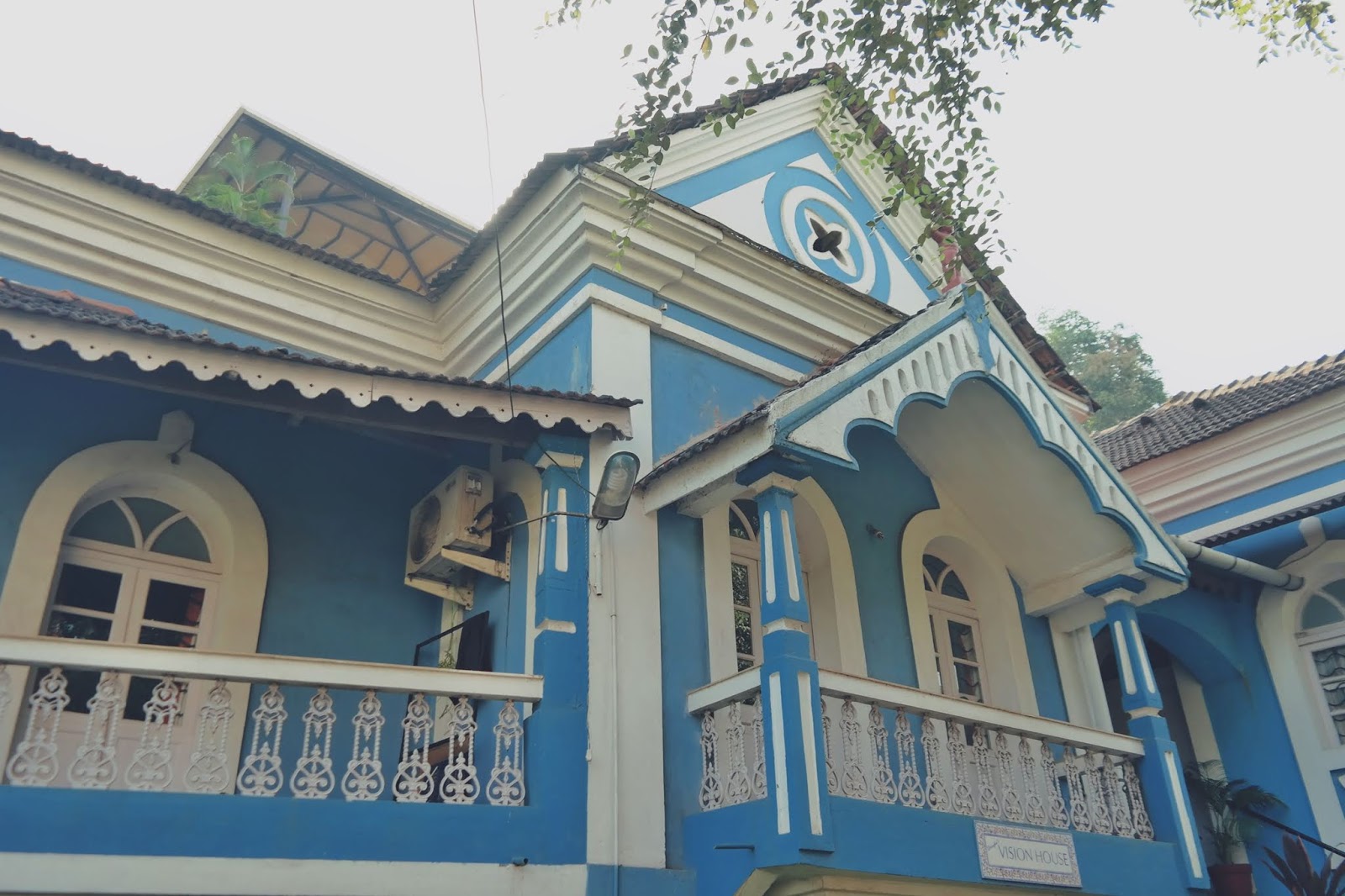
Após mais de 400 anos de “domínio” português (não gosto dessa palavra), existem ainda hoje bairros com arquitetura típica portuguesa, e onde podes continuar a ouvir falar e ler português. Por exemplo, quando passeava pelo Bairro das Fontainhas, onde os nomes das ruas e das casas mantêm nome português, vieram pessoas à janela, por ouvirem alguém na rua a falar português. Existem também algumas igrejas católicas (ex. Igreja da Imaculada Conceição, Sé Catedral - a maior igreja de Goa, Igreja de São Caetano, Igreja de São Francisco de Assis) em estilo manuelino, maneirista ou barroco, consideradas Património da Humanidade pela Unesco, como é o caso da Basílica do Bom Jesus, onde se encontra o túmulo de São Francisco Xavier, missionário com a “missão” de conversão dos locais ao cristianismo. Este assunto é delicado, pois se algumas conversões foram consideradas voluntárias, sabe-se que com a Inquisição algumas delas foram também violentamente forçadas. E este impacto da colonização é de lastimar. Mas não só de religião se trata, Portugal construiu ali também várias escolas.

After more than 400 years of Portuguese "domination" (I don’t like that word), there are still neighbourhoods with typical Portuguese architecture, where you can continue to listening and speaking Portuguese. For example, when I was walking in the Bairro das Fontainhas, where the names of the streets and houses have a Portuguese name, people came to the window, because they listen someone on the street speaking Portuguese. There are also some Catholic churches (ex. Church of the Immaculate Conception, Cathedral - the largest church in Goa, Church of St. Caetano, Church of St. Francis of Assisi) in Manueline, Mannerist or Baroque style, considered by UNESCO as a World Heritage Site, such as the Basilica of Bom Jesus, where is the tomb of St. Francis Xavier, a missionary with the "mission" of converting locals to Christianity. This issue is delicate, because if some conversions were considered voluntary, it’s known that with the Inquisition some of them were also violently forced. And this impact of colonization is such a shame. But it’s not all about religion, in fact, Portugal also built several schools there.
Colonial houses in Goa (photo by Littlelle)
Bairro das Fontainhas in Goa (photo by Littlelle)
Bairro das Fontainhas in Goa (photo by Littlelle)
Color of Goa (photo by Littlelle)
Portuguese houses (photo by Littlelle)
Portuguese houses (photo by Littlelle)

Streets with Portuguese names (photo by Littlelle)
Colonial houses (photo by Littlelle)
Se Cathedral (photo by Littlelle)
Basilica of Bom Jesus (photo by Littlelle)
Our Lady of Immaculate Conception Church (photo by Littlelle)
The mixture of cultures of Goa (photo by Littlelle)

Macau, China

Em 1513, o primeiro navegador Europeu chegou à China, mais precisamente a Hong-Kong, sendo ele o português Jorge Álvares. A presença portuguesa fortaleceu-se nos anos seguintes culminando com a instalação de um porto comercial em Macau no ano de 1557 que perdurou até 1999, ano em que Macau deixou de ser colónia portuguesa, passando a região administrativa especial da República Popular da China.

In 1513, the first European navigator, namely the Portuguese Jorge Álvares, arrived in China, more precisely in Hong Kong. The Portuguese presence strengthened in the following years culminating with the installation of a commercial port in Macao in 1557, that lasted until 1999, when Macao ceased to be a Portuguese colony, and got to be a special administrative region of China.


 Portuguese ship on a tradicional Portuguese pavement in Macau representing a (photo by Littlelle)

Welcome to Macau (photo by Littlelle)

Dos 400 anos de história de administração portuguesa, são visíveis as marcas arquitetónicas indiscutivelmente portuguesas. Ao passeares por Macau, caminhas pela típica calçada portuguesa, vês os candeeiros com design luso a iluminar as ruas e deparas-te com casas colonias com fachadas típicas portuguesas. Nas ruas a sinalização está em português e em chinês, bem como os nomes das ruas, até nos autocarros as informações são igualmente escritas em português. É curioso observar o contraste entre as igrejas católicas com campanários e os templos budistas em tons vermelhos envoltos em incenso. De ressalvar que a maioria da população é Budista, existindo no entanto, fruto do intercâmbio entre o Ocidente e o Oriente, uma comunidade considerável de cristãos católicos. Para conheceres o património português em Macau, tens como pontos de passagem obrigatória o Real Senado, as Ruínas da Igreja de São Paulo, a Santa Casa da Misericórdia ou a fortaleza do Monte, de onde tens uma vista bonita para a cidade. Visitei também o Jardim Camões, onde se encontra supostamente a gruta onde Camões terá escrito parte dos Lusíadas. Visitei ainda um museu do chá. Achei curioso, pois essa bebida e a própria palavra Chá (derivada do palavra chinesa que significa 'apanhar, colher') foi importada para Portugal, o qual terá sido o primeiro país europeu a entrar em contacto com esta bebida. Mais tarde, o consumo do chá terá expandido para a Europa, tendo sido popularizado em parte pela princesa portuguesa que casou com Carlos II da Inglaterra, Catarina de Bragança, através das "Tea parties" que realizava. Falando ainda de comes e bebes, podes saborear pastéis de nata enquanto vagueias pelas ruas da cidade e encontras vários restaurantes típicos portugueses. Por tudo isto, ao passear pelo centro histórico de Macau fui invadida pelo sentimento de “estar em casa”, sabendo que estava, no entanto, a quilómetros de distância! Foi sem dúvida o sítio onde me senti mais em Portugal, fora dele!

With 400 years of Portuguese administration history, the indisputably Portuguese architectural traces are visible. While strolling through Macao, you walk along the typical Portuguese sidewalk, you can see the Portuguese-style streetlights illuminating the streets and you will find colonial houses with typical Portuguese facades. In the streets the signs are in Portuguese and Chinese as well as the names of the streets, even in the buses the information is also written in Portuguese. It’s curious to note the contrast between Catholic churches with bell towers and Buddhist temples in red tones wrapped in incense. It should be noted that the majority of the population is Buddhist, but there’s a considerable community of Catholic Christians, due to the exchange between the West and the East. To get to know the Portuguese heritage in Macao, you have as a must-see attractions the Royal Senate, the Ruins of the Church of São Paulo, the Santa Casa da Misericordia or the fortress of Monte, from where you have a beautiful view of the city. I also visited the Camões Garden, where there’s a cave, which is supposed to be where Camões wrote part of the Lusíadas. I also visited a tea museum. I found it curious, because this drink and the word Tea (derived from the Chinese word which means 'to collect, to harvest') was imported into Portugal, which was the first European country to come into contact with this drink. Later, tea consumption expanded to Europe, and was popularized in part by the Portuguese princess who married Charles II of England, Catherine of Braganza, through the "tea parties" she held. Speaking of eating and drinking, you can tasty egg tarts as you wander the streets of the city and find several typical Portuguese restaurants. For all of this, as I strolled through the historic center of Macao I was invaded by the feeling of being at home, knowing that I was miles away! It was undoubtedly the place where I felt most in Portugal, outside of it!
Traditional Portuguese pavement (photo by Littlelle)
If you are Portuguese you'r never lost in Macau (photo by Littlelle)
You can even find some cute street names (photo by Littlelle)
Em Macau, Farmácia ainda se escreve com Ph (photo by Littlelle)
Alfaiataria na Rua da Felicidade (photo by Littlelle)
Temple (photo by Littlelle)
Our Lady of Carmel Church (photo by Littlelle)
Saint Dominic's Church (photo by Littlelle)
Ruins of St. Paul's (photo by Littlelle)
Santa Casa da Misericórdia of Macau (photo by Littlelle)
Fundação Oriente (photo by Littlelle)
Colonial Houses in Taipa (photo by Littlelle)
Camões Grotto (photo by Littlelle)
The art of making Chá (photo by Littlelle)
Portuguese restaurant (photo by Littlelle)
Egg tart, mais conhecido como Pastel de Nata (photo by Littlelle)
Nos 6 dias que lá passei pude explorar Macau ao detalhe, roteiro que ficará para uma próxima publicação. Em publicações seguintes será então aprofundado um roteiro com sugestões para cada um destes sítios.


In the 6 days that I spent there I was able to explore Macao in detail, an itinerary that will remain for a forthcoming publication. In subsequent publications will be deepened an itinerary with suggestions for each of these sites.


Macau by night (phoro by Littlelle)